Setae: The Biological Bristles That Shape Life
In the vast diversity of the natural world, small structures often perform the most monumental tasks. One such structure is the seta (plural: setae). Derived from the Latin word for "bristle," setae are hair-like or bristle-like projections found across an incredible range of organisms, from microscopic diatoms to climbing vertebrates. While they may appear simple, these structures serve vital roles in movement, sensation, defense, and even nutrient transport.
Because the term is used across different scientific disciplines, a "seta" can mean very different things depending on whether you are speaking to a zoologist, a botanist, or a mycologist. This article explores the diverse functions and forms these biological bristles take throughout the tree of life.
Animal Setae: From Movement to Sensation
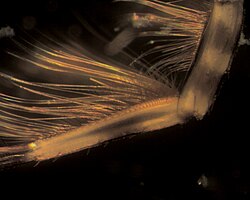
In the animal kingdom, setae are highly specialized tools. Among protostomes (a major group of bilateral animals), these structures are sometimes referred to as macrotrichia, chaetae, or scales. Unlike many other rigid structures, the setal membrane is often not cuticularized, allowing for flexible movement.
Annelids and Crustaceans
For annelids, such as earthworms, setae are stiff bristles that provide essential traction. By allowing the worm to attach to surfaces, these bristles prevent backsliding during peristaltic motion—the wave-like muscle contractions used for movement. In many oligochaetes, these bristles are composed of chitin, a tough, protective polysaccharide.
Crustaceans utilize setae for much more than just movement. They possess both mechano-sensory (detecting physical touch) and chemo-sensory (detecting chemical signals) setae. These are frequently found on mouthparts and grooming limbs. In certain species, like krill, specialized setae on the legs act as a biological net to capture phytoplankton for food.
Insects and the Mechanics of Growth
In insects, setae are unicellular structures, meaning each bristle is produced by a single epidermal cell known as a trichogen (or "bristle generator"). These setae typically grow through an accessory cell called a tormogen, which creates the flexible membrane connecting the base of the seta to the insect's outer layer, or integument. While many insect setae function as mechanoreceptors to sense the environment, others serve defensive purposes; for example, the larvae of Eriogaster lanestris possess setae that can cause dermatitis upon skin contact.
Vertebrates and the Secret of Gecko Adhesion
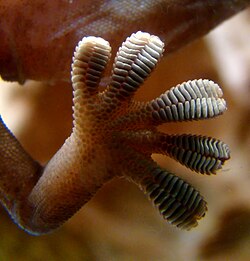
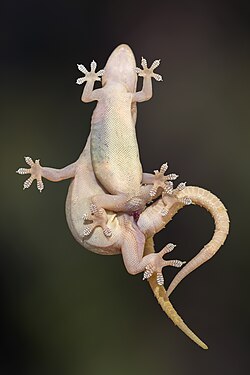
One of the most famous examples of setae in vertebrates is found on the feet of geckos. These animals use microscopic, hair-like processes to cling to vertical surfaces. These setae branch out into even smaller, nanometer-scale projections called spatulae.
This hierarchical structure allows the gecko to utilize van der Waals forces—weak intermolecular attractions—to create significant stickiness. For instance, a Tokay gecko's two front feet can sustain 20.1 N of force parallel to a surface, utilizing approximately 14,400 setae per square millimeter. This incredible engineering allows them to navigate complex, vertical environments with ease.
Setae in Fungi, Plants, and Microscopic Life
The term "setae" extends far beyond the animal kingdom, describing specialized structures in plants, fungi, and even single-celled organisms.
Fungal and Plant Setae
In mycology (the study of fungi), setae refer to dark-brown, thick-walled, thornlike structures called cystidia found in certain families like Hymenochaetaceae. While usually microscopic, they can sometimes be seen with a hand lens.
In botany, a seta is the stalk that supports the capsule of a moss or liverwort. This stalk is part of the sporophyte and serves the critical function of supplying nutrients to the capsule. While not present in all mosses, some species can produce setae reaching 15 to 20 centimeters in height.
Diatoms and Synthetic Innovations
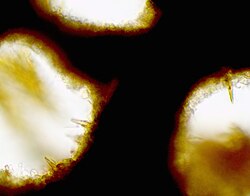
Even microscopic algae use these structures. In the diatom family Chaetocerotaceae, setae are hairlike outgrowths of the cell valve. These help prevent the cells from sinking too rapidly and provide protection against grazers.
Human engineers are now looking to these biological models to create synthetic setae. These are a class of resettable adhesives that mimic the "stick and release" mechanism of biological bristles, offering substantial stickiness that can be detached at will.
Key Facts
- Biological Definition: Setae are hair-like or bristle-like structures found in animals, plants, and fungi.
- Gecko Adhesion: Geckos use hierarchical setae and spatulae to generate van der Waals forces for climbing.
- Insect Development: Insect setae are produced by specialized cells called trichogens.
- Annelid Function: Earthworms use chitinous setae to prevent slipping during movement.
- Botanical Use: In mosses, the seta is a nutrient-supplying stalk for the reproductive capsule.
- Synthetic Application: Research is ongoing into synthetic setae to create resettable adhesives.
Summary of Setae Types
| Organism Group | Primary Function | Key Feature |
|---|---|---|
| Annelids | Locomotion/Traction | Stiff, chitinous bristles |
| Insects | Sensation/Defense | Unicellular (trichogen cells) |
| Geckos | Adhesion | Branching spatulae |
| Mosses | Nutrient Transport | Stalk supporting the capsule |
| Fungi | Structural/Protective | Thick-walled cystidia |
Frequently Asked Questions
How do geckos stick to walls?
Geckos use a hierarchical system of microscopic setae that branch into even smaller projections called spatulae. These structures allow the gecko to engage van der Waals forces with the surface, creating strong adhesion.
What is the difference between a trichogen and a tormogen?
In insects, the trichogen is the primary cell that generates the seta, while the tormogen is an accessory cell that creates the flexible membrane connecting the seta to the insect's body.
Are all insect setae the same?
No. Setae can serve various purposes, including acting as mechanoreceptors for sensing touch, or serving as a defense mechanism, such as the irritating setae found on certain larvae.
What are synthetic setae?
Synthetic setae are man-made adhesives designed to mimic the properties of biological bristles. They are characterized by being "resettable," meaning they are very sticky but can be detached easily at will.
Do all mosses have a seta?
No, setae are not present in all moss species, though in those that do have them, the stalk can grow quite long to support the reproductive capsule.