Seoraksan: The Majestic Peaks and Biodiversity of South Korea
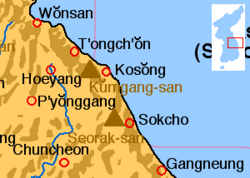
Seoraksan (also known as Mount Sorak) is one of South Korea's most iconic natural landmarks. Located in the Gangwon Province in eastern South Korea, it stands as the highest peak in the Taebaek mountain range. Often regarded as the backbone of the country, Seoraksan is the third highest mountain in South Korea, surpassed only by Hallasan on Jeju Island and Jirisan in the south.
The mountain's highest point, the peak of Daechongbong, reaches an elevation of 1,708 meters (5,603 feet). Beyond its height, the mountain is celebrated for its dramatic granite peaks, lush forests, and its status as a UNESCO biosphere reserve.
Key Facts
- Highest Point: Daechongbong at 1,708 meters (5,603 feet).
- Location: Gangwon Province, South Korea, near the city of Sokcho.
- Status: National Park (est. 1970) and UNESCO Biosphere Reserve (est. 1982).
- Parent Range: Taebaek Mountains.
- Notable Features: Dinosaur Ridge, Ulsanbawi Rock, and Towangseong Waterfall.
Geography and Regional Divisions
Seoraksan is geographically divided into three distinct areas, each offering different landscapes and accessibility for visitors.
Naeseorak (Inner Seorak)
Located in the northwest within Inje-gun, Naeseorak is home to the highest peak, Daechongbong. This region is characterized by its deep valleys and dramatic falls, including the Baekdam, Gaya-dong, and Gugokdam valleys. Other notable landmarks include the Yonga-jangseong (Fortress of Dragon's Teeth) and Daeseung Falls.
Oeseorak (Outer Seorak)
Oeseorak is the eastern area belonging to Sokcho. Because it offers easier hiking courses, it is the most frequently visited part of the park. This region is home to the Towangseong Waterfall, which is the highest waterfall in South Korea.
Namseorak (South Seorak)
The southern portion of the mountain completes the tripartite division of the range, contributing to the overall ecological diversity of the park.
Flora, Fauna, and Ecological Importance
Due to its varied climate, Seoraksan supports diverse ecosystems. The inland areas feature gentle slopes and thick soil layers that support abundant forests and wildlife. In contrast, the coastal-facing areas experience a marine climate, resulting in steeper terrain and different vegetation patterns.
The mountain is a sanctuary for rare species and natural monuments, including mountain goats and semi-moon chest bears. Its biological significance is so great that it was designated as Natural Monument No. 171 in 1965. The unique environment has also led to the discovery of several species named after the mountain, including various cicadas and annelids (segmented worms).
Iconic Hiking Destinations
Ulsanbawi Rock
Ulsanbawi is a striking rock formation known for its unique shape. Reaching the summit requires a climb of approximately 888 steps. Along the path, hikers encounter two temples and Heundeulbawi (Rocking Rock), a 5-meter-high spherical boulder that can be waggled but not pushed over.
Local legend says Ulsanbawi traveled from the city of Ulsan in the southeast to join the construction of Mount Kumgang. Arriving too late to find a place, the rock began its journey home but fell in love with the beauty of the Seorak area and decided to stay forever.
Dinosaur Ridge (Gongryong Neungseon)
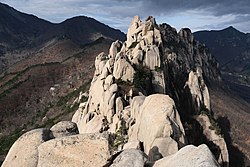
Designated as the 103rd cultural scenic treasure in 2013, the Dinosaur Ridge is named for its jagged peaks that resemble the spine of a spiked dinosaur. Extending from Madeungyeong to Sinseonam, it is considered one of the most difficult hiking courses in South Korea.
The ridge is a strenuous 5.1-kilometer trek that takes roughly 5 hours to cross, though a full traverse from the eastern entrance can exceed 10 hours. Due to steep slopes and the need for scrambling (using hands to climb), it is a high-risk area, particularly during winter or rainy weather.
Valleys and Waterfalls
The Valley of a Thousand Buddhas (Cheonbul-dong Valley) is the primary valley of the mountain, named for rock formations that look like a line of Buddha statues. Other popular spots include the Biryong (Flying Dragon) and Yukdam waterfalls, located near the Sangcheon river.
Seoraksan Summary Table
| Feature | Detail |
|---|---|
| Highest Peak | Daechongbong (1,708 m) |
| Prominence | 1,201 m |
| UNESCO Status | Biosphere Reserve (since 1982) |
| Key Landmarks | Ulsanbawi, Dinosaur Ridge, Towangseong Waterfall |
| Protected Species | Mountain goats, Semi-moon chest bears |
Frequently Asked Questions
What is the highest point of Seoraksan?
The highest point is Daechongbong, which reaches an elevation of 1,708 meters (5,603 feet).
Why is the Dinosaur Ridge famous?
It is famous for its jagged, dinosaur-like silhouette and is recognized as one of the most challenging and scenic hiking courses in South Korea.
What is the legend of Ulsanbawi?
Legend says the rock traveled from Ulsan to join Mount Kumgang, but after arriving too late, it found the Seorak area so beautiful that it decided to settle there permanently.
Is Seoraksan a protected area?
Yes, it is a National Park, a Natural Monument (No. 171), and a UNESCO-designated biosphere reserve.
What is Heundeulbawi?
Heundeulbawi, or "Rocking Rock," is a 5-meter-high spherical boulder located on the path to Ulsanbawi that can be moved slightly when pushed, though it cannot be knocked over.