Seohaean Expressway: Connecting South Korea's West Coast
The Seohaean Expressway (Route 15) serves as a vital north-south artery in South Korea, stretching across the western landscape to link the capital, Seoul, with the southern city of Mokpo. Spanning a total length of 346.1 km (215.1 mi), this major highway facilitates essential travel through the provinces of Gyeonggi, Chungcheong, Jeolla, and Seoul, acting as the primary axis for the Seohaean region.
Since its inception in 1994, the expressway has undergone significant expansions to accommodate increasing traffic volumes. Today, it provides seamless access to major coastal and inland cities, including Gunsan, Dangjin, Pyeongtaek, and Ansan, making it a cornerstone of the nation's transportation infrastructure.
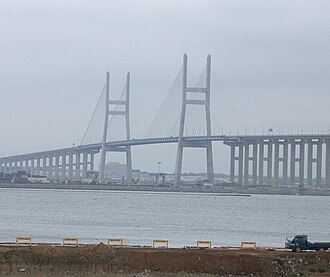
Key Facts
- Route Number: 15
- Total Length: 346.1 km (215.1 mi)
- Termini: Geumcheon, Seoul (North) to Mokpo, Jeonnam (South)
- Speed Limits: Ranges from 90 km/h to 110 km/h depending on the segment
- Major Landmark: Seohae Grand Bridge (7.3 km)
- Operational Since: 1994
Infrastructure and Engineering Highlights
One of the most impressive engineering feats along this route is the Seohae Grand Bridge (Seohae Daegyo). Spanning 7.3 km, this massive structure connects Pyeongtaek in Gyeonggi Province to Dangjin in Chungnam Province. It currently holds the distinction of being the third-longest bridge in the Republic of Korea.
Lane Configurations and Speed Limits
The expressway features varying lane capacities to manage traffic flow across different regions. While some sections consist of 4 lanes, others have been expanded to 6, 8, or even 10 lanes to handle high-density transit. Speed limits are strictly enforced via speed cameras and vary by segment:
- Mokpo to Jungnim JC: 90 km/h
- Maesong IC to Seoul (Geumcheon): 100 km/h
- Jungnim JC to Maesong IC: 110 km/h
Route Summary Table
| Feature | Details |
|---|---|
| Total Distance | 346.1 km |
| Primary Provinces | Seoul, Gyeonggi, Chungnam, Jeonbuk, Jeonnam |
| Major Junctions | Ansan JC, W Pyeongtaek JC, Dangjin JC, Jungnim JC |
| Branch Expressways | Seocheon–Gongju Expressway, Pyeongtaek–Siheung Expressway |
Historical Development
The construction of the Seohaean Expressway was a multi-stage process that spanned several years. Work began in December 1991, with the first segment—the Seoul to Ansan section—opening to traffic on July 6, 1994. The construction of the Seohae Grand Bridge commenced in May 1993, and the bridge segment finally opened in November 2000.
To meet modern demands, significant widening projects were undertaken in the 2010s. This included expanding the Ansan–Iljik Junction to 10 lanes and completing various 10-lane expansions between 2014 and 2015 to alleviate congestion in the heavily traveled northern sections.
Frequently Asked Questions
What is the maximum speed limit on the Seohaean Expressway?
The highest posted speed limit is 110 km/h, specifically on the segment between Jungnim JC and Maesong IC. However, limits decrease to 100 km/h or 90 km/h in other sections.
Which major bridge is located on this expressway?
The Seohae Grand Bridge (Seohae Daegyo) is the prominent bridge on this route. It is 7.3 km long and connects Pyeongtaek and Dangjin.
Does the expressway have service areas for travelers?
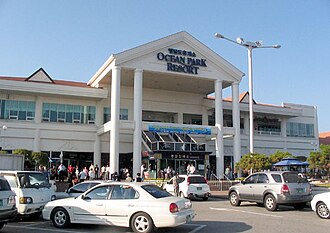
Yes, there are several service areas (SA) along the route, such as the Haengdamdo Service Area (located within the Seohae Grand Bridge), Maesong SA, Hwaseong SA, and Seosan SA.
What cities can I reach via the Seohaean Expressway?
The expressway connects several major cities including Seoul, Anyang, Ansan, Pyeongtaek, Dangjin, Seosan, Boryeong, Gunsan, and Mokpo.
Are there any branch expressways connected to Route 15?
Yes, the Seocheon–Gongju Expressway and the Pyeongtaek–Siheung Expressway serve as branch expressways connected to the main Seohaean route.