Scottish Government
The Scottish Government is the devolved administration responsible for governing Scotland. Established in its modern form in 1999, it operates within a system of devolution—the transfer of certain powers from the central UK government in London to a regional authority. Headquartered at St Andrew's House in Edinburgh, the government manages a wide array of public services and legislative functions to meet the specific needs of the Scottish people.
From managing the national healthcare system to setting education standards, the Scottish Government wields significant influence over the daily lives of citizens, operating under the oversight of the Scottish Parliament.
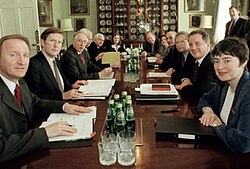
Key Facts
- Established: 1 July 1999 following the Scotland Act 1998.
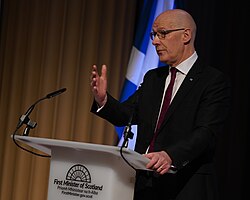
- Current Leader: First Minister John Swinney.
- Seat of Government: St Andrew's House, Edinburgh.
- Annual Budget: £67.9 billion (2026–27).
- Accountability: Appointed by and responsible to the Scottish Parliament.
- Voting Age: 16 and 17-year-olds are eligible to vote in Scottish Parliament and local elections.
History and Evolution of Devolution
The path to the modern Scottish Government began with the Labour Party's 1997 general election manifesto. Following a landslide victory, Prime Minister Tony Blair held a referendum in September 1997. The result was decisive: 74.2% (1,775,045 people) voted in favour of devolution, while 25.7% (614,400 people) voted against.
This led to the Scotland Act 1998, which created the Scottish Parliament and the Scottish Executive (the precursor to the Scottish Government). The first First Minister, Donald Dewar, led a coalition between the Scottish Labour Party and the Scottish Liberal Democrats.
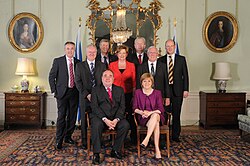
Over time, the administration's identity evolved. In 2007, under Alex Salmond, the "Scottish Executive" was renamed the "Scottish Government," a change later formalized by the Scotland Act 2012. This era also saw the adoption of the Flag of Scotland as the government's emblem, replacing the Royal Arms.
Significant milestones include the 2014 independence referendum, where 55.3% voted against independence and 44.7% voted in favour. More recently, following the end of the Brexit transition period on 31 December 2020, the government passed the UK Withdrawal from the European Union (Continuity) (Scotland) Act 2020 to maintain regulatory alignment with EU law in devolved areas.
Government Structure and Leadership
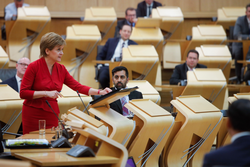
The Scottish Government is led by the First Minister, who is not directly elected by the public but is nominated by the monarch based on the party with the most seats in the Scottish Parliament. The First Minister is supported by the Scottish Cabinet, which makes collective decisions on policy and legislation.
The Civil Service and Administration
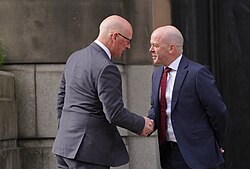
The political leadership is supported by the Scottish Administration, consisting of officials from the UK Civil Service. This includes approximately 16,000 civil servants working across 56 government directorates, 131 public bodies, 10 executive agencies, and 46 non-executive agencies. The most senior civil servant is the Permanent Secretary.
Legislative Process and Oversight
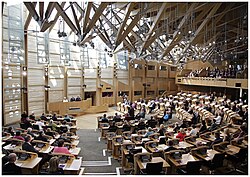
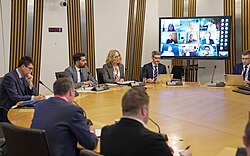
Bills introduced by the government are debated in the Scottish Parliament and require a majority vote to become law. To ensure transparency and accountability, parliamentary committees scrutinize proposed legislation and government conduct.
Responsibilities and Devolved Powers
The scope of the Scottish Government's authority has expanded through the Scotland Acts of 1998, 2012, and 2016. These laws define which areas are "devolved" (managed in Scotland) and which remain "reserved" (managed by the UK Parliament).
| Category | Key Responsibilities |
|---|---|
| Public Services | Healthcare (NHS Scotland), Education, Policing, and the Scottish Prison Service. |
| Infrastructure & Environment | Housing, Planning, Agriculture, Forestry, Fisheries, and Renewable Energy. |
| Legal & Social | Scots Law, Social Care, Equality Legislation, and Abortion Rights. |
| Finance & Tax | Income Tax rates/bands, Landfill Tax, and certain Social Security benefits. |
| Culture & Tourism | VisitScotland, Culture, and Major Event Promotion. |
Budget and Finance
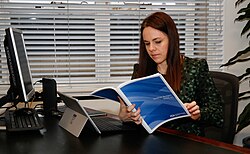
The Scottish Budget is the primary tool for distributing funds across government departments. It outlines spending priorities, proposes new taxes, and adjusts welfare benefits. For the 2026–27 period, the annual budget is set at £67.9 billion.
Funding is derived from a combination of UK government grants and the Scottish Government's own tax powers. In the 2019-2020 financial year, combined spending by the Scottish and local governments accounted for approximately 58% of total expenditure in Scotland.
International Presence and Offices
To promote trade, investment, and diplomatic ties, the Scottish Government maintains a network of eight international offices. These are located in major global hubs including Beijing, Berlin, Brussels, Copenhagen, Dublin, Ottawa, Paris, and Washington DC.
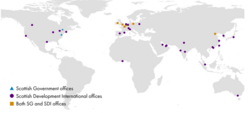
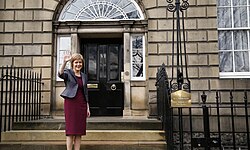
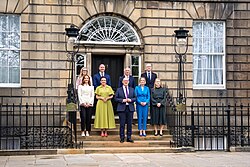
Within Scotland, the government operates several key sites, including the official residence of the First Minister at Bute House and various administrative offices in Edinburgh and Glasgow.
Frequently Asked Questions
How is the First Minister chosen?
The First Minister is not directly elected by the public. Instead, after a Scottish Parliament election, the monarch asks the leader of the party with the most MSPs (Members of the Scottish Parliament) to form a government and serve as First Minister.
What is the difference between the Scottish Government and the Scottish Parliament?
The Scottish Parliament is the legislative body that debates and votes on laws. The Scottish Government is the executive branch that proposes legislation, implements policy, and manages the day-to-day administration of devolved services.
Who is eligible to vote in Scottish elections?
Following the Scottish Elections (Reduction of Voting Age) Act 2015, all citizens aged 16 and 17 are eligible to vote in Scottish Parliament and local government elections.
What are devolved powers?
Devolved powers are specific areas of governance transferred from the UK Parliament to the Scottish Parliament and Government. These include healthcare, education, and policing, allowing Scotland to create laws tailored to its own needs.
Where is the Scottish Government based?
The main headquarters is St Andrew's House in Edinburgh, while the First Minister's official residence is Bute House, also located in Edinburgh.