Sayfo: The Assyrian Genocide of World War I
The Sayfo (Syriac: ܣܲܝܦܵܐ, meaning "sword"), also known as the Assyrian genocide, refers to the systematic mass killing and deportation of Assyrian and Syriac Christians during World War I. This tragedy unfolded across southeastern Anatolia and the Azerbaijan province of Persia, carried out by Ottoman forces and certain Kurdish tribes.
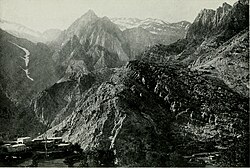
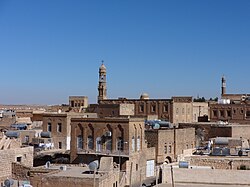
The victims belonged to several distinct, and sometimes antagonistic, denominations, including the Syriac Orthodox Church, the Assyrian Church of the East, and the Chaldean Catholic Church. Historically, these communities resided in remote, mountainous regions of Persia and the Ottoman Empire, some of which functioned as effectively stateless zones. However, the Ottoman Empire's push for centralization in the 19th century gradually increased the vulnerability and danger facing these populations.
Key Facts
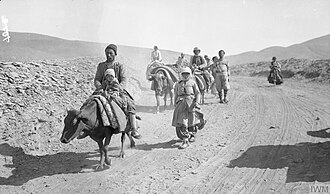
- Definition: Sayfo means "sword" in Syriac and refers to the genocide of Assyrian/Syriac Christians.
- Timeline: The primary massacres occurred during World War I, specifically starting in early 1915.
- Perpetrators: Ottoman military forces and pro-Ottoman Kurdish tribes.
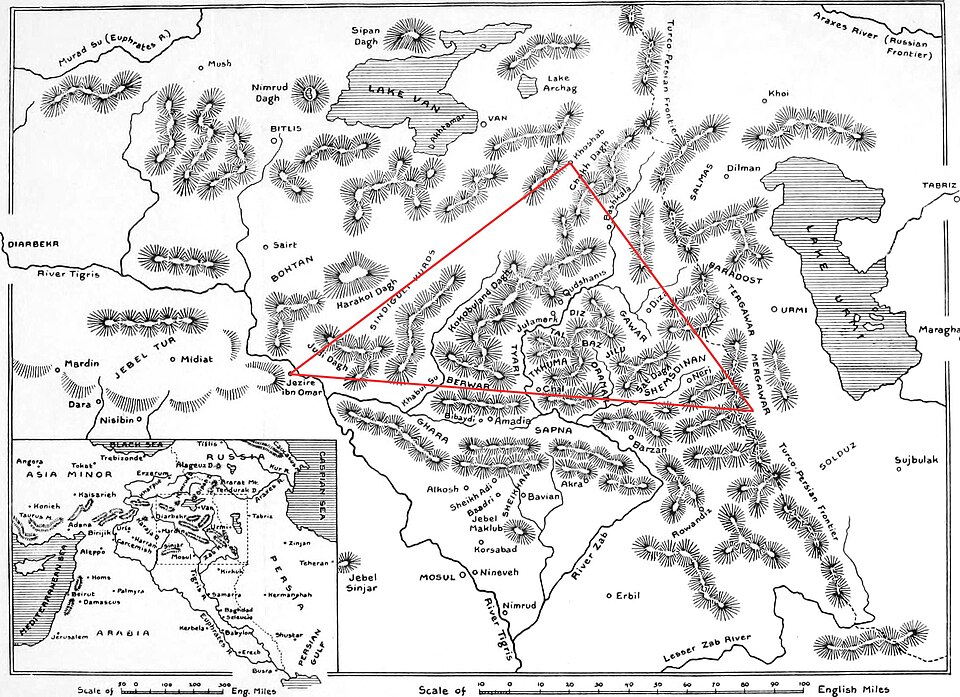
- Geography: Centered in southeastern Anatolia (Turkey) and the Azerbaijan province of Persia (Iran).
- Estimated Loss: Assyrian delegates estimated losses at 250,000 to 275,000 people.
- Legal Status: Unlike Armenians, Jews, and Greeks, Assyrians were not recognized as a minority group in the 1923 Treaty of Lausanne.
The Road to Violence: Pre-War Tensions
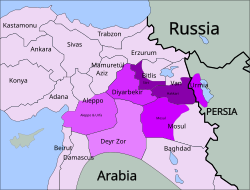
The escalation of violence did not begin with the Great War but was the result of decades of worsening conflict. During the Russo-Turkish War of 1877–1878, the Ottoman state provided modern weaponry to Kurdish forces to fight Russia. When these weapons were not returned after the war, the Assyrians—who relied on outdated arms—found themselves at a severe military disadvantage.
In the 1880s, the government formed the Hamidiye cavalry, irregular units composed of Kurdish tribes loyal to the state. Because these units were exempt from civil and military law, they often committed acts of violence against Christians with total impunity. This was further exacerbated by the rise of political Islam among Kurdish shaikhs, widening the social and religious divide.
By 1908, despite hopes that the Young Turk Revolution would curb anti-Christian Islamism, violence intensified. In one instance, 12,000 Assyrians were expelled from the Lizan valley. These pressures led Mar Shimun XIX Benyamin, Patriarch of the Church of the East, to begin negotiations with the Russian Empire for protection.
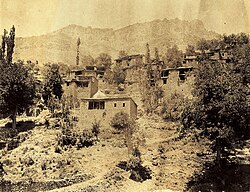
The Outbreak of Genocide during World War I
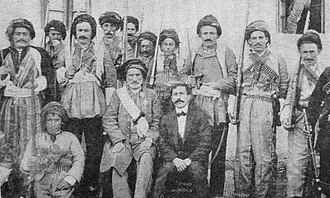
The Occupation of Azerbaijan
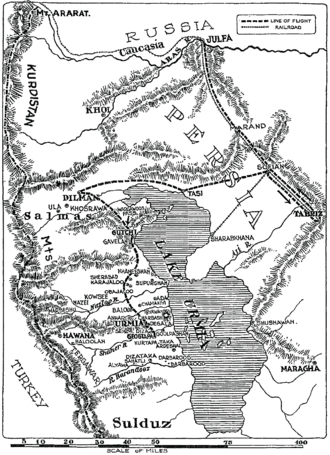
In the borderlands between the Ottoman Empire and Persia, Assyrian villages had organized self-defense forces. However, the situation turned dire on January 1, 1915, when Russia abruptly withdrew its forces from the region. This left the area open to Ottoman forces led by Djevdet, Kazim Karabekir, and Ömer Naji.
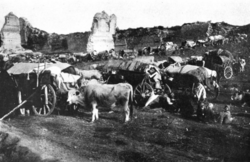
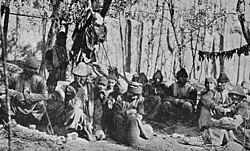
Following the Russian withdrawal, local Muslims and the Ottoman army launched pogroms against Christians. Over a dozen villages were sacked, prompting thousands of Armenians and Assyrians to flee toward the Russian Caucasus. It is estimated that between 10,000 and 20,000 people made this perilous crossing.
Ethnic Cleansing in the Highlands and Lowlands
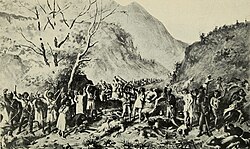
In mid-1915, Ottoman forces and Kurdish tribes attacked the Assyrian tribes of Hakkari. Despite a coordinated military defense, the Assyrians were driven out by September. Simultaneously, in the Diyarbekir province, Governor Mehmed Reshid initiated a genocide targeting all Christian communities, including Syriac Christians, who offered only sporadic resistance in parts of Tur Abdin.
In the Bitlis province, Ottoman troops returning from Persia joined local Kurdish tribes to massacre the Christian population. While the genocide was widespread, it was not uniform; some local officials spared Assyrians while targeting Armenians, and Assyrians living further south in present-day Iraq and Syria were largely not targeted during this specific period.
Aftermath and the Struggle for Recognition
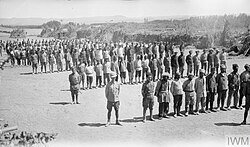
The violence continued in various forms after the war. Following 1923, anti-Christian campaigns in Turkey forced many Syriac communities in regions like Adana and Urfa to flee to Syria, settling in Aleppo, Qamishli, or the Khabur region. In 1924, the Syriac Orthodox patriarchate was expelled from Turkey.
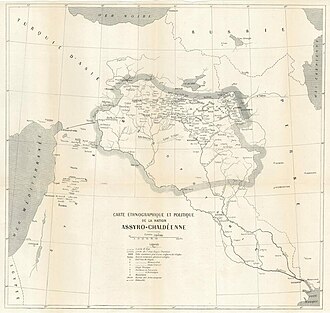
At the 1919 Paris Peace Conference, an Assyro-Chaldean delegation presented maps and data seeking an independent Assyria and highlighting their losses. They estimated that 250,000 people—roughly half of the prewar population—had been killed. This figure was later raised to 275,000 at the 1923 Lausanne Conference.
Estimated Losses by Region
While some historians, such as David Gaunt, suggest that certain figures may be overestimates or difficult to verify, the scale of the loss remains staggering.
| Region | Estimated Losses | Notes |
|---|---|---|
| Persia | 40,000 | Figures vary; some historians suggest as few as 7,000. |
| Van (including Hakkari) | 80,000 | High estimate; approx. 45,000 fled to Persia. |
| Diyarbekir | 63,000 | Includes Syriac Orthodox, Chaldeans, and Catholics. |
| Bitlis | 38,000 | Significant losses in the Siirt district. |
| Harput | 15,000 | - |
| Urfa | 9,000 | - |
| Other (Adana, Der Zor, etc.) | 5,000 | - |
| Total | 250,000 | Based on delegation reports. |
Frequently Asked Questions
What does the term "Sayfo" mean?
Sayfo is the Syriac word for "sword," symbolizing the weapon used during the massacres and the violent nature of the genocide.
Which Christian groups were targeted during the Sayfo?
The genocide targeted Assyrian and Syriac Christians, specifically those belonging to the Syriac Orthodox Church, the Assyrian Church of the East, and the Chaldean Catholic Church.
How did the Sayfo differ from the Armenian genocide?
While occurring simultaneously and sharing perpetrators, the Sayfo was described as less systematic in some areas. In certain regions, local officials targeted Armenians while sparing Assyrians, or vice versa.
Why were the Assyrians not recognized in the Treaty of Lausanne?
Despite their efforts at the Paris Peace Conference, the Assyrians were not granted minority status in the 1923 Treaty of Lausanne, unlike the Greeks, Jews, and Armenians.
Where did the survivors of the Sayfo settle?
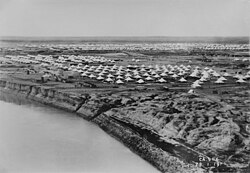
Many survivors fled to the Russian Caucasus, Persia, or later to Syria (specifically Aleppo and the Khabur region) and Iraq. In more recent decades, significant diaspora communities have formed in countries like Sweden and Australia.