Saxifragales: Evolution, Taxonomy, and Diversity of a Unique Angiosperm Order
The Saxifragales represent a diverse and fascinating order of angiosperms (flowering plants) within the eudicot clade. Spanning a temporal range from 89.5 million years ago to the present, this group encompasses a wide variety of forms, from succulent perennials to towering woody trees. While relatively small in scope—comprising approximately 15 families, 100 genera, and 2,470 species—the order provides critical insights into the rapid radiation and evolutionary adaptation of flowering plants.
Key Facts
- Species Count: Approximately 2,470 species across 15 families.
- Dominant Families: 95% of species are concentrated in five families: Crassulaceae, Saxifragaceae, Grossulariaceae, Haloragaceae, and Hamamelidaceae.
- Temporal Range: Exists from the Late Cretaceous (89.5 Ma) to the present.
- Classification: Part of the Superrosids clade within the Core eudicots.
- Conservation Status: Includes several critically endangered species, with the genus Whittonia thought to be extinct.
Historical Classification and Taxonomy
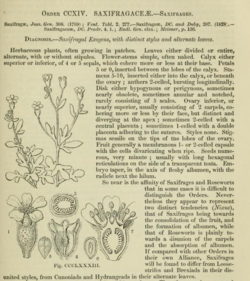
The order was first described in 1820 by Berchtold and Presl as Saxifrageae, initially consisting of five genera. The botanical authority is generally attributed to Bercht. & J.Presl, though some references cite Dumortier, who first used the term Saxifragaceae in 1829. By 1853, John Lindley referred to the group as an "Alliance" in his seminal work, The Vegetable Kingdom.
Modern classification has been heavily refined by the Angiosperm Phylogeny Group (APG). The transition from APG I (1998) to APG IV (2016) saw significant shifts in family boundaries. For instance, the Peridiscaceae family underwent radical recircumscription; it was briefly placed in the Malpighiales order due to a contaminated DNA sample before being correctly returned to Saxifragales.
Phylogeny and Family Structure
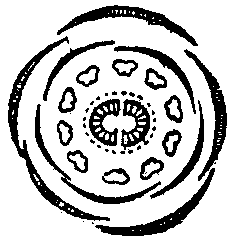
The evolutionary history of Saxifragales is characterized by rapid radiation. Most families within the order are monogeneric (containing only one genus). However, a few families dominate the species count. The Crassulaceae family is the largest, with roughly 1,400 species, followed by Saxifragaceae with 500.
Major Family Groupings
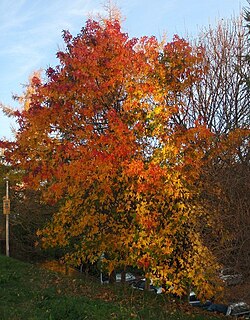
The order includes a variety of specialized plants, including the parasitic Cynomoriaceae and the aquatic Haloragaceae. The Altingiaceae family, which includes the sweetgum, has seen recent taxonomic mergers, with Liquidambar and Semiliquidambar now submerged into the genus Altingia.
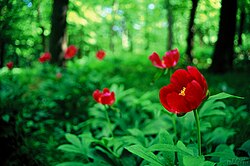
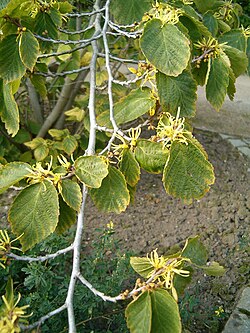
Other notable members include the Paeoniaceae (peonies) and Hamamelidaceae (witch-hazels), showcasing the morphological breadth of the order.
Diversity and Distribution
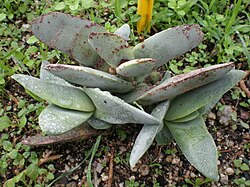
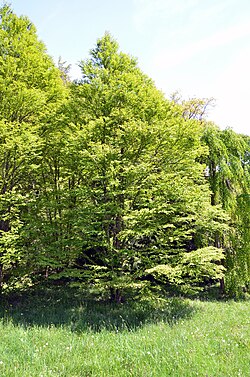
The members of Saxifragales are found in diverse habitats globally. The order includes everything from the succulent Crassula perfoliata to the deciduous Cercidiphyllum japonicum.
The following table summarizes the distribution of species across the most prominent families within the order:
| Family | Approximate Species Count | Example Genus/Species |
|---|---|---|
| Crassulaceae | 1,400 | Crassula |
| Saxifragaceae | 500 | Saxifraga |
| Grossulariaceae | 150–200 | Ribes |
| Haloragaceae | 150 | Haloragis |
| Hamamelidaceae | 100 | Hamamelis |
Additional Representative Taxa
- Peridiscaceae: Peridiscus lucidus
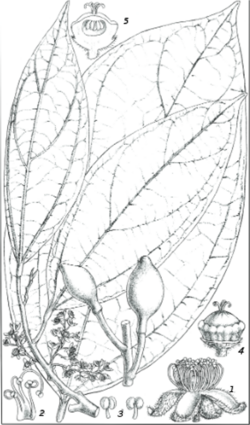
Peridiscus lucidus - Daphniphyllaceae: Daphniphyllum macropodum
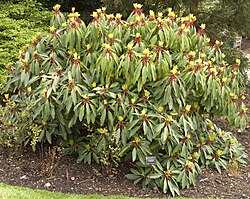
Daphniphyllum macropodum - Aphanopetalaceae: Aphanopetalum resinosum
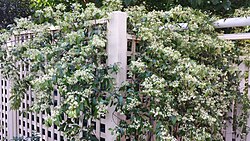
Aphanopetalum resinosum - Tetracarpaeaceae: Tetracarpaea tasmannica
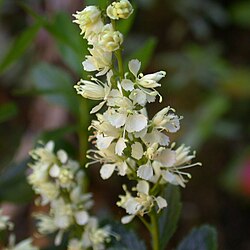
Tetracarpaea tasmannica - Penthoraceae: Penthorum sedoides
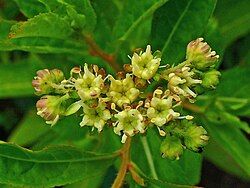
Penthorum sedoides - Haloragaceae: Haloragis erecta
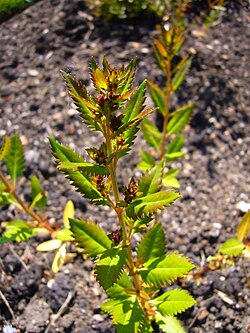
Haloragis erecta - Iteaceae: Itea virginica
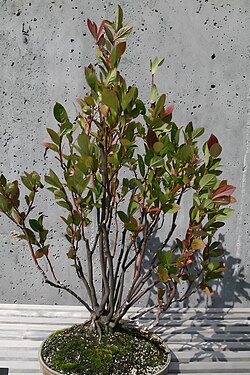
Itea virginica - Grossulariaceae: Ribes rubrum
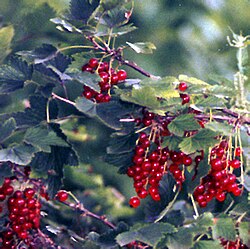
Ribes rubrum - Saxifragaceae: Saxifraga granulata
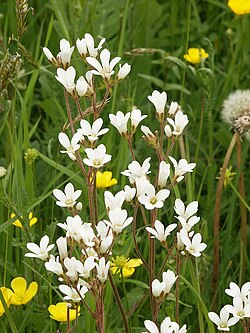
Saxifraga granulata - Cynomoriaceae: Cynomorium coccineum
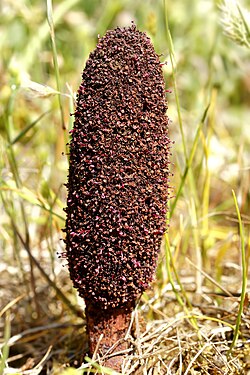
Cynomorium coccineum
Conservation Status
Many species within the Saxifragales order are currently facing extinction risks. As of 2019, the IUCN lists 9 species as critically endangered, 12 as endangered, and 19 as vulnerable. Particularly threatened species include Aichryson dumosum and Monanthes wildpretii from the Crassulaceae family, as well as Saxifraga artvinensis. The genus Whittonia is currently believed to be extinct.
Frequently Asked Questions
How many families are in the Saxifragales order?
According to the APG IV (2016) classification, there are 15 families within the Saxifragales order.
Which family contains the most species in this order?
The Crassulaceae family is the most species-rich, containing approximately 1,400 species.
What is the temporal range of Saxifragales?
The order has a temporal range from 89.5 million years ago (Ma) to the present day.
Why was the Peridiscaceae family once misclassified?
Peridiscaceae was briefly placed in the Malpighiales order because a DNA sequence used for the genus Whittonia was contaminated with DNA from other plants.
Which species are among the most threatened in this order?
Some of the most threatened include Aichryson dumosum, Monanthes wildpretii, Haloragis stokesii, and Molinadendron hondurense.