Saul Amarel: A Pioneer of Artificial Intelligence and Computer Science
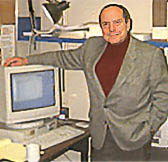
Saul Amarel was a visionary scientist, engineer, and educator whose contributions fundamentally shaped the landscape of Artificial Intelligence (AI). As a professor at Rutgers University and a leader in both government and private research, Amarel bridged the gap between theoretical computing and practical engineering, leaving an indelible mark on how machines solve complex problems.
Throughout his career, Amarel focused on the intersection of scientific inquiry and engineering practice, developing methodologies that allowed computers to better represent and process information to achieve specific goals.
Key Facts
- Primary Legacy: Pioneered research in AI representation and computational planning.
- Academic Leadership: Founded the Department of Computer Science at Livingston College, Rutgers University.
- Government Service: Served as Director of the Information Sciences and Technology Office for DARPA (1985–1988).
- Major Honors: Recipient of the Allen Newell Award from the ACM.
- Education: Degrees from Technion (B.S.) and Columbia University (M.S. and Ph.D.).
Early Life and Academic Foundation
Born on February 16, 1928, into a Greek Jewish family in Thessaloniki, Amarel's early life was marked by the turmoil of World War II. During the German invasion of Greece, he served in the Greek Resistance movement before fleeing with his family to Gaza, which was then part of British Palestine.
Amarel's academic journey began at the Technion – Israel Institute of Technology, where he earned a bachelor's degree in engineering in 1948. After a period of service with the Israeli Ministry of Defense, he moved to the United States to further his studies. He attended Columbia University in New York, obtaining a master's degree in 1953 and a doctorate in Electrical Engineering in 1955.
Professional Career and Leadership
Amarel's professional trajectory spanned industry, academia, and government. From 1958 to 1969, he led the Computer Theory Research Group at RCA Sarnoff Labs, where he applied his expertise to advanced computing theories.
Establishing Computer Science at Rutgers
In 1969, Amarel transitioned to academia by founding the Department of Computer Science at Livingston College of Rutgers University in New Brunswick, New Jersey. His leadership helped establish the institution as a hub for computing research.
Contributions to DARPA
Between 1985 and 1988, Amarel took on a critical role in national defense and technology as the Director of the Information Sciences and Technology Office for the Defense Advanced Research Projects Agency (DARPA), the U.S. agency responsible for developing emerging technologies for military use.
The Alan M. Turing Professorship
Returning to Rutgers in 1988, he was appointed the Alan M. Turing Professor of Computer Science. In this role, he continued his pioneering research in AI, focusing on the theory and practice of computational planning—the process by which an AI agent determines a sequence of actions to achieve a desired goal.
Recognition and Legacy
Amarel's impact on the field was recognized by the highest bodies in computing. He received the Allen Newell Award from the Association for Computing Machinery (ACM) for his work on the role of representation—how knowledge is structured within a computer—in problem solving.
His professional standing was further cemented by his election as a Fellow of the Association for the Advancement of Artificial Intelligence (AAAI) in 1990 and a Fellow of the Institute of Electrical and Electronics Engineers (IEEE) in 1994.
| Period/Year | Organization/Role | Key Achievement |
|---|---|---|
| 1948 | Technion | Bachelor's degree in engineering |
| 1955 | Columbia University | Doctorate in Electrical Engineering |
| 1958–1969 | RCA Sarnoff Labs | Led Computer Theory Research Group |
| 1969 | Rutgers University | Founded Dept. of Computer Science |
| 1985–1988 | DARPA | Director of Information Sciences and Technology Office |
| 1988 | Rutgers University | Appointed Alan M. Turing Professor |
Saul Amarel passed away on December 18, 2002, in Princeton, New Jersey, following a six-year battle with cancer. His legacy continues to live on through the Rutgers high-performance computing cluster, which is named in his honor.
Frequently Asked Questions
What was Saul Amarel's primary contribution to AI?
Amarel is best known for his work on the role of representation in problem solving and his contributions to the theory and practice of computational planning.
Which academic institution did Saul Amarel help build?
He founded the Department of Computer Science at Livingston College of Rutgers University in 1969.
What prestigious awards did Saul Amarel receive?
He received the Allen Newell Award from the ACM and was elected a Fellow of both the AAAI (1990) and the IEEE (1994).
What role did he play at DARPA?
From 1985 to 1988, he served as the Director of the Information Sciences and Technology Office.
Where did Saul Amarel receive his doctoral degree?
He earned his doctorate in Electrical Engineering from Columbia University in 1955.