Santa Catarina: A Powerhouse of Industry, Agriculture, and Tourism in Southern Brazil
Located in the Southern Region of Brazil, Santa Catarina is a state defined by its diverse landscapes, robust economic output, and high quality of life. Bordered by Paraná to the north, Rio Grande do Sul to the south, and the Atlantic Ocean to the east, it serves as a vital link between Brazil and the Argentine province of Misiones to the west. With a total area of approximately 95,730.69 square kilometers—roughly comparable in size to Hungary—it is the seventh smallest Brazilian state by area but ranks among the most influential in terms of GDP and human development.
The state is known for its high Human Development Index (HDI) of 0.833, ranking it third in Brazil. Its population, which reached over 8.1 million by 2025, is characterized by a rich ethnic tapestry, primarily composed of White Brazilians (76.28%), followed by mixed race (19.22%) and Black Brazilians (4.07%).
Key Facts
- Capital: Florianópolis
- Largest City: Joinville
- Economic Rank: 6th highest nominal GDP in Brazil (R$ 428.571 billion in 2021)
- Agricultural Leadership: Brazil's largest producer of pork and a leader in onion production.
- Human Development: 3rd highest HDI in Brazil (0.833).
- Key Infrastructure: Home to the Port of Itajaí and the fully duplicated BR-101 highway.
Geography and Environment
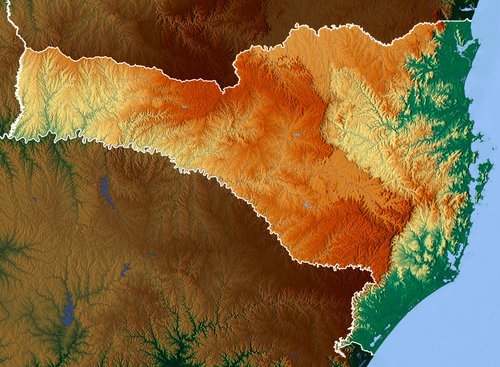
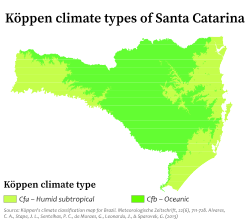
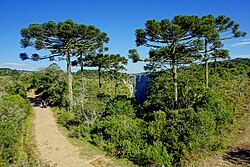
Santa Catarina's geography is as varied as its economy. The state features a complex topographic profile that influences its climate and biodiversity. The region is home to the iconic Araucaria forest, a distinctive ecosystem that defines much of the highland landscape.
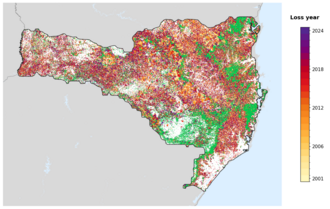
Environmental challenges persist, however, as evidenced by tree-cover loss data from 2001 to 2024. Despite this, the state maintains a strong connection to its natural resources, which fuel its massive agribusiness sector.
Demographics and Urban Centers
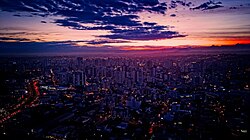
The population density of Santa Catarina is among the highest in Brazil, ranking 9th nationally. The distribution of people is concentrated in several key urban hubs, with Joinville and Florianópolis serving as the primary centers of population and commerce.
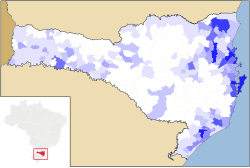
| Rank | Municipality | Population | Percentage of Total |
|---|---|---|---|
| 1 | Joinville | 616,317 | 8.09% |
| 2 | Florianópolis | 537,211 | 7.05% |
| 3 | Blumenau | 361,261 | 4.74% |
| 4 | São José | 270,299 | 3.55% |
| 5 | Itajaí | 264,054 | 3.46% |
| 6 | Chapecó | 254,785 | 3.34% |
| 7 | Palhoça | 222,598 | 2.92% |
| 8 | Criciúma | 214,493 | 2.81% |
| 9 | Jaraguá do Sul | 182,660 | 2.40% |
| 10 | Lages | 164,981 | 2.16% |
Economic Engine: Agriculture and Industry
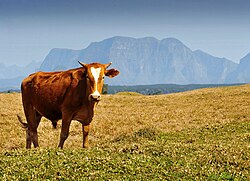
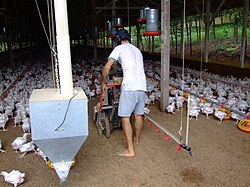
Santa Catarina is an agricultural titan. It is the largest producer of pork in Brazil, accounting for 28.38% of the country's slaughter and 40.28% of its pork exports. The state also holds a dominant position in poultry, contributing 10.8% of Brazil's chicken population, and is a national leader in onion production.
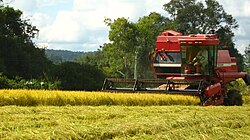
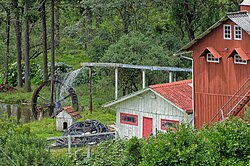
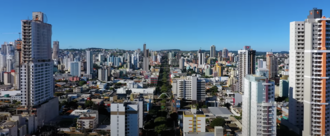
Beyond livestock, the state excels in aquaculture, producing 98.1% of Brazil's oysters, scallops, and mussels, primarily in Palhoça, Florianópolis, and Bombinhas. Other significant crops include yerba mate, grapes, and apples.
Industrial Specialization
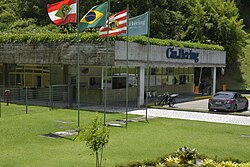
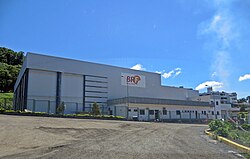
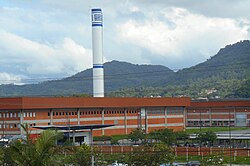
The industrial sector is highly diversified, with a GDP of R$63.2 billion (as of 2017). The most prominent sectors include construction, food processing, clothing, and textiles. Many cities have specialized economic identities:
- Florianópolis: Technology, tourism, and government services.
- Joinville & Jaraguá do Sul: Electric motors and textiles.
- Blumenau: Textiles, software, and beer.
- Criciúma & Tubarão: Ceramics.
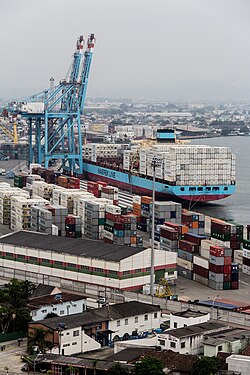
- Itajaí: Maritime logistics and seaport operations.
Infrastructure and Tourism
Transportation is a cornerstone of the state's efficiency. The BR-101 is the primary artery, a fully duplicated highway running along the coast that connects the state's wealthiest cities. Other critical routes include the BR-470 and BR-280.
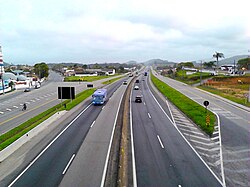
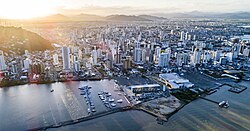
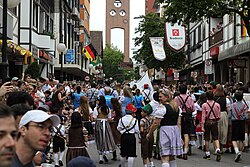
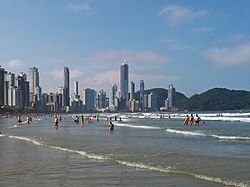
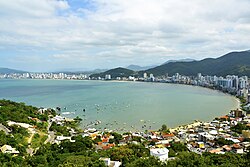
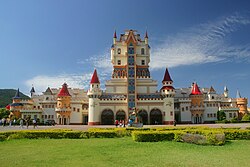
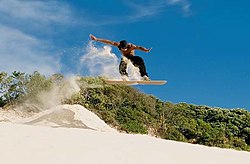
Tourism is a major economic driver, ranging from the cultural celebrations of the Oktoberfest in Blumenau to the luxury high-rises of Balneário Camboriú and the natural beauty of the Florianópolis dunes. The state also hosts Beto Carrero World, the largest theme park in Latin America.
Frequently Asked Questions
What is the largest city in Santa Catarina?
The largest city is Joinville, with a population of 616,317 according to the 2022 census.
Why is Santa Catarina important to Brazil's food supply?
It is the largest producer of pork in Brazil and a dominant force in poultry and shellfish (oysters, scallops, and mussels) production.
What are the main industrial sectors in the state?
The primary sectors are construction, food production, clothing, industrial public utilities, and textiles.
Which highway is most critical for the state's economy?
The BR-101 is the most important highway, as it is fully duplicated and passes through the majority of the state's highest-GDP cities along the coast.
What is the HDI of Santa Catarina?
As of 2024, Santa Catarina has a very high Human Development Index (HDI) of 0.833, ranking it 3rd in Brazil.