Samguk yusa: The Sacred Legends and History of Ancient Korea
The Samguk yusa (Korean: 삼국유사; Hanja: 三國遺事), translated as Memorabilia of the Three Kingdoms, is a cornerstone of Korean cultural identity. It is a vast collection of legends, folktales, and historical accounts that chronicle the Three Kingdoms of Korea—Goguryeo, Baekje, and Silla—alongside other states and periods that shaped the peninsula's early history.
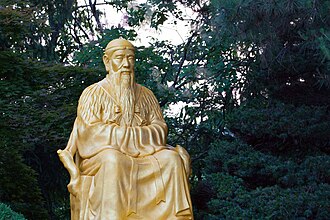
Compiled in the late Goryeo dynasty around 1280 by the Buddhist monk Il-yeon, the text was originally written in Classical Chinese, the scholarly language of the era. Beyond its historical value, it is designated as National Treasure No. 306, serving as the earliest extant record of the Dangun legend, which describes the founding of Gojoseon, the first Korean nation.
Key Facts
- Author: Compiled by the Buddhist monk Il-yeon around 1280.
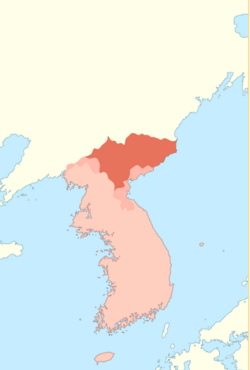
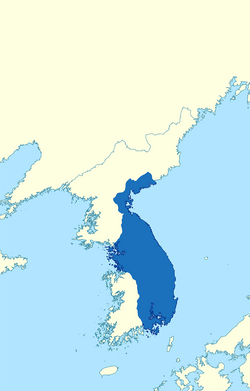
- Scope: Covers Gojoseon, Wiman Joseon, Buyeo, Goguryeo, Baekje, Silla, and Gaya.
- Significance: The first written record of the Dangun founding myth.
- Language: Originally written in Classical Chinese.
- Cultural Status: Designated as National Treasure No. 306 of the Republic of Korea.
- Core Theme: Heavily influenced by Buddhist values, blending history with mythology.
Historical Background and Motivation
The Samguk yusa was composed at the Ingak Temple during a period of immense turmoil. In the 13th century, the Mongol Empire launched devastating invasions of East Asia, including Korea, starting in 1231. These conquests resulted in the destruction of countless cultural properties, literature, and historical records.
Driven by a desire to preserve the disappearing folklore and heritage of his people, Il-yeon spent years collecting and analyzing cultural works. At a time when the Korean peninsula was not yet fully united, the inclusion of the Dangun myth provided a shared ancestral root, fostering a sense of "one blood, one nation" among Koreans.
Structure and Contents
The text is organized into five volumes, transitioning from royal records to spiritual anecdotes and moral tales. A significant portion of the work—approximately 49.5%—is dedicated to Buddhist principles and the lives of monks.
| Volume | Part | Primary Theme |
|---|---|---|
| Volume 1 | Part 1 | Records of Kings and the founding of kingdoms |
| Volume 2 | Part 2 | Records of Great Wonders (United Silla) |
| Volume 3 | Part 3 & 4 | Rise of Buddhism; Pagodas and Buddhist images |
| Volume 4 | Part 5 | Anecdotes of renowned monks |
| Volume 5 | Part 6-9 | Divination, miracles, devotion, seclusion, and filial piety |
Buddhist Art and Archaeology
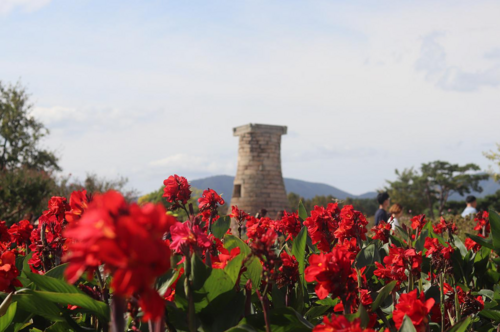
The Samguk yusa is an essential resource for studying ancient Buddhist art. Specifically, Part 4 (Tapsang) focuses on the creation of pagodas, temples, and Buddhist images, providing archaeological insights that would otherwise be lost. It also contains unique records regarding the young soldiers of the Silla dynasty.
Comparing Samguk yusa and Samguk sagi
Historians often compare the Samguk yusa with the Samguk sagi. While both are vital, they differ fundamentally in approach and philosophy:
- Methodology: The Samguk sagi employs a rational, logical, and Confucian-centered approach. In contrast, the Samguk yusa takes a romantic, Buddhist approach, embracing superstitions, myths, and folklore.
- Perspective: Some scholars argue the Samguk sagi reflects a subordinate attitude (sadae) toward Chinese Confucianism. The Samguk yusa is seen as more tailored to a distinct Korean Buddhist style.
- Detail: The Samguk sagi provides superior administrative detail, such as explanations of kwallogup (officials' land) and sigup (food-producing land), whereas the Samguk yusa excels in preserving the spiritual and mythical narrative.
Notable Legends: Choshin's Dream
The text is famous for its evocative storytelling. One such tale is "Choshin's Dream," where a monk named Choshin prays to the Gwaneum Bodhisattva for love with a woman named Kim Nang-Ja. In a vivid dream, he lives with her for 40 years and has five children, only to suffer the heartbreak of poverty and the death of a child.
Upon awakening, Choshin realizes the vanity of human desire and the illusory nature of worldly life, illustrating the Buddhist theme of detachment.
Preservation and Major Collections
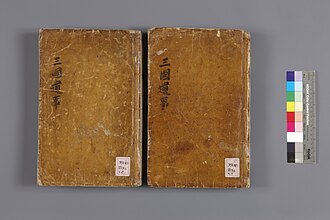
Because the original manuscripts were lost, scholars rely on several key collections to reconstruct the text. The earliest extant publication dates to 1512.
- Kyujanggak Collection: The most complete 1512 edition, widely used for academic research.
- Beomeosa Temple Collection: A highly valuable woodblock-printed edition (National Treasure No. 306-4) that contains chapters missing from other copies.
- Korea University Collection: A version of the 1512 edition notable for including Korean endings on Chinese characters.
- Jung-gu and Seodaemun-gu Collections: Early Joseon editions that help scholars correct errors in the 1512 text and identify lost literary works.
Frequently Asked Questions
Who wrote the Samguk yusa?
The text was compiled by the Buddhist monk Il-yeon around 1280 during the Goryeo dynasty, though some scholars believe his disciple Muguk and others expanded the work later.
What is the difference between Samguk yusa and Samguk sagi?
The Samguk sagi is a rational, Confucian-based historical record focusing on facts and administration. The Samguk yusa is a Buddhist-influenced collection that preserves myths, legends, and folklore.
Why is the Dangun legend important in this text?
The Samguk yusa provides the earliest extant record of the Dangun legend, which establishes Gojoseon as the first Korean nation and serves as a symbol of shared Korean ancestry.
Is the Samguk yusa considered a reliable historical source?
Because it focuses heavily on mythical narratives and folktales, its factual reliability is often questioned compared to the Samguk sagi. However, it is considered an irreplaceable source for understanding ancient Korean culture and spirituality.
What language was the original text written in?
It was written in Classical Chinese, which was the standard written language for literate Koreans and scholars during the Goryeo dynasty.