Sam Phillips: The Visionary Who Shaped Rock and Roll
Few individuals have left as indelible a mark on the landscape of modern music as Sam Phillips. A disc jockey, songwriter, and record producer, Phillips was the architect behind some of the most influential sounds of the 20th century. By blending diverse musical traditions and championing untapped talent, he didn't just record music—he helped ignite the rock and roll revolution from a small studio in Memphis, Tennessee.
Key Facts
- Founder: Established Sun Records and Sun Studio in Memphis.
- Key Artists: Launched the careers of Elvis Presley, Johnny Cash, Jerry Lee Lewis, Carl Perkins, and Roy Orbison.
- Innovation: Produced "Rocket 88," often cited as the first rock and roll record.
- Social Impact: An early advocate for racial equality who broke barriers in the music industry.
- Legacy: First non-performer inducted into the Rock and Roll Hall of Fame (1986).
Early Life and Musical Roots
Born Samuel Cornelius Phillips in 1923 on a 200-acre farm near Florence, Alabama, Phillips' musical sensibilities were formed in the fields. As a child, he picked cotton alongside Black laborers, and the spirituals and songs he heard there left a profound impression on him. This early exposure to the raw emotion of the blues became the foundation of his professional life.
Phillips' path was not linear. While he initially harbored ambitions of becoming a criminal defense attorney, the Great Depression bankrupted his father, who passed away in 1941. This tragedy forced Sam to leave high school to support his mother and aunt, working in a grocery store and a funeral parlor before finding his calling in radio.
In 1942, while working at WLAY radio station in Sheffield, Alabama, he met Rebecca "Becky" Burns. The two married in 1943, beginning a lifelong partnership. His time at WLAY introduced him to an "open format" of broadcasting—playing music by both Black and white musicians—which would later define his approach to recording.
The Birth of Sun Records
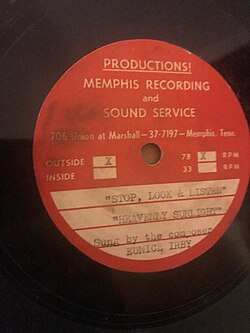
After a stint as a sound engineer for WREC in Memphis, Phillips opened the Memphis Recording Service on January 3, 1950, at 706 Union Avenue. The studio was unique because it allowed amateurs to record, attracting early talent such as B.B. King and Howlin' Wolf.
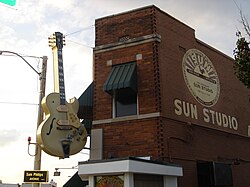
In 1951, Phillips recorded "Rocket 88" by Jackie Brenston and His Delta Cats (led by Ike Turner), a track widely regarded by historians as the first rock and roll record. By 1952, he launched his own label, Sun Record Company. Over the next 16 years, Sun produced 226 singles, becoming the most prolific rock and roll label of its era.
The Pursuit of "Feel"
Phillips was less concerned with technical perfection and more interested in the "feel" of a performance. He sought artists who could tap into the emotional depth of the blues, believing that the genre allowed people of all races to express the difficulties and joys of life.
Launching Legends: From Presley to the Million Dollar Quartet
The most famous partnership in Sun's history began on July 18, 1953, when an 18-year-old truck driver named Elvis Presley entered the studio. Encouraged by Marion Keisker, Phillips eventually recorded Presley's version of "That's All Right," a song that blended R&B and country to create a new, explosive sound.
Presley's regional success turned Sun Records into a magnet for aspiring musicians. This led to the discovery of other icons, including Johnny Cash, Jerry Lee Lewis, Carl Perkins, and Roy Orbison. One of the most legendary moments in music history occurred on December 4, 1956, during an impromptu jam session featuring these four artists, later known as the Million Dollar Quartet.
Business Ventures and Social Advocacy
Beyond the studio, Phillips was a shrewd entrepreneur. He launched WHER in 1955, the first all-female radio station in the United States. He also expanded into the hospitality industry as an early investor in the Holiday Inn hotel chain, significantly growing his wealth after selling Elvis Presley's contract to RCA for $35,000.
Throughout his career, Phillips remained a steadfast advocate for racial equality. By recording and promoting Black artists and blending racial musical styles, he helped dismantle systemic barriers within the music industry during a period of intense segregation.
| Category | Details |
|---|---|
| Primary Label | Sun Records (est. 1952) |
| Key Artists | Elvis Presley, Johnny Cash, Jerry Lee Lewis, Carl Perkins, Howlin' Wolf |
| Major Innovation | Pioneered the Rockabilly sound and early Rock and Roll |
| Business Interests | WHER Radio, Holiday Inn (Investor), Big River Broadcasting |
| Hall of Fame Inductions | Rock and Roll, Alabama Music, Blues, Country, and Memphis Music |
Later Years and Final Honors
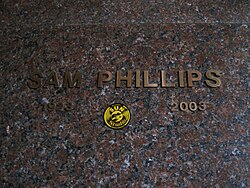
Phillips sold Sun Records to Shelby Singleton in 1969, though he remained involved in music, occasionally overseeing recordings for his sons at Phillips Recording Studio. He passed away from respiratory failure on July 30, 2003, at the age of 80.
In a poignant twist of timing, Phillips died just one day before the original Sun Studio was officially designated a National Historic Landmark.
Frequently Asked Questions
Who was the first artist Sam Phillips discovered?
While he recorded many amateurs at the Memphis Recording Service, including B.B. King and Howlin' Wolf, he is most famous for launching the career of Elvis Presley in 1953.
What was the "Million Dollar Quartet"?
The Million Dollar Quartet was an impromptu jam session on December 4, 1956, featuring Elvis Presley, Johnny Cash, Jerry Lee Lewis, and Carl Perkins at Sun Studio.
What was the significance of "Rocket 88"?
Recorded in 1951 by Jackie Brenston and His Delta Cats, "Rocket 88" is considered by many music historians to be the first true rock and roll record.
How did Sam Phillips contribute to racial equality?
Phillips was an advocate for racial equality who broke down barriers by recording both Black and white musicians and blending their styles, promoting a shared musical language during the era of segregation.
What other businesses did Sam Phillips own?
Besides Sun Records, he owned several radio stations (including the all-female WHER), the Sun Studio Café, and was an early investor in the Holiday Inn hotel chain.