Saint Basil the Great: The Legacy of a Cappadocian Father
Saint Basil the Great, also known as Basil of Caesarea, was a towering figure of the early Christian church. Serving as the Bishop of Caesarea Mazaca in Cappadocia from 370 until his death in 379, Basil was not only a skilled administrator but a profound theologian. He is remembered as a Doctor of the Church and a Great Hierarch, revered across multiple Christian traditions for his intellectual rigor and his commitment to the poor.
Basil's life was defined by a balance of academic excellence and spiritual devotion. He spent his career defending the Nicene Creed—the defining statement of Christian belief—and opposing various heresies, most notably Arianism and Apollinarianism, which challenged the nature of the Trinity.
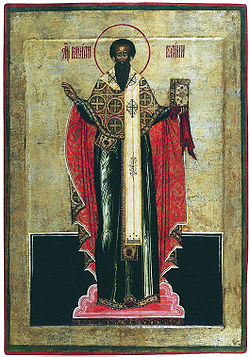
Key Facts
- Born: 330 AD in Caesarea Mazaca, Cappadocia, Roman Empire.
- Died: January 1 or 2, 379 AD (aged 48–49).
- Role: Bishop of Caesarea Mazaca and Metropolitan of five suffragan bishops.
- Theological Stance: Strong supporter of the Nicene Creed and opponent of Arianism.
- Patronage: Patron of Russia, Cappadocia, monks, education, liturgists, and hospital administrators.
- Major Contributions: Established standards for Eastern monasticism and organized extensive social welfare programs.
Early Life and Academic Journey
Basil's path to leadership began with a rigorous education in Caesarea Mazaca around 350–351 AD. During this time, he formed a lifelong bond with Gregory of Nazianzus. Their shared pursuit of knowledge took them to the great intellectual centers of the era; while Gregory traveled to Alexandria, Basil studied in Constantinople, where he attended the lectures of the renowned orator Libanius.
The two friends eventually reunited in Athens, where they encountered a fellow student who would later become the emperor Julian the Apostate. After leaving Athens in 356 AD and traveling through Syria and Egypt, Basil returned to his hometown. For approximately one year, he applied his education by practicing law and teaching rhetoric before fully committing to the church.
Ecclesiastical Rise and Leadership
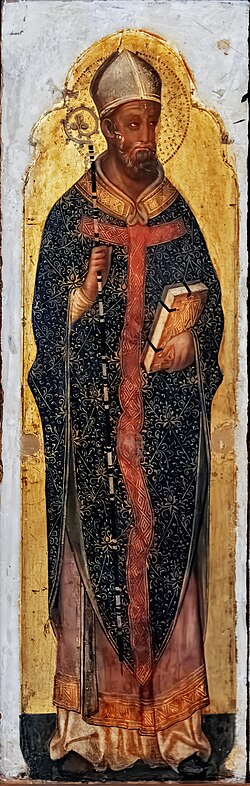
Basil's transition into church leadership was driven more by the needs of the church than his own ambition. In 362 AD, Bishop Meletius of Antioch ordained him as a deacon. By 365 AD, Eusebius summoned him to Caesarea to serve as a presbyter, valuing Basil's exceptional intellectual gifts.
Following the death of Eusebius in 370 AD, Basil was consecrated as Bishop of Caesarea on June 14. This position granted him significant authority as the exarch of Pontus. Despite facing opposition from several suffragan bishops during his election, Basil proved to be a dynamic leader. While described as hot-blooded and occasionally imperious, he was equally known for his deep sympathy and generosity.
His commitment to social justice was evident during a severe drought and subsequent famine, during which he personally organized a soup kitchen to feed the impoverished.
Theological Contributions and Social Views
Basil's writings reveal a sophisticated understanding of human nature and equality. He argued for the complete equality of genders, stating that both men and women derive from the same human "lump" (phyrama) and are created in the image of God. He insisted that both possess the same honor, dignity (homotimos), and nature (physis), and that they share the same capacity for virtue and activity (energeia).
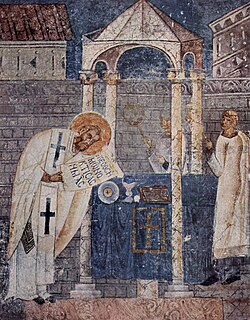
Beyond his social views, Basil's influence extended to the structure of the church. He played a pivotal role in shaping monasticism in the East, establishing rules that became the standard for monastic life. His liturgical contributions also left a lasting mark on how the faith is practiced today.
Commemorations and Legacy
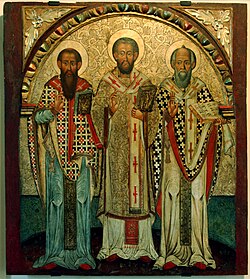
The legacy of Saint Basil is preserved through various feast days across different denominations. In the Eastern Orthodox Church, he is often celebrated on January 1. The General Roman Calendar originally observed his feast on January 1, later moving it to June 14 (the date of his ordination) in the 13th century, and finally to January 2 in 1969 to avoid conflict with the Solemnity of Mary, Mother of God.
The Coptic Orthodox Church of Alexandria celebrates him on the 6th of Tobi (currently January 14), while the Ethiopian Orthodox Tewahedo Church observes him on Ter 6.
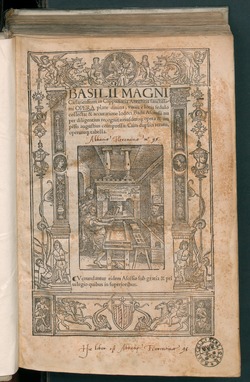
Today, Basil is remembered not only as a theologian but as a model for reformers and hospital administrators, reflecting his lifelong dedication to combining spiritual truth with practical mercy.
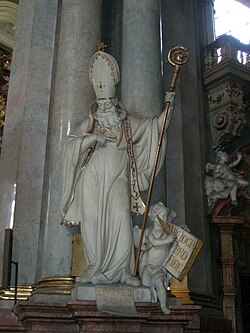
Summary of Saint Basil's Life
| Category | Details |
|---|---|
| Titles | Bishop, Confessor, Doctor of the Church, Great Hierarch |
| Key Locations | Caesarea Mazaca, Constantinople, Athens, Egypt, Syria |
| Theological Focus | Nicene Creed, Trinity, Equality of Genders, Anti-Arianism |
| Social Impact | Famine relief, Monastic rules, Hospital administration |
| Venerated In | Catholic, Eastern Orthodox, Oriental Orthodox, Anglican, Lutheran, Church of the East |
Frequently Asked Questions
Who was Saint Basil the Great?
Saint Basil the Great was a 4th-century bishop of Caesarea Mazaca in Cappadocia. He was a prominent theologian and one of the Cappadocian Fathers, known for defending the Nicene Creed and organizing early Christian monasticism.
What were Basil's views on gender equality?
Basil taught that men and women are created in the image of God with equal honor and dignity. He argued that they share the same nature and capacity for virtue, and are endowed with the same spiritual reward.
How did Saint Basil help the poor?
Basil was deeply committed to social welfare. Most notably, he organized a soup kitchen and distributed food to the needy during a period of famine caused by drought in his region.
When is Saint Basil's feast day?
The date varies by tradition: the Eastern Orthodox Church typically celebrates him on January 1, the Roman Catholic Church on January 2, and the Coptic Orthodox Church on January 14.
What is Basil's connection to monasticism?
Basil established the rules and standards for monasteries in the East, creating a framework for communal monastic life that influenced countless religious communities for centuries.