First Council of Nicaea: Shaping Early Christian Doctrine
The First Council of Nicaea stands as one of the most pivotal events in the history of the early Christian Church. Convened in 325 AD, this gathering sought to resolve deep theological divisions and establish a unified foundation for faith and practice across the Roman Empire. By bringing together bishops from across the known world, the council addressed critical questions regarding the nature of divinity and the organization of the church.
The council was convoked by Emperor Constantine I, who viewed religious unity as essential to the stability of his empire. Presided over by Hosius of Corduba, the assembly focused on resolving the Alexandrian controversies, most notably the teachings of Arius, which had sparked widespread debate over the deity of Christ.
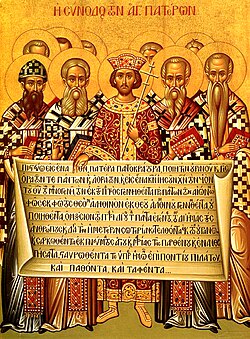
Key Facts
- Date: May to August 325 AD.
- Convener: Emperor Constantine I.
- Primary Goal: To resolve the Arian controversy regarding the deity of Christ.
- Major Outcome: The creation of the original Nicene Creed.
- Attendance: Traditionally cited as 318 bishops, though estimates range from 250 to 318.
- Funding: Travel and expenses were paid for by the imperial treasury.
Attendance and Composition
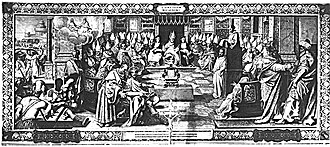
The scale of the council was unprecedented for its time. While the traditional number of attending bishops is 318—a figure often linked to the number of members in Abraham's household in the Book of Genesis—modern estimates suggest between 250 and 300 bishops. Notably, only five representatives attended from the Western Church, meaning the council was heavily dominated by Eastern perspectives.
When accounting for the presbyters and deacons who accompanied each bishop, the total number of attendees may have reached between 1,200 and 1,900 people. Signatory lists for the final decisions contain between 200 and 220 names.
Theological Outcomes and the Nicene Creed
The primary focus of the council was the deity of Christ. The assembly sought to counter the views of Arius, who argued that Jesus Christ was not God. This led to the formulation of the Nicene Creed, a statement of belief intended to define the orthodox position of the church.
The Concept of the Trinity
While the council dealt with the relationship between the Father and the Son, the full-fledged doctrine of the Trinity (the belief in one God in three persons: Father, Son, and Holy Spirit) was not fully formulated at Nicaea. The term had been used previously by writers such as Theophilus of Antioch, Origen, and Tertullian, but questions regarding the Holy Spirit remained largely unaddressed until the Council of Constantinople in 381.
Canon Law and Administrative Decisions
Beyond theology, the council established 20 canons (church laws) and a synodal epistle to regulate church discipline and administration. These decisions touched upon various aspects of clerical and lay life:
- Clerical Conduct: Prohibited usury among clergy and forbade self-castration for those entering the priesthood.
- Ordination: Required a bishop to be ordained in the presence of at least three provincial bishops and confirmed by the metropolitan bishop.
- Jurisdiction: Confirmed the ancient customs giving jurisdiction over large regions to the bishops of Rome, Alexandria, and Antioch, and recognized the honorary rights of the see of Jerusalem.
- Baptism and Catechumens: Established a minimum term for catechumens (individuals studying for baptism) and declared baptisms by Paulian heretics invalid.
- Liturgical Changes: Separated the computation of Easter from the Jewish calendar.
Summary of the Council of Nicaea
| Category | Details |
|---|---|
| Presiding Officer | Hosius of Corduba |
| Key Documents | Original Nicene Creed, 20 Canons, Synodal Epistle |
| Major Conflict | Arianism (The deity of Christ) |
| Accepted By | Catholic, Eastern Orthodox, Oriental Orthodox, Church of the East, Lutheran, Anglican, and Reformed Churches |
| Successor Council | First Council of Constantinople |
Frequently Asked Questions
Did the Council of Nicaea decide which books belong in the Bible?
No. Contrary to common misconceptions, the Council of Nicaea did not establish the biblical canon; its primary focus was on the nature of Christ and church discipline.
Who was Arius and why was he a problem?
Arius was a priest from Alexandria whose teachings suggested that Jesus Christ was a created being and not co-eternal with God the Father. This view was deemed heretical by the council.
What is the significance of the number 318?
The number 318 is the traditionally accepted number of bishops in attendance, though historical lists of signatories show fewer. It is believed this specific number was favored because it mirrors the size of Abraham's household in the Book of Genesis.
How did Emperor Constantine influence the council?
Constantine convoked the council and paid for the bishops' travel. While he was not a theologian, he sought a unified church to ensure imperial stability and presided over the proceedings to encourage consensus.
What happened to those who disagreed with the council?
Those who refused to accept the Nicene Creed and the council's decisions, such as Arius, were exiled.