Saemaeul-ho: The Legacy of South Korea's Former Premier Express Train
For decades, the Saemaeul-ho served as the gold standard of rail travel in South Korea. Launched on February 10, 1969, by Korail, the national railroad, this express service was designed to provide high-speed, comfortable transit across the peninsula. Before the arrival of the KTX (Korea Train Express), the Saemaeul-ho was the fastest class of train in the country, famously reducing the travel time between Seoul and Busan to under five hours.
The train's name was derived from the Saemaul Undong, a rural revitalization movement led by President Park Chung-hee in the 1970s, reflecting the era's spirit of national modernization and progress.

Key Facts
- Service Period: February 10, 1969, to April 30, 2018.
- Primary Operator: Korail.
- Successor: ITX-Saemaeul.
- Track Gauge: 1,435 mm (Standard Gauge).
- Distinguishing Feature: No standing passengers allowed; larger, more comfortable seating than the Mugunghwa-ho.
- Final Route: The last traditional service ran between Iksan and Yongsan on the Janghang Line.
Evolution of Rolling Stock
The Saemaeul-ho evolved through several generations of carriages, each improving passenger comfort and technical efficiency.
Rectangular Carriages (1969–1982)
The first generation featured a rectangular design based on Japanese limited express trains. These cars typically offered 56 seats and were initially painted ivory with a blue band. They utilized NT-21 disc braking bogies for high-speed stability, with some later models incorporating air spring bogies for a smoother ride.
Streamlined Carriages (1986–1993)
Introduced alongside the 7000-train locomotive, these cars increased in length to 23.5 meters and capacity to 64 seats. Key upgrades included the introduction of cotton cushions, center armrests with folding tables, and Korea's first automatic cabin doors. They also introduced indirect lighting and individual reading lamps.
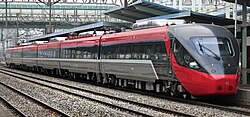
Long Carriages (1990–1999)
The third generation focused on luxury and utility. These carriages featured purple patterned seats, improved washrooms with water heaters, and the introduction of mobile public telephones. They were characterized by a stainless steel body and LED signboards that displayed trip information.

Specialized and Remodeled Units
To maintain service quality, Korail introduced Suite carriages with a 2x1 seating array for increased space. In 2013, remaining carriages were remodeled to allow them to be hauled by locomotives and mixed with other carriage types. Later, some Mugunghwa-ho carriages were remodeled with the ITX-Saemaeul color scheme, adding modern amenities like 220V outlets and USB charging ports.

Onboard Experience and Dining
The Saemaeul-ho was not just a mode of transport but a symbol of social status, often frequented by VIPs and the wealthy. A central part of this experience was the dining car, originally known as the "SALON."
Dining services evolved from direct Korail management to privatization, with the Seoul Plaza Hotel operating the restaurants until 2004. The menu ranged from traditional Korean lunch boxes to Western cuisine and liquor. By 2008, as KTX shifted passenger habits, dining cars were reorganized into train cafes, offering sandwiches, drinks, and even amenities like mini concert rooms and therapy chairs.
Service Summary
| Feature | Details |
|---|---|
| First Service | February 10, 1969 |
| Last Service | April 30, 2018 |
| Rolling Stock | Korail Class 7300, DHC-PP DMU |
| Max Speed (Successor) | 150 km/h (ITX-Saemaeul) |
| Major Lines | Gyeongbu, Honam, Jeolla, Jungang, Yeongdong, Janghang |
Notable Incidents
The history of the Saemaeul-ho includes a rare and tragic event on May 1, 2002. Train #162, traveling from Yeosu to Seoul, was involved in three consecutive fatal collisions at different railroad crossings within a short window of time. This event was reported as the first such occurrence of three consecutive crossing accidents in the world.
Frequently Asked Questions
What replaced the Saemaeul-ho?
The Saemaeul-ho was gradually phased out and replaced by the ITX-Saemaeul, which offers a faster average speed of 150 kilometers per hour.
How did Saemaeul-ho differ from Mugunghwa-ho?
Saemaeul-ho trains were the premium class, featuring larger, more comfortable seats and a strict policy of no standing passengers, whereas Mugunghwa-ho was a more basic service.
What was the significance of the train's name?
It was named after the Saemaul Undong (New Village Movement), a government-led initiative in the 1970s aimed at modernizing the rural Korean countryside.
Did the Saemaeul-ho have dining options?
Yes, it featured dining cars (originally called "SALON") that later evolved into train cafes selling lunch boxes, snacks, and beverages.
Which lines did the Saemaeul-ho serve?
It operated on numerous major lines, including the Gyeongbu, Honam, Jeolla, Jungang, Yeongdong, and Janghang lines, connecting Seoul to various cities like Busan, Mokpo, and Gangneung.