Russian Regionalism in Eastern and Southern Ukraine
The geopolitical landscape of Ukraine has long been shaped by complex regional identities, particularly in its eastern and southern territories. These areas have frequently seen movements advocating for regionalism—the political ideology that emphasizes the autonomy or specific administrative status of a region relative to a central government.
Early Proposals for Autonomy
Efforts to establish regional autonomy began decades ago. Early suggestions included the creation of a Donetsk-Dnipro or Dnipro autonomous region. In 1990, a proposal emerged in Odesa advocating for a "special state status" for the historical area known as Novorossiya. This proposed entity would have encompassed five Ukrainian oblasts (administrative provinces) and the Moldovan territory of Transnistria, which currently exists as a breakaway region.
Regionalism in Crimea saw varying degrees of political success starting in the early 1990s. These internal political dynamics eventually culminated in the annexation of Crimea by Russia.
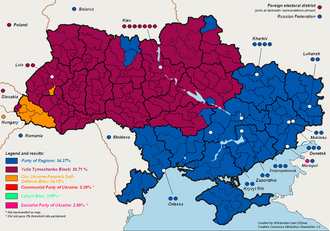
Public Sentiment on Federalization
The desire to shift Ukraine from a unitary state to a federal state—a system where power is divided between a central authority and constituent political units—has varied significantly by region. According to polling conducted by the Kyiv International Institute of Sociology in early 2014, support for federalization was highest in the east.
- Luhansk Oblast: 41.9% support
- Donetsk Oblast: 38.4% support
- Kharkiv Oblast: 32.2% support
- Odesa Oblast: 17.5% support
- Zaporizhzhia Oblast: 15.3% support
- Dnipropetrovsk Oblast: 11.4% support
- Mykolaiv Oblast: 10.7% support
- Kherson Oblast: 6.9% support
Perspectives on Autonomy and Governance in Donbas
By 2019, polling revealed a sharp divide in preferences between the separatist-controlled and Ukrainian-controlled portions of the Donbas region.
In the separatist-controlled Donbas, 58% of residents expressed a desire for special autonomy, with 31% wanting this within Ukraine and 27% wanting it within Russia. Regarding overall rule, 45% of these residents preferred Russian rule, while 55% preferred Ukrainian rule.
Conversely, in the Ukrainian-controlled Donbas, only 33% of residents desired special autonomy (31% within Ukraine and 2% within Russia). The preference for governance was overwhelmingly skewed, with 96% of residents wanting to live under Ukrainian rule and only 4% preferring Russian rule.
Key Facts
- The Novorossiya proposal in 1990 sought special status for five Ukrainian oblasts and Transnistria.
- In 2014, Luhansk and Donetsk oblasts showed the highest support for transforming Ukraine into a federal state.
- In 2019, 96% of residents in Ukrainian-controlled Donbas preferred Ukrainian rule.
- In separatist-controlled Donbas, a majority (55%) still preferred Ukrainian rule over Russian rule in 2019.
Regional Support Summary
| Oblast | Support for Federal State (%) |
|---|---|
| Luhansk | 41.9% |
| Donetsk | 38.4% |
| Kharkiv | 32.2% |
| Odesa | 17.5% |
| Zaporizhzhia | 15.3% |
| Dnipropetrovsk | 11.4% |
| Mykolaiv | 10.7% |
| Kherson | 6.9% |
Frequently Asked Questions
What was the Novorossiya proposal?
Proposed in Odesa in 1990, it was a suggestion to grant "special state status" to a historical area including five Ukrainian oblasts and the Moldovan territory of Transnistria.
What is the difference between a unitary and a federal state in this context?
A unitary state concentrates power in the central government, while a federal state distributes power between the central government and regional entities.
How did preferences differ between the two parts of Donbas in 2019?
Residents in Ukrainian-controlled Donbas overwhelmingly preferred Ukrainian rule (96%), whereas in separatist-controlled areas, the preference was more divided, though still leaning toward Ukrainian rule (55%) over Russian rule (45%).
Which Ukrainian oblast had the highest support for federalization in 2014?
Luhansk Oblast had the highest support at 41.9%.
What was the outcome of regionalism in Crimea?
Regionalist movements in Crimea, which began in the early 1990s, eventually led to the region's annexation by Russia.