Russian Federationhistory of RussiaRussian geographyRussian governmentRussian economy

Russia: A Comprehensive Overview of History, Geography, and Governance

Understanding the Russian Federation: A Comprehensive Overview The Russian Federation is a nation of immense scale, spanning vast territories and a complex historical tapestry. As the lar...

Understanding the Russian Federation: A Comprehensive Overview

The Russian Federation is a nation of immense scale, spanning vast territories and a complex historical tapestry. As the largest country in the world by land area, it serves as a bridge between Europe and Asia, encompassing a diverse array of cultures, climates, and political evolutions. From its ancient roots to its status as a modern global power, Russia remains a central figure in international affairs.

Key Facts

Bronze Age spread of Yamnaya Steppe pastoralist ancestry between 3300 and 1500 BC,[40] including the Afanasievo culture of southern Siberia
  • Total Area: 17,098,246 km² (the world's largest country).
  • Capital City: Moscow.
  • Official Language: Russian.
  • Population: Approximately 146 million (2025 estimate, including Crimea).
  • Government Type: Federal semi-presidential republic.
  • Currency: Russian ruble (₽).

Geography and Climate
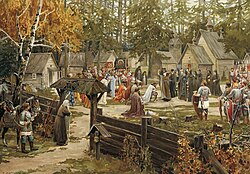
Sergius of Radonezh blessing Dmitry Donskoy in Trinity Sergius Lavra, before the Battle of Kulikovo, depicted in a painting by Ernst Lissner

Russia's geography is defined by its staggering size and varied landscapes. The nation includes diverse ecosystems, ranging from the vast Siberian wilderness to the unique waters of Lake Baikal, which is the third-largest lake island in the world.
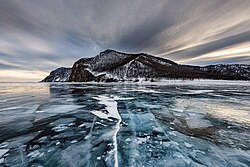
Frozen Lake Baikal near Olkhon Island, the third-largest lake island in the world
: Frozen Lake Baikal near Olkhon Island, the third-largest lake island in the world

The country's terrain is highly varied, featuring massive mountain ranges, expansive plains, and significant water bodies. For a detailed look at the physical layout of the nation, one can refer to a topographic map of the region.
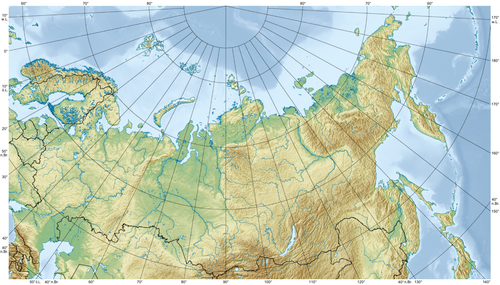
Topographic map of Russia
: Topographic map of Russia

Climate plays a critical role in Russian life and industry. The country experiences a wide range of weather patterns, which can be categorized using the Köppen climate classification—a system used to define climates based on temperature and precipitation patterns.
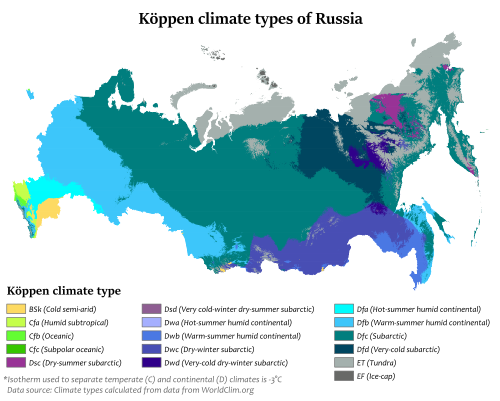
Köppen climate classification of Russia
: Köppen climate classification of Russia

Biodiversity is also a hallmark of the Russian landscape. The nation is home to significant protected areas, such as the Yugyd Va National Park in the Komi Republic, which stands as the largest national park in Europe.

Yugyd Va National Park in the Komi Republic is the largest national park in Europe.[252]
: Yugyd Va National Park in the Komi Republic is the largest national park in Europe.[252]

Historical Evolution

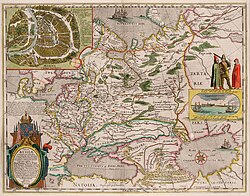
Feodor Godunov's map of Russia, as published by Hessel Gerritsz in 1614

The history of Russia is a journey through several distinct eras, beginning with early formations and evolving through various states and empires.

Early Foundations and the Tsardom

The roots of the Russian state can be traced back to the formation of Kievan Rus' in 882. Over the centuries, power shifted through various principalities, including Vladimir-Suzdal and the Grand Principality of Moscow, eventually leading to the establishment of the Tsardom of Russia in 1547.
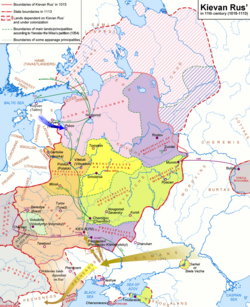
Kievan Rus' after the Council of Liubech in 1097
: Kievan Rus' after the Council of Liubech in 1097

The transition from a Grand Principality to a formal Tsardom marked a significant era of centralized rule. This was followed by the Russian Empire, established in 1721, which expanded Russia's influence significantly on the global stage.
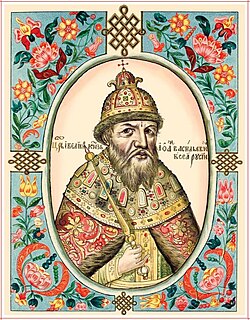
Ivan IV was the Grand Prince of Moscow from 1533 to 1547, then Tsar of Russia until his death in 1584.
: Ivan IV was the Grand Prince of Moscow from 1533 to 1547, then Tsar of Russia until his death in 1584.

The Soviet Era and Modern Independence

The 20th century brought radical transformations. Following the abolition of the monarchy in 1917, the Soviet Union was formed in 1922. This era was characterized by a command economy—an economic system where the government determines what goods are produced and the prices at which they are sold.
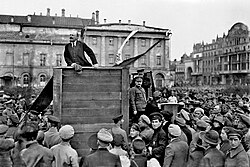
Vladimir Lenin speaks in Moscow, 1920, with Leon Trotsky leaning against the podium.
: Vladimir Lenin speaks in Moscow, 1920, with Leon Trotsky leaning against the podium.

The Soviet period included periods of intense modernization and the massive upheaval of World War II. Following the dissolution of the Soviet Union, the Russian Federation was established in December 1991, eventually adopting its current constitution in 1993.
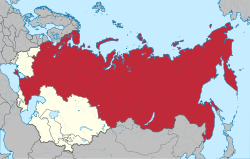
Location of the Russian SFSR (red) within the Soviet Union in 1936
: Location of the Russian SFSR (red) within the Soviet Union in 1936

Demographics and Culture

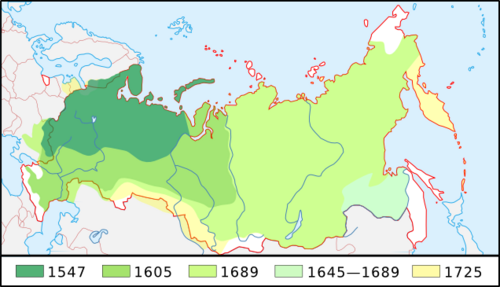
Expansion and territorial evolution of Russia from the coronation of Ivan IV to the death of Peter I

Russia is a multi-ethnic nation. While ethnic Russians make up the majority (71.7%), the country is home to significant populations of Tatars, Bashkirs, Chechens, and many other groups.

Religion and Traditions

Religion plays a significant role in the cultural fabric of the nation. Christianity, specifically Eastern Orthodoxy, is the largest religious group, followed by Islam, Buddhism, and other faiths. Since the dissolution of the Soviet Union, the Russian Orthodox Church has seen a notable revival.
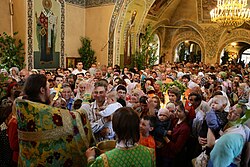
Trinity Sunday in Russia; the Russian Orthodox Church has experienced a great revival since the dissolution of the Soviet Union, a country that had a policy of state atheism.
: Trinity Sunday in Russia; the Russian Orthodox Church has experienced a great revival since the dissolution of the Soviet Union, a country that had a policy of state atheism.

Arts, Science, and Lifestyle

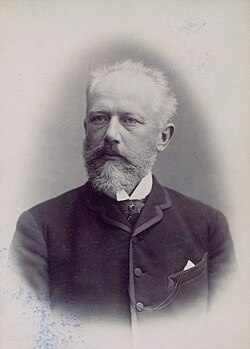
Russian culture is world-renowned for its contributions to literature, music, and science. From the polymathic achievements of scientists like Mikhail Lomonosov to the iconic compositions of Pyotr Ilyich Tchaikovsky, the nation's intellectual and artistic heritage is profound.
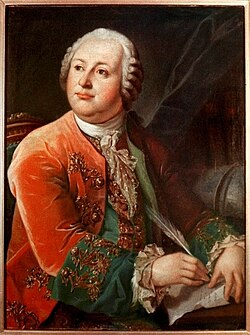
Mikhail Lomonosov (1711–1765), polymath scientist, inventor, poet and artist
: Mikhail Lomonosov (1711–1765), polymath scientist, inventor, poet and artist
Pyotr Ilyich Tchaikovsky (1840–1893), c. 1888
: Pyotr Ilyich Tchaikovsky (1840–1893), c. 1888

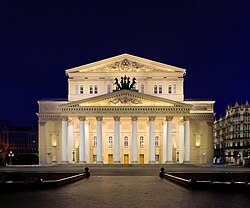
In daily life, traditional elements remain present, such as Kvass, an ancient and traditional fermented beverage. Modern urban life is centered in major hubs like Moscow and Saint Petersburg, which host world-class theaters, universities, and business centers.
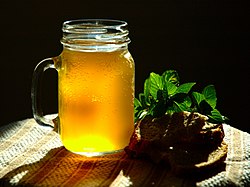
Kvass is an ancient and traditional Russian beverage.
: Kvass is an ancient and traditional Russian beverage.
classical building at night
The Bolshoi Theatre in Moscow
: The Bolshoi Theatre in Moscow
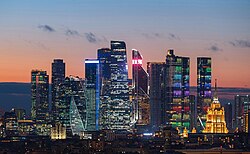
The Moscow International Business Center
: The Moscow International Business Center

Economy and Governance

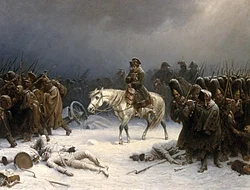
Napoleon's retreat from Moscow by Albrecht Adam (1851)

The Russian Federation operates as a federal semi-presidential republic. The government is structured with a President, a Prime Minister, and a legislature known as the Federal Assembly, which consists of the Federation Council (upper house) and the State Duma (lower house).
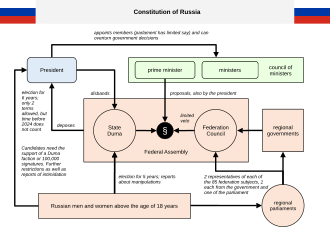
A chart of the political system in the modern Russian Federation
: A chart of the political system in the modern Russian Federation

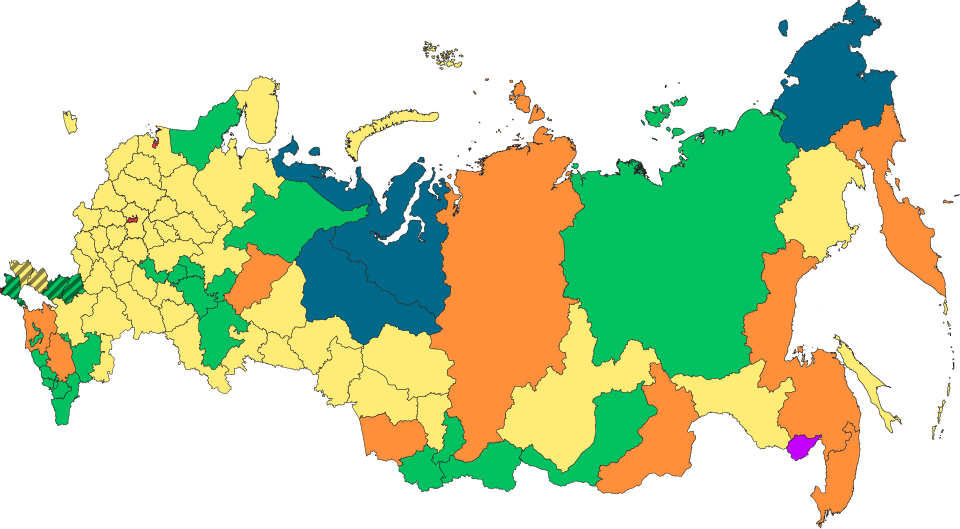
Economically, Russia is a significant player, with a substantial GDP. The economy involves a mix of traditional sectors like agriculture and energy, alongside modern industrial and technological sectors. The nation's wealth is distributed across various federal subjects, including oblasts, republics, and krais.

Summary of Key National Statistics (Estimates)
Category Value/Detail
Total Area 17,098,246 km²
GDP (PPP) 2026 Est. $7.525 trillion
GDP (Nominal) 2026 Est. $2.656 trillion
HDI (2023) 0.832 (Very High)
Official Language Russian

Frequently Asked Questions

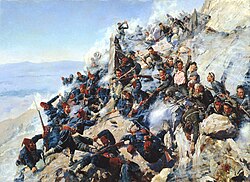
The Battle of Shipka Pass for the control of the vital Shipka Pass during the 1877–1878 Russo-Turkish War
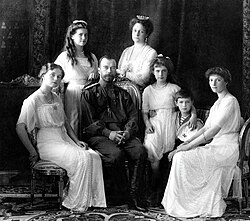
Emperor Nicholas II of Russia and the Romanovs were executed by the Bolsheviks in 1918.
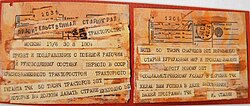
Congratulations sent by Joseph Stalin on the opening of the Stalingrad Tractor Plant
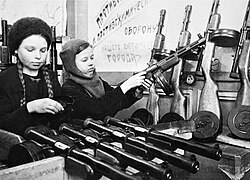
Two teenage girls assemble PPD-40 submachine guns during the Siege of Leningrad in 1942.
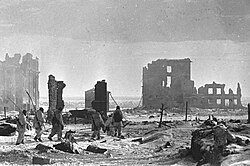
The Battle of Stalingrad, the largest and bloodiest battle in the history of warfare, ended in 1943 with a decisive Soviet victory against the German army.
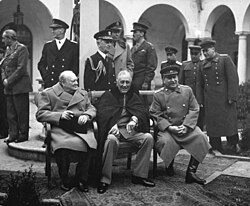
The "Big Three" at the Yalta Conference in February 1945, Winston Churchill, Franklin D. Roosevelt and Joseph Stalin
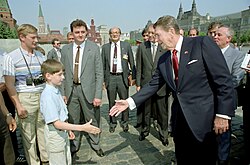
Soviet leader Mikhail Gorbachev and US President Ronald Reagan in Red Square during the Moscow Summit, 31 May 1988
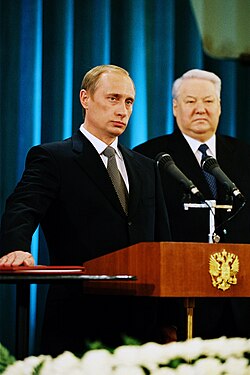
Vladimir Putin takes the oath of office as president on his first inauguration, with Boris Yeltsin looking over, 2000
President Dmitry Medvedev with U.S. President Barack Obama after signing the New START treaty on nuclear disarmament in 2010, which was suspended by Putin in 2023[211]
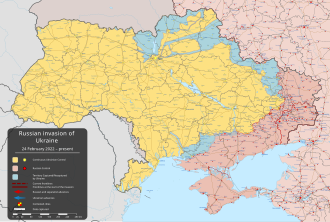
Map of Ukraine as of December 2025: Continuously controlled by Ukraine
ภาพประกอบบทความ
ภาพประกอบจากบทความต้นฉบับ
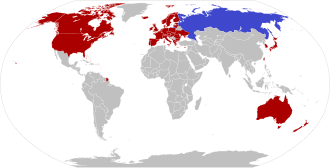
Russia Countries on Russia's "unfriendly countries and territories list"The list includes Russia's geopolitical rivals—member states of the European Union and NATO and their allies—that have imposed sanctions against it for its invasion of Ukraine.
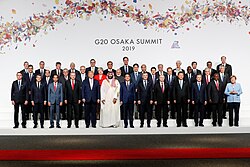
Putin with G20 counterparts in Osaka, 2019
Sukhoi Su-57, a fifth-generation fighter of the Russian Air Force[363]
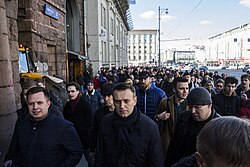
Opposition leader Alexei Navalny leading protestors in Moscow in the nationwide anti-corruption protests of 2017–2018
Following the 2022 Russian invasion of Ukraine, anti-war protests broke out across Russia. The protests have been met with widespread repression, leading to about 15,000 people being arrested.[409]
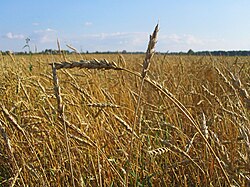
Wheat in Tomsk Oblast, Siberia
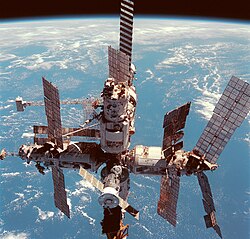
Mir, Russian space station that operated in LEO
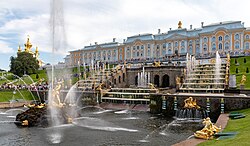
Peterhof Palace in Saint Petersburg, a UNESCO World Heritage Site
Moscow State University, the most prestigious educational institution in Russia[574]
Metallurg, a Soviet-era sanatorium in Sochi[587]
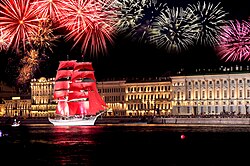
The Scarlet Sails being celebrated along the Neva in Saint Petersburg
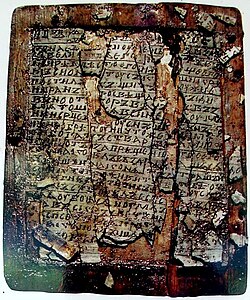
First page of the Novgorod Codex, c. 1000, the oldest surviving book of Kievan Rus'
Ostankino Tower in Moscow, the tallest freestanding structure in Europe[707]
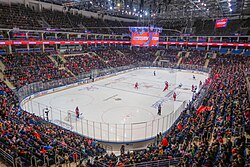
KHL match between CSKA Moscow and Dynamo Moscow at CSKA Arena, Moscow

What is the capital of Russia?

The capital and largest city of the Russian Federation is Moscow.

How many people live in Russia?

As of 2025 estimates, the population is approximately 146,028,325, including Crimea.

What are the main ethnic groups in Russia?

The largest group is ethnic Russians (71.7%), followed by Tatars (3.2%), Bashkirs (1.1%), and Chechens (1.1%).

What is the official currency used in Russia?

The official currency of the Russian Federation is the Russian ruble (₽).

What type of government does Russia have?

Russia is a federal semi-presidential republic under an authoritarian government.