Russian Far East
The Russian Far East is a vast region in North Asia, representing the easternmost reaches of both Russia and the Asian continent. Coextensive with the Far Eastern Federal District, this territory spans the immense area between Lake Baikal and the Pacific Ocean. While foreign perspectives often group this region with Siberia, Russian cultural and administrative traditions have historically categorized the Far East as a distinct entity.
Bordering Mongolia, China, and North Korea to the south, the region also maintains maritime boundaries with Japan to the southeast and the United States across the Bering Strait to the northeast. Its landscape is defined by extreme geography, featuring the Kuril–Kamchatka Trench, the Klyuchevskaya Sopka volcano, and the deep waters of Lake Baikal.
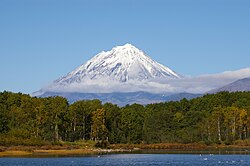
Key Facts
- Largest City: Khabarovsk, followed by Vladivostok.
- Total Area: Approximately 6,952,600 km², covering over one-third of Russia's total landmass.
- Population: 7,975,762 (2021 Census).
- Population Density: Extremely low, at roughly 1.1472 people per km².
- Key Infrastructure: Connected via the Trans-Siberian Railway and the Baikal–Amur Mainline.
Regional Geography and Administration
In Russia, the area is commonly referred to as the Far East (Dal'niy Vostok). This differs from the English usage of "Far East," which Russians typically describe as the Asia-Pacific Region (ATR) or East Asia. Administratively, the region was not officially defined until 2000, when the Far Eastern Federal District was established.
The district includes several key subjects: Amur Oblast, Chukotka Autonomous Okrug, Jewish Autonomous Oblast, Kamchatka Oblast (including Koryak Autonomous Okrug), Khabarovsk Krai, Magadan Oblast, Primorsky Krai, the Sakha (Yakutia) Republic, and Sakhalin Oblast. In 2018, Zabaykalsky Krai and the Republic of Buryatia were added to the district.
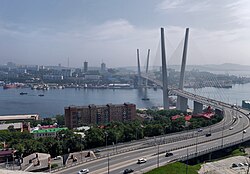
Historical Evolution
Russian Expansion and Early Administration
Russian presence on the Pacific coast began in 1647 with the founding of Okhotsk. Control was consolidated during the 19th century, particularly following the annexation of parts of Chinese Manchuria between 1858 and 1860. In 1856, Primorskaya Oblast was established with Khabarovsk as its center.
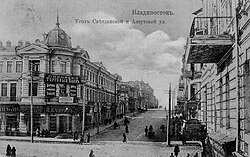
The Russo-Japanese War
At the turn of the 20th century, Russia sought a year-round warm-water port for its navy and trade. While Vladivostok was operational only in summer, Port Arthur (leased from China) provided year-round access. This strategic ambition led to conflict with Japan, which sought to protect its influence in Korea. The resulting Russo-Japanese War (1904–1905) ended in a Japanese victory, leading to the Treaty of Portsmouth. Russia ceded the southern half of Sakhalin and evacuated Manchuria.
The Soviet Era and World War II
The Soviet period was marked by significant social upheaval and strategic military movements. Between 1937 and 1939, Joseph Stalin deported over 200,000 Koreans to Central Asia due to suspicions of Japanese espionage. Additionally, the development of remote northern locations relied heavily on the Gulag (forced labor camp) system until 1953.
During World War II, Primorsky Krai served as the Soviet Pacific headquarters. In August 1945, Soviet and Mongolian troops invaded Manchukuo, Mengjiang, Korea, and South Sakhalin, and annexed the Kuril Islands.
The Cold War and Modern Era
During the Cold War, the region was a flashpoint of security. Vladivostok hosted the 1974 Strategic Arms Limitation Talks (SALT) between the US and USSR. Due to the presence of the Soviet Pacific Fleet, many cities in Primorsky Krai became "closed cities." In 2016, the Russian government proposed the Russian Homestead Act to encourage repopulation of the region.
Demographics and Culture
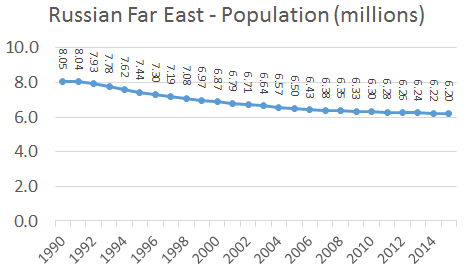
The population of the Russian Far East has declined rapidly since the fall of the Soviet Union, dropping by 14% over the last fifteen years. Most residents are concentrated in the south, with 75% living in urban centers. While ethnic Russians and Ukrainians form the majority, the region is home to diverse traditional ethnic groups:
- Mongolic: Buryats
- Turkic: Sakha
- Eskimo–Aleut: Aleuts, Siberian Yupiks
- Chukotko-Kamchatkan: Chukchi, Koryaks, Alutors, Kereks, Itelmens
- Tungusic: Evenks, Evens, Nanais, and others
- Isolates: Yukaghirs, Nivkhs, Ainus

Infrastructure and Transport
Transportation in the Far East is challenging due to the terrain. The region was not connected to the rest of Russia by domestic highways until the completion of the M58 in 2010. Interestingly, 73% of cars in the region are right-hand drive, though they are driven on the right side of the road.
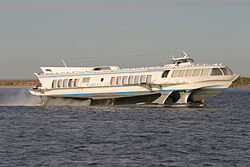
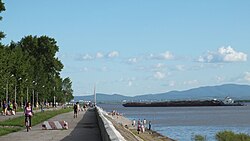
Railways, including the Trans-Siberian and the Baikal–Amur Mainline, are the primary land links. For the most remote areas, aviation is the main lifeline, while maritime transport is critical for exporting oil, gas, and ores.
Natural World: Flora and Fauna
The region is a biodiversity hotspot, home to some of the world's rarest predators, including the Amur leopard and the Siberian tiger. The bear population is particularly diverse, featuring the Ussuri black bear, polar bears, and several brown bear subspecies (Kamchatka, Ussuri, and East Siberian).
| Category | Detail |
|---|---|
| Total Area | 6,952,600 km² |
| Population (2021) | 7,975,762 |
| Population Density | 1.1472 / km² |
| Largest City | Khabarovsk |
| Urbanization Rate | 75% |
| Key Wildlife | Siberian Tiger, Amur Leopard, Polar Bear |
Frequently Asked Questions
Is the Russian Far East the same as Siberia?
While foreign sources often group them together, in Russia, the Far East is historically and administratively distinct from Siberia. The Far Eastern Federal District specifically covers the area from Lake Baikal to the Pacific Ocean.
Why are there so many right-hand drive cars in the region?
Approximately 73% of cars in the Russian Far East are right-hand drive, largely due to imports from markets like Japan, despite the fact that traffic is driven on the right side of the road.
What is the Russian Homestead Act?
Proposed by President Vladimir Putin in 2016, the Russian Homestead Act is an initiative designed to encourage people to move to and populate the sparsely inhabited Russian Far East.
Which cities are the most important in the region?
Khabarovsk is the largest city, followed closely by Vladivostok. Other significant urban centers include Ulan-Ude, Chita, and Yakutsk.
What are the main transportation challenges in the Far East?
The region suffers from poor aviation infrastructure in remote areas and only recently gained a full domestic highway connection (the M58) in 2010. Many areas rely heavily on the Trans-Siberian Railway and maritime shipping.