Rural Flight: The Drivers and History of Rural-to-Urban Migration
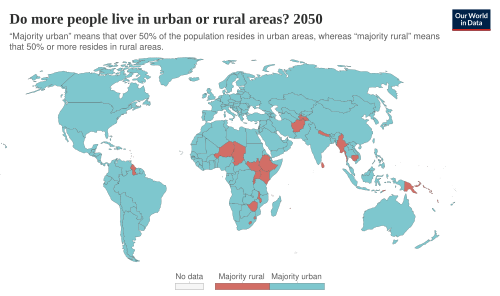
Rural flight, also known as rural depopulation or rural exodus, describes the migratory pattern where populations move from countryside areas into urban centers. While often viewed as a component of urbanization, rural flight specifically highlights the perspective of the shrinking rural landscape. This phenomenon is driven by a complex interplay of push factors—negative conditions that force people to leave—and pull factors—positive attractions that draw them toward cities.
The Mechanics of Migration: Push and Pull Factors
The movement of people is rarely random; it is usually a response to economic, social, or ecological shifts. In industrializing economies, such as Britain in the 18th century or East Asia in the 20th century, the industrialization of primary industries like agriculture, mining, and forestry often reduces the need for human labor. As these sectors become more efficient, fewer workers are required to maintain the same output, pushing them toward secondary industries like refining and processing.
Conversely, cities exert a powerful pull by offering higher wages, better access to education, and various urban amenities. Beyond economics, ecological catastrophes—such as famine or resource depletion—can trigger sudden, massive waves of migration.
Historical Evolution of Rural Exodus
Pre-Industrial Limitations
Before the Industrial Revolution, rural flight was largely localized. Pre-industrial cities lacked the infrastructure to support massive populations due to low food supplies, high mortality rates, and a lack of large-scale employment industries. For context, scholars estimate that ancient Athens and Rome peaked at approximately 80,000 and 500,000 residents, respectively.
The Industrial Revolution and Modern Shifts
The late 19th century marked a turning point. As food supplies stabilized and industrial centers emerged, the checks on urban growth were removed. In the United Kingdom, the urban population surged from 20% in 1800 to over 70% by 1925. This pattern spread globally throughout the 20th century, with intense migration seen in China and sub-Saharan Africa during the early 21st century.
![Population age comparison between rural Pocahontas County, Iowa, and urban Johnson County, Iowa, illustrating the flight of young female adults (red) to urban centers in Iowa[1]](/images/3a/44/3a448acf7e761db57fb32deaf4e402c4bfe15c2b2f98b51981f509d49ff5f1c7.jpg)
Mechanization and the Changing Face of Agriculture
Since World War II, the spread of industrialized agriculture has been a primary driver of rural flight. The traditional, labor-intensive family farm has largely been replaced by heavily mechanized, specialized industrial operations. While small farms once produced diverse crops and livestock requiring significant manual labor, modern industrial farms use high-density containment and large machinery to produce specific commodities with a fraction of the workforce.
A striking example can be seen in Iowa. According to Iowa State University, the number of hog farmers in the state dropped from 65,000 in 1980 to just 10,000 in 2002, even as the number of hogs per farm increased from 200 to 1,400.
Case Studies in Global Migration
North America and the Dust Bowl
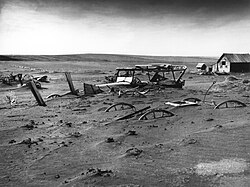
Natural disasters can act as single-point triggers for mass migration. During the 1930s, the Dust Bowl in the United States caused an exodus of 2.5 million people from the Plains by 1940. It is estimated that one in four residents of the Plains States left during this decade, many seeking new opportunities in the West.
China's Rapid Urbanization
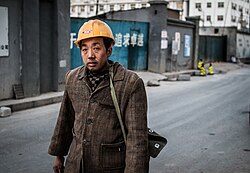
China experienced a relatively late start to rural flight due to the hukou system, which restricted internal migration until 1983. Since the lifting of these restrictions, the country has seen massive urbanization driven by income disparity, surplus rural labor, and family pressure. By the end of 2024, China's urbanization rate reached 67%, with projections suggesting it will hit 75–80% by 2035.
Mexico and the Green Revolution
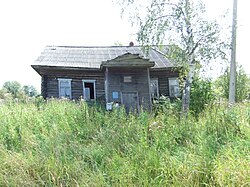
In Mexico, a combination of government policy and the Green Revolution—the introduction of hybrid seeds and chemical fertilizers—altered the landscape. While these technologies increased yields, their high costs led to the consolidation of small farms into large estates. By 1960, while 50.3% of land plots were smaller than 5 hectares, the top 0.5% of estates controlled 28.3% of all arable land, forcing many small farmers to migrate to cities or become itinerant workers.

Summary of Migration Drivers
| Region/Era | Primary Driver | Key Characteristic |
|---|---|---|
| Pre-Industrial Era | Localized movement | Limited by food supply and urban mortality |
| 19th Century Europe | Industrialization | Shift from agriculture to factory labor |
| 1930s USA | Ecological catastrophe | The Dust Bowl forced 2.5 million people to move |
| Post-WWII Era | Agricultural mechanization | Replacement of family farms with industrial farms |
| Modern China | Policy reform & economy | Lifting of the hukou system and income disparity |
Key Facts
- Push factors include famine, resource depletion, and agricultural recession.
- Pull factors include higher wages, education, and urban amenities.
- The Dust Bowl caused approximately 25% of the Plains States population to migrate in the 1930s.
- In the USSR, between 1939 and 1959, the rural population declined by 21.3 million people.
- In Sweden, the rural population dropped from 54% in 1925 to 21% in 1965 due to industrial prosperity.
Frequently Asked Questions
What is the difference between rural flight and urbanization?
Rural flight is the process of people leaving rural areas, whereas urbanization is the broader process of population growth in cities. Rural flight is essentially urbanization viewed from the perspective of the rural areas being emptied.
How does mechanization affect rural populations?
Mechanization allows fewer people to produce more goods. As large machinery replaces manual labor in farming, the demand for rural workers decreases, pushing them toward urban employment.
Can natural disasters cause rural flight?
Yes. Single-point ecological events, such as the Dust Bowl in the 1930s or the drought in Syria between 2006 and 2011, can trigger massive, rapid migrations to urban centers.
Why do young people specifically migrate to cities?
Rural youth often migrate to seek economic prosperity, transition into adulthood, or follow social norms that equate urban migration with leadership and self-respect. In Sub-Saharan Africa, youth accounted for roughly 15% of urban migrants in a 2006 study.
What was the impact of the hukou system in China?
The hukou system was a method of restricting internal migration. Since its gradual relaxation in 1983, China has experienced a massive increase in rural-to-urban migration.