Runrig: The Legacy of Scotland's Celtic Rock Pioneers
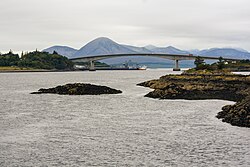
From the rugged landscapes of the Isle of Skye to the grand ramparts of Stirling Castle, Runrig stood as a titan of Scottish music for forty-five years. Blending the traditional sounds of the Highlands with the energy of modern rock, they created a unique sonic identity known as Celtic rock—a fusion of folk melodies and electric instrumentation. More than just a band, Runrig became a cultural beacon for the Scottish Gaelic language, bringing the sounds of the Gàidhealtachd (the Gaelic-speaking areas of Scotland) to a global audience.
Founded in 1973, the group evolved from a local dance band into an international act, leaving behind a discography that captured the political, social, and spiritual essence of Scotland.
Key Facts
- Origin: Formed on the Isle of Skye, Scotland, in 1973.
- Genre: Pioneers of Celtic rock and folk rock.
- Chart Milestone: First act to chart on the UK Singles Charts with a song sung in Scottish Gaelic ("An Ubhal as Àirde").
- Signature Song: "Loch Lomond," which became a national anthem of sorts and reached No. 9 in the UK with the Hampden Remix.
- Final Performance: "The Last Dance" in Stirling (August 2018), attended by approximately 52,000 fans.
The Early Years: From Dance Band to Cultural Voice (1973–1987)
Runrig began its journey as "The Runrig Dance Band," a three-piece ensemble consisting of brothers Rory MacDonald (bass, vocals) and Calum MacDonald (percussion), along with Blair Douglas. The group's sound expanded significantly in 1974 when lead singer Donnie Munro joined, helping the band move beyond their native Skye.
Their debut album, Play Gaelic (1978), was a bold statement, featuring songs entirely in the Gaelic language. This was followed by The Highland Connection (1979), released on their own label, Ridge Records. This transitional record introduced electric guitars and ballads, including the original version of "Loch Lomond," which would eventually become their most enduring signature song.
By the early 1980s, the band's thematic focus shifted toward the politics and rise of the Gaelic community, most notably on the 1981 album Recovery. The lineup solidified during this era with the addition of drummer Iain Bayne and keyboardist Richard Cherns.
Mainstream Success and the Chrysalis Era (1987–2001)
The late 1980s and 1990s marked the band's commercial peak. After signing with the major label Chrysalis, Runrig reached wider audiences across the UK and Europe. This period saw the release of five influential studio albums, including The Cutter and the Clan (1987), Searchlight (1989), and Mara (1995).
The band's popularity culminated in a massive outdoor concert at Balloch Country Park near Loch Lomond on June 22, 1991, which drew an estimated 50,000 people—the largest crowd of their career.
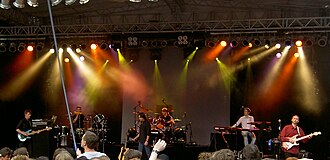
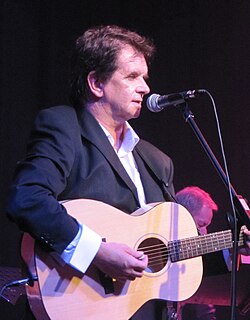
However, the late 90s brought significant change. In 1997, original lead singer Donnie Munro left the band to pursue a political career with the Labour Party, seeking a seat in the House of Commons.
Renewal and the Bruce Guthro Era (2001–2017)
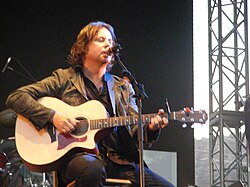
Runrig entered a new chapter in 1998 with the arrival of Canadian vocalist Bruce Guthro. This era was marked by renewed popularity and a continued commitment to their roots. In 2007, they released the "Hampden Remix" of "Loch Lomond" featuring the Tartan Army (supporters of the Scotland national football team) and Rod Stewart. The track hit number one in Scotland and number nine in the UK, earning a Silver certification from the BPI.
Despite facing health challenges—including heart operations for guitarist Malcolm Jones—the band continued to tour and record. They were inducted into the Scottish Traditional Music Hall of Fame in 2008. After a brief hiatus in 2011 to pursue solo projects, the band reunited for the Rewired Tour in 2012.
Their final studio album, The Story, was released in 2016. During its promotion, the band hinted that this would be their final recording project, setting the stage for their emotional farewell.
The Final Mile and The Last Dance (2017–2018)
On September 26, 2017, Runrig announced their retirement after 45 years. They embarked on a farewell tour titled "The Final Mile," which took them through the UK, Germany, and Denmark. The journey concluded in August 2018 with "The Last Dance" in Stirling City Park. Over two days, an estimated 52,000 fans gathered beneath the castle ramparts to witness the band's final performances.
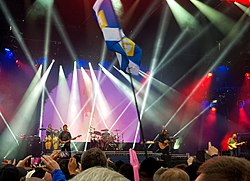
Summary of Runrig's Career
| Category | Details |
|---|---|
| Active Years | 1973–2018 |
| Key Members | Rory MacDonald, Calum MacDonald, Donnie Munro, Bruce Guthro, Malcolm Jones, Iain Bayne |
| Major Labels | Ridge Records, Chrysalis, Columbia |
| Notable Achievement | First Gaelic song to chart on UK Singles Charts ("An Ubhal as Àirde") |
| Final Album | The Story (2016) |
Frequently Asked Questions
Who were the founding members of Runrig?
The band was formed in 1973 on the Isle of Skye by brothers Rory and Calum MacDonald and their friend Blair Douglas.
Why did Donnie Munro leave the band?
Donnie Munro left Runrig in 1997 to pursue a career in politics, standing for a seat in the House of Commons for the Labour Party.
What is the significance of the song "Loch Lomond"?
"Loch Lomond" became the band's signature closing song. A 2007 remix featuring the Tartan Army reached No. 9 in the UK charts and was named "The Best Scottish Song Of All Time" in 2008.
When and where did Runrig perform their final concert?
The band's final shows, titled "The Last Dance," took place in August 2018 at Stirling City Park in Scotland.
Who replaced Donnie Munro as the lead singer?
Bruce Guthro joined the band in 1998 as the lead vocalist and remained with them until their disbandment in 2018.