Rugby Union: History, Rules, and Global Competition
Rugby union, often referred to simply as rugby or rugger, is a high-intensity, full-contact team sport that originated in the early 19th century at Rugby School in Warwickshire, England. Known for its physical demands and strategic depth, the game has evolved from a schoolboy pastime into a global phenomenon with approximately 8.4 million registered players worldwide.

The sport is characterized by its unique blend of strength, speed, and technical skill. While most popular in European and Commonwealth nations, Japan and Argentina have also become major strongholds for the game. Today, the sport is governed globally by World Rugby, which oversees the laws of the game and the organization of major international tournaments.
Key Facts
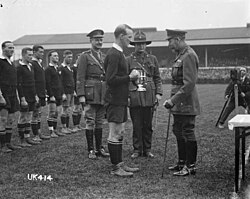
- Governing Body: World Rugby.
- Team Size: 15 players per side (with up to 8 substitutes).
- Nature of Sport: Outdoor, full-contact team sport.
- Olympic Status: Featured in 1900, 1908, 1920, and 1924; Rugby Sevens returned in 2016.
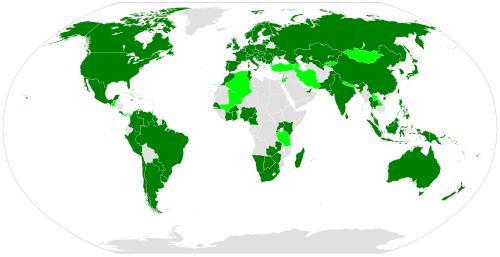
- Global Reach: Played in 119 countries with millions of participants.
The Playing Field and Equipment
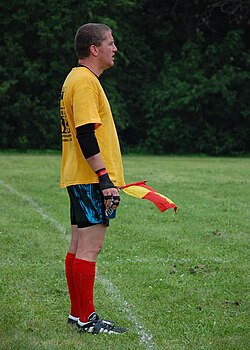
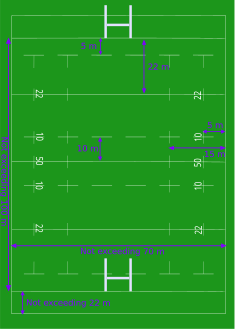
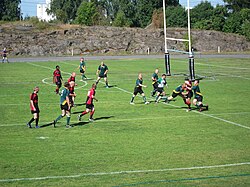
A rugby match takes place on a rugby field, which consists of the central field of play and two in-goal areas at either end. The boundaries are defined by sidelines (touchlines) and goal-lines. Flag posts are strategically placed at the intersections of touch-in-goal and dead-ball lines to assist officials.
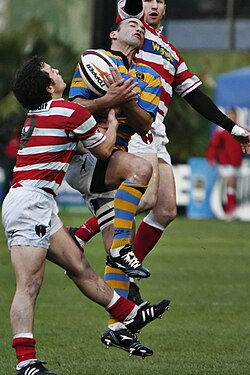
Players utilize specific equipment to ensure safety and performance. While the rugby ball is the central piece of equipment, players wear rugby boots and mouthguards. Optional gear includes scrum caps for head protection, shoulder pads, and kicking tees used by specialists to elevate the ball during restarts or conversions.
Teams and Positions
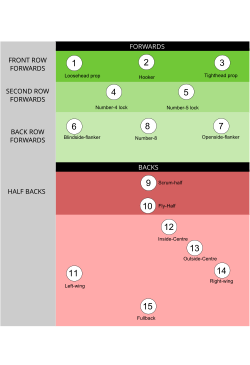
A standard rugby union team is divided into two primary groups: the forwards and the backs. Each role requires a specific physical profile and skill set.
The Forwards
The forwards are the primary engines of the team, responsible for winning possession during set pieces. They are further divided into:
- Front Row: The players who engage directly in the scrum.
- Second Row: Taller players who provide power in the scrum and compete for the ball in line-outs.
- Back Row: Versatile players who link the forwards and backs and are often the primary tacklers.
The Backs
The backs focus on speed, agility, and scoring. This group includes:
- Half-backs: The tactical links who distribute the ball from the forwards to the rest of the team.
- Three-quarters: Fast runners and powerful finishers who attempt to break the defensive line.
- Full-back: The last line of defense who handles deep kicks and launches counter-attacks.
Laws and Gameplay
Rugby is a game of territory and possession. The primary objective is to move the ball toward the opponent's in-goal area to score. A try is scored by grounding the ball in the opponent's in-goal area. Following a try, the team can attempt a conversion (a kick through the goalposts) for additional points.
Breakdowns and Tackling
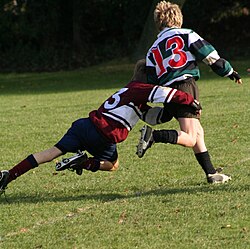
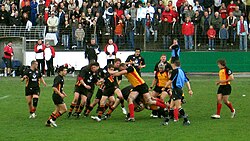
Tackling is a fundamental part of the game, used to impede the ball carrier or ground them. A legal tackle must be below the neck. Once a player is tackled, a breakdown occurs, where players from both teams compete for the ball through rucking or mauling.
Set Pieces
When play stops due to a minor infringement or the ball going out of bounds, the game restarts via set pieces:
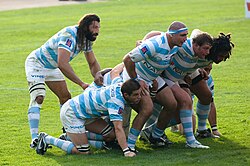
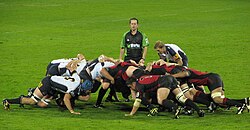
- The Scrum: A method of restarting play where the forwards of both teams bind together and push against each other to contest the ball.
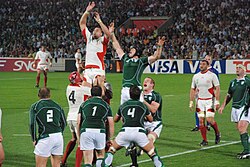
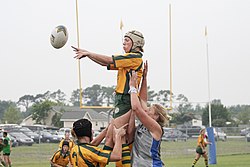
- The Line-out: Used when the ball goes into touch (out of bounds), where players are hoisted into the air to catch the ball thrown back into play.
Global Administration and Competition
World Rugby manages the sport through six regional associations:
- Rugby Africa
- Asia Rugby
- Rugby Americas North
- Rugby Europe
- Oceania Rugby
- Sudamérica Rugby
The pinnacle of the sport is the Men's and Women's Rugby World Cup. Additionally, regional tournaments like the Six Nations Championship provide high-level competition. Professionalism has led to the rise of elite leagues such as Super Rugby Pacific, the Top 14 in France, and the United Rugby Championship.
| Competition | Primary Regions/Countries | Average Attendance (Approx.) |
|---|---|---|
| Super Rugby Pacific | New Zealand, Australia, Fiji, Pacific Islands | 14,436 (2017) |
| PREM Rugby | England | 15,358 (2023–24) |
| Japan Rugby League One | Japan | 14,952 (2020) |
| Top 14 | France | 14,841 (2022–2023) |
| United Rugby Championship | Ireland, Wales, Scotland, Italy, South Africa | 10,809 (2022–23) |
Frequently Asked Questions
How many players are on a rugby union team?
A standard rugby union team consists of 15 players on the field, with up to 8 substitutes available on the bench.
What is the difference between a scrum and a line-out?
A scrum is a contest for the ball between the forwards of both teams after a minor infringement, while a line-out is used to restart play after the ball has gone out of bounds.
Who governs rugby union globally?
The sport is governed by World Rugby, which coordinates with six regional associations across Africa, Asia, North America, Europe, Oceania, and South America.
Is rugby union an Olympic sport?
Yes, rugby union was part of the Summer Olympics in the early 20th century (1900, 1908, 1920, and 1924), and the Rugby Sevens variant was reintroduced in 2016.
What is the primary goal of a tackle in rugby?
The aim of a tackle is to impede the progress of the player carrying the ball or to ground them, allowing the tackling team to contest for possession.