Rudolph Nissen: The Surgical Pioneer Behind Fundoplication
Rudolph Nissen (1896–1981) was a distinguished German surgeon whose contributions to general and thoracic surgery left a lasting mark on modern medicine. Throughout a career that spanned three continents—Turkey, the United States, and Switzerland—Nissen developed innovative techniques to treat complex conditions of the esophagus, lungs, and vascular system. He is most widely recognized today for the procedure that bears his name, the Nissen fundoplication, which remains a gold standard for treating severe acid reflux.
Key Facts
- Primary Legacy: Developed the Nissen fundoplication to treat gastroesophageal reflux disease (GERD).
- Medical Firsts: Performed the first pneumonectomy (complete lung removal) in the West in 1931.
- Notable Patient: Extended the life of Albert Einstein through the repair of an abdominal aortic aneurysm.
- Global Career: Chaired surgery departments at Istanbul University, Jewish Hospital, Maimonides Medical Center, and the University of Basel.
Early Life and Academic Foundation
Born on September 5, 1896, in Neisse, German Empire, Rudolph Nissen was the son of Franz Nissen, a prominent surgeon. His medical education was extensive, involving studies at the University of Breslau, Marburg University, and the Ludwig-Maximilians-Universität München. He further specialized in pathology under the guidance of Ludwig Aschoff at the University of Freiburg.
Nissen's early career was interrupted by World War I, where he served in a medical corps unit. During his service, he suffered a severe gunshot wound to the lung, an injury that caused lifelong health challenges but perhaps informed his later expertise in thoracic surgery. After the war, he trained under the renowned surgeon Ferdinand Sauerbruch, eventually moving to the Charité at the Friedrich Wilhelm University of Berlin in 1927.
The Evolution of Nissen Fundoplication
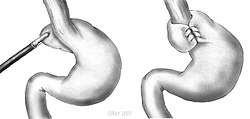
The procedure now known as the Nissen fundoplication originated from a 1936 operation in Istanbul. While treating a 28-year-old patient with an esophageal ulcer, Nissen had to remove a section of the lower esophagus. To prevent the backflow of stomach acid—a condition known as gastroesophageal reflux disease (GERD)—he wrapped the upper portion of the stomach (the fundus) around the lower esophagus to create a valve-like mechanism.
For nearly two decades, Nissen continued to treat hiatal hernias using existing methods, including anterior gastropexy (a procedure to fix the stomach's position). However, observing high relapse rates in these conventional treatments led him to revisit his 1936 success. In 1955, while practicing in Basel, he performed the wrap procedure on two patients with reflux esophagitis and published his findings in 1956, establishing the foundation for the modern fundoplication.
Pioneering Thoracic and Vascular Surgery
The First Western Pneumonectomy
Under the mentorship of Ferdinand Sauerbruch, Nissen became an expert in chest surgery. In 1931, he performed a pneumonectomy—the complete surgical removal of a lung—on a 12-year-old girl suffering from a chronic chest injury. The surgery was complex and occurred in two phases after the patient experienced asystole (a state where the heart stops beating). The patient survived for several years, marking the first successful completion of this procedure by a Western physician.
Saving Albert Einstein
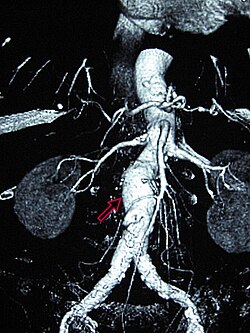
In December 1948, Nissen treated Albert Einstein for intestinal cysts. During the process, Nissen addressed an abdominal aortic aneurysm (AAA)—a dangerous dilation of the main artery in the abdomen that can lead to fatal internal bleeding if it ruptures.
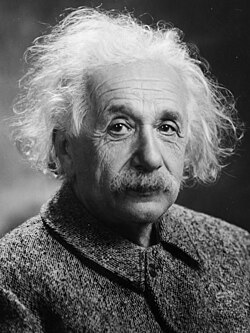
Because definitive surgical repair for AAA was not yet available in the 1940s, Nissen used a technique of wrapping the aneurysm in cellophane to induce fibrosis (the thickening and scarring of connective tissue), which reinforced the vessel wall. This intervention extended Einstein's life by several years. Einstein famously acknowledged the surgery by sending Nissen a photo of himself with the caption, "To Nissen my tummy / The world my tongue."
Career Summary and Legacy
Nissen's career was marked by resilience and internationalism. Forced to leave Germany due to the Nazi Jewish boycott in 1933, he found success in Turkey before moving to the United States in 1939. He held prestigious roles at Massachusetts General Hospital and in New York before retiring from the University of Basel in 1967.
| Contribution | Year/Period | Impact |
|---|---|---|
| Pneumonectomy | 1931 | First successful lung removal in the West. |
| Nissen Fundoplication | 1936 / 1956 | Standardized surgical treatment for GERD. |
| AAA Cellophane Wrap | 1948 | Extended the life of Albert Einstein. |
| Academic Leadership | 1933–1967 | Headed surgery departments in Turkey, USA, and Switzerland. |
Today, his legacy is honored through the Rudolf Nissen Prize, awarded by the German Society of General and Visceral Surgery, and the Rudolf-Nissen-Haus emergency admissions building at the Charité.
Frequently Asked Questions
What is a Nissen fundoplication?
It is a surgical procedure used to treat gastroesophageal reflux disease (GERD) where the upper part of the stomach is wrapped around the lower esophagus to prevent stomach acid from flowing backward.
How did Rudolph Nissen help Albert Einstein?
Nissen treated Einstein's abdominal aortic aneurysm by wrapping the dilated blood vessel in cellophane to strengthen the wall and prevent rupture, which extended the scientist's life for several years.
What was Nissen's contribution to lung surgery?
In 1931, Rudolph Nissen became the first Western physician to successfully perform a pneumonectomy, which is the complete surgical removal of a lung.
Why did Rudolph Nissen leave Germany in 1933?
Nissen left Germany for Istanbul due to the Jewish boycott initiated by the Nazi regime, despite his status as a decorated World War I veteran.
What is an abdominal aortic aneurysm (AAA)?
An AAA is a bulging or dilation of the aorta in the abdominal region. It is often asymptomatic until it is close to rupturing, which can cause immediate death from massive blood loss.