Royal Garrison Artillery: The Technical Powerhouse of the British Army
The Royal Garrison Artillery (RGA) served as the specialized technical arm of the British Army's Royal Regiment of Artillery from 1899 to 1924. While other branches focused on mobility and rapid deployment, the RGA was the custodian of heavy firepower, responsible for the professionalization of technical gunnery during one of the most transformative periods in military history.
Originally established to man the formidable forts and fortresses of the British Empire, the RGA's remit extended from coastal batteries to the massive siege guns that would eventually define the landscapes of the Western Front during the Great War.
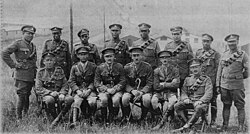
Key Facts
- Active Period: 1899–1924.
- Primary Role: Manning coastal artillery, heavy batteries, and siege artillery.
- Motto: Ubique Quo Fas Et Gloria Ducunt ("Everywhere where right and glory leads us").
- WWI Impact: Transitioned from static coastal defense to mastering indirect fire and long-range heavy artillery.
- Amalgamation: Merged with the Royal Field Artillery in 1924 to form the modern Royal Artillery.
Organizational Evolution
The RGA was created on June 1, 1899, by amalgamating existing coastal defense, mountain, siege, and heavy batteries into a single sub-branch. This reorganization was the culmination of decades of shifts in reserve force management. In the mid-19th century, the British government relied on the Militia and Volunteer Force to supplement regular troops, particularly for garrison duties.
By 1882, garrison units were organized into territorial divisions. However, these were eventually streamlined, and by 1908, the Volunteer units were incorporated into the RGA as "Defended Ports" units. A notable exception was the Bermuda Militia Artillery, which remained a vital part of the fortress colony's defense, funded and organized as part of the British Army.
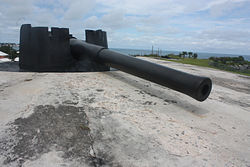
Uniforms and Identity
Until 1914, the RGA wore the traditional dark blue dress with scarlet facings and blue cloth home-service helmets. To distinguish themselves from the Royal Horse Artillery (RHA) and Royal Field Artillery (RFA) in the field, they adopted gilded metal "R.G.A." shoulder titles for their khaki service dress in 1907.
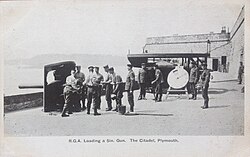
Coastal Defence and the Shift in Warfare
Fixed artillery—guns designed to remain stationary—was the RGA's primary focus. These batteries protected strategic ports and cities from naval incursions. Historically, it was believed that a naval force required a three-to-one advantage to defeat coastal artillery because land-based guns offered superior stability and accuracy.
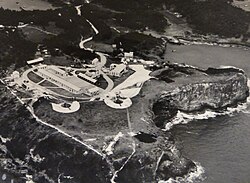
However, the early 20th century saw the rise of massive capital ships with 16-inch guns, which could outrange the RGA's typical 6-inch or 9-inch batteries. This technological leap, combined with the advent of aircraft and missiles, rendered fixed fortifications obsolete. By the 1950s, the last of these coastal artillery installations were removed from service.
The RGA in the First World War
The Great War fundamentally changed the RGA. With very little heavy artillery at the start of the conflict in 1914, the RGA quickly became the primary operator of heavy and siege artillery, as well as railway guns. To meet the demand for firepower on the Western Front, manpower was stripped from idle coastal batteries and reassigned to the field.
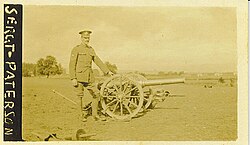
The Mastery of Indirect Fire
The introduction of long-range small arms made it too dangerous for artillery to fire from the front lines. The RGA adopted the principle of indirect fire, positioning guns well behind the infantry and targeting unseen enemies via forward artillery observers. This evolved into a scientific process using geometry, mathematics, and coordinates on a map.
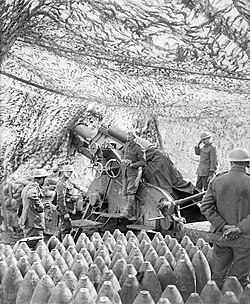
The RGA also pioneered cooperation with the Royal Flying Corps (RFC). Pilots used wireless telegraphy to send Morse code corrections (such as "A5" or "B3") to land stations, allowing heavy batteries to adjust their aim in real-time.
Expansion and Specialization
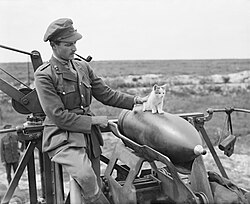
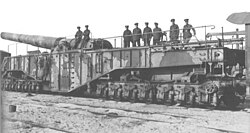
The scale of the RGA's growth was immense. Heavy batteries grew from 32 in 1914 to 117 by the war's end, while siege batteries exploded from just three regular batteries to 401. These units utilized massive howitzers and railway guns to shatter enemy defenses.

The human experience of the RGA was also captured through art; Gunner F. J. Mears, medically discharged in 1917, became a noted artist of WWI battlefield scenes.

Air Defence and Mountain Batteries
Beyond the trenches, the RGA adapted to new threats. By February 1916, the army assumed full responsibility for the air defense of the United Kingdom. By November 1917, over 8,000 RGA men were manning anti-aircraft defenses. Additionally, the RGA managed mountain batteries, with 20 batteries serving in India, Macedonia, Palestine, and Mesopotamia by 1918.
Re-amalgamation and Legacy
Following the war, the distinction between the RGA and the Royal Field Artillery became blurred, as heavy field artillery operations mirrored field artillery tactics. In 1924, the RGA was re-amalgamated into the Royal Artillery, ending its existence as a separate entity.
Post-war budget cuts further reduced coastal defenses. In 1926, UK coastal batteries were handed over to the Territorial Army. In 1928, regular units were withdrawn from the Bermuda Garrison, leaving the Bermuda Militia Artillery to take full responsibility for the colony's coastal defense.
| Feature | Early Period (1899-1914) | WWI Period (1914-1918) | Post-War (1919-1924) |
|---|---|---|---|
| Primary Focus | Coastal & Fortress Defence | Heavy & Siege Artillery | Heavy Field Artillery |
| Key Tactics | Direct Fire / Fixed Platforms | Indirect Fire / Map Coordinates | Integrated Field Operations |
| Key Technology | 6" and 9" Coastal Guns | Railway Guns & Wireless Telegraphy | Mobile Heavy Artillery |
| Organization | Separate Technical Branch | Massive Expansion of Siege Batteries | Amalgamated into Royal Artillery |
Frequently Asked Questions
What was the primary purpose of the Royal Garrison Artillery?
The RGA was the technical branch of the Royal Artillery, originally tasked with manning the fixed guns of the British Empire's forts, coastal batteries, and siege artillery.
How did the RGA change during World War I?
The RGA shifted from static coastal defense to operating heavy and siege artillery in the field. They pioneered indirect fire and used wireless telegraphy from aircraft to coordinate long-range strikes.
What is "indirect fire" in the context of the RGA?
Indirect fire is the technique of engaging a target that is not visible to the gun crew. This required the artillery to be positioned behind the front lines, relying on forward observers and mathematical coordinates to hit targets.
Why was the RGA amalgamated in 1924?
After WWI, the operational differences between heavy field artillery (RGA) and field artillery (RFA) had diminished. Maintaining them as separate corps became unnecessary, leading to their merger into the Royal Artillery.
What role did the Bermuda Militia Artillery play?
The Bermuda Militia Artillery was a part-time reserve force that helped man the coastal batteries of the important Fortress colony of Bermuda, eventually taking full responsibility for its coastal defense in 1928.