RosUkrEnergo and Gazprom: The 2009 Gas Crisis Legal Battles
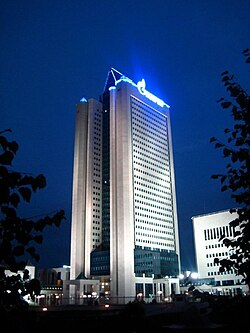
The 2009 gas crisis between Ukraine and Russia triggered a complex web of international arbitration and domestic criminal prosecutions. At the center of this conflict were three entities: Gazprom (the Russian state-owned energy giant), NAK Naftogaz (the Ukrainian state-owned energy company), and RosUkrEnergo (RUE), a Swiss-registered intermediary company.
The dispute primarily revolved around unpaid debts for natural gas and the subsequent legal struggle over the ownership and transfer of billions of cubic meters of fuel.
Key Facts
- The Debt: RosUkrEnergo failed to pay Gazprom $1.7 billion for 11 billion cubic meters (bcm) of gas in January 2009.
- The Settlement: Naftogaz paid RUE's $1.7 billion debt to Gazprom to secure the gas supply.
- Arbitration: The Stockholm Arbitral Court eventually ordered Naftogaz to return 11 bcm of gas plus 10% compensation to RosUkrEnergo.
- Structural Change: Gazprom exited RosUkrEnergo in April 2010, leaving it as a private company controlled by Firtash.
- Criminal Charges: Several high-ranking Ukrainian officials were arrested for their roles in clearing the gas into Naftogaz's accounts.
The Stockholm Arbitral Court Proceedings
The legal battle began in April 2008 when RosUkrEnergo filed a suit against Naftogaz. By January 2009, RUE had filed three additional suits, while Naftogaz responded with four counter-claims. All these disputes were consolidated into a single case before the Arbitral Court under the Stockholm Chamber of Commerce.
On April 2, 2010, the court issued an interim decision regarding RUE's $2 billion claim, ordering Naftogaz to repay $19 million. By July 8, 2010, an "amicable settlement" was reached. Under this agreement, Naftogaz admitted to RUE's claims and was bound to return 11 bcm of gas plus 10% compensation.
Financial Implications of the Gas Transfer
The gas in question had been destined for RosUkrEnergo in January 2009, but because RUE had not paid Gazprom, Naftogaz stepped in to pay the $1.7 billion debt. In exchange, Gazprom transferred the 11 bcm of gas to Naftogaz at a price of $156 per 1,000 cubic meters.
Between November 2010 and April 2011, Naftogaz transferred a total of 12.1 bcm (the original 11 bcm plus 10% compensation) to RosUkrEnergo. While RUE paid Naftogaz back the $1.7 billion, the market value of the gas by 2011—with EU prices at $490 per 1,000 cubic meters—was estimated at no less than $5.4 billion.
Criminal Prosecutions in Ukraine
Parallel to the civil arbitration, the Ukrainian government launched several criminal cases against officials involved in the 2009 interstate agreement aimed at resolving the gas crisis.
The Case of Didenko, Makarenko, and Shepitko
Three key figures were arrested in mid-2010: Anatoly Makarenko (former head of Ukrainian Customs), Igor Didenko (former first deputy head of Naftogaz), and Taras Shepitko (deputy head of a department of the Energy Regional Customs).
These individuals were accused of illegally clearing and placing 11 bcm of gas—originally supplied for RosUkrEnergo but unpaid—into the balance account of Naftogaz. This unpaid debt of $1.7 billion was cited as the primary reason Russia halted gas transit to Ukraine and Europe for 20 days in January 2009.

The Case of Maria Kushnir
Maria Kushnir, the deputy chief accountant of Naftogaz, became the fourth convict in the RUE gas case. The Security Service of Ukraine (SBU) alleged she was hired specifically to facilitate the customs clearance of RUE's gas. Initially charged with negligence (Article 367 of the Criminal Code), her charges were upgraded to "abuse of office duties" (Article 364) on September 9, 2010.
Kushnir was detained in the Volgograd region of Russia on September 10, 2010, and extradited to Ukraine a month later, where she remained in a detention center (SIZO) until at least October 2011.
Political Aftermath and Releases
The legal proceedings were often intertwined with high-level diplomacy. In July 2011, Anatoly Makarenko and Taras Shepitko were unexpectedly released from detention, though their cases remained open with travel restrictions.
Observers noted the timing of these releases coincided with a meeting between Russian Prime Minister Vladimir Putin and President Viktor Yanukovich. Reports suggested that Russia may have linked these releases to a request to cease persecutions of Yulia Tymoshenko. Furthermore, Putin stated that Russia opposed the reconsideration of the January 19, 2009, gas agreement, viewing criticism of the deal as a political attempt to discredit previous administrations.
The legal saga for Makarenko concluded on July 20, 2012, when the Pechersky district court sentenced him to four years of imprisonment with a delayed penalty.
Summary of Key Entities and Outcomes
| Entity/Person | Role | Key Outcome/Action |
|---|---|---|
| Gazprom | Russian Supplier | Exited RosUkrEnergo in April 2010; received $1.7bn debt payment. |
| Naftogaz | Ukrainian State Company | Paid RUE's debt; later returned 12.1 bcm of gas to RUE. |
| RosUkrEnergo | Swiss Intermediary | Became fully private; received 12.1 bcm of gas from Naftogaz. |
| Anatoly Makarenko | Customs Head | Sentenced to 4 years (delayed penalty) in 2012. |
| Maria Kushnir | Deputy Accountant | Extradited from Russia; charged with abuse of office. |
Frequently Asked Questions
Why did Russia stop gas transit in January 2009?
The primary reason was the $1.7 billion indebtedness of RosUkrEnergo to Gazprom for 11 billion cubic meters of gas.
What was the result of the Stockholm Arbitral Court case?
The court approved a settlement requiring Naftogaz to return 11 billion cubic meters of gas plus 10% compensation to RosUkrEnergo.
How did the ownership of RosUkrEnergo change?
Prior to April 2010, Gazprom owned 50% of the company. After withdrawing as a co-founder, RosUkrEnergo became a private company with a controlling block of shares held by Firtash.
Who were the primary officials prosecuted in Ukraine?
The main figures arrested were Anatoly Makarenko, Igor Didenko, Taras Shepitko, and Maria Kushnir.
What was the financial discrepancy in the gas return?
While RUE paid Naftogaz $1.7 billion, the 12.1 bcm of gas transferred back to RUE was valued at approximately $5.4 billion based on 2011 EU market prices.