Rosettes in Honors and Awards: Meaning and Usage
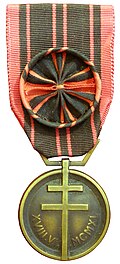
In the world of formal honors and military decorations, a rosette is a small, circular device typically presented alongside a medal. Often referred to as bowknots due to their shape, these devices serve as critical visual indicators of rank or membership. Depending on the tradition, a rosette may be attached directly to a medal's suspension ribbon or worn independently on civilian clothing, such as a suit, when wearing a full medal is deemed inappropriate.
Rosettes are widely utilized by state orders in nations including France, Belgium, Italy, Japan, and the Netherlands, as well as by those awarded knighthoods or damehoods in chivalric orders. Beyond government honors, certain fraternal orders and hereditary societies, such as the Society of Descendants of the Latin Kingdom of Jerusalem, also issue rosettes to their members.
Key Facts
- Purpose: Used to denote higher ranks within an order or as a discreet alternative to full medals on civilian attire.
- Placement: Can be pinned to the suspension ribbon of a medal or worn as a lapel pin.
- Rank Indicators: In many European systems, a rosette signifies the rank of Officer; higher ranks may add gold or silver "half-knots" (bars).
- Variations: Some countries use silver rosettes to indicate multiple awards of the same decoration.
European Traditions and State Orders
France and Belgium
France and Belgium follow similar protocols for their national decorations. In France, the Légion d'honneur (Legion of Honor) and the Ordre national du Mérite authorize rosettes for those holding the rank of officer or above. For higher grades, the rosette is further embellished with gold and/or silver bars, known as half-knots, placed on either side.

Similarly, in Belgium, a rosette adorns the ribbon of all national Orders of Merit—including the Order of Leopold, the Order of the Crown, and the Order of Leopold II—at the rank of Officer. Those in ranks above Officer (Commander, Grand Officer, and Grand Cross) may wear rosettes adorned with gold and/or silver half-knots on civilian dress.
The Netherlands
The Netherlands utilizes rosettes for several state awards, including the Military William Order, the Order of the Netherlands Lion, and the Order of Orange-Nassau. The rosette typically appears on the suspension ribbon for the rank of Officer (Knight Third Class).

For daily use, the Netherlands provides lapel badges consisting of a small bow in the decoration's colors. While the Officer rank uses a standard rosette, higher ranks (Commander, Grand Officer, and Knight Grand Cross) use rosettes with half-knots. Since 1995, standardized lapel badges have largely replaced the traditional lapel rosette pin. Additionally, the Cross of Merit of the Netherlands Red Cross uses a rosette to distinguish it from the Medals of Merit, though this rosette is not found on the suspension ribbon.
Anglo-American Usage
United Kingdom
In the UK, small silver rosettes are used differently. Rather than denoting a specific rank in a chivalric order, they are often added to ribbons worn in place of medals to indicate multiple award bars—meaning the decoration for merit or distinguished service was awarded more than once.

Certain campaign medals, such as the 1939-45 Star, the Atlantic Star, and the Gulf War Medal 1991, also allow for these rosettes if the recipient met specific combat service criteria. Notably, the Victoria Cross and George Cross do not use this system.
United States
In the United States, the Medal of Honor is issued with a light blue rosette featuring white stars (approximately 1/2 inch in size), which is authorized for wear as a civilian lapel button.

While the Purple Heart previously utilized a purple and white rosette, it has since been replaced by a metallic lapel pin designed as a miniature version of the service ribbon. Similarly, members of the Sons of the American Revolution wear blue-and-buff rosettes as lapel buttons, mirroring the colors of General George Washington's Continental Army uniform.
Summary of Rosette Usage by Region
| Country/Entity | Primary Meaning | Distinguishing Features |
|---|---|---|
| France & Belgium | Rank (Officer and above) | Half-knots (gold/silver) for higher grades |
| Netherlands | Rank (Officer and above) | Small bows for daily lapel wear |
| United Kingdom | Multiple Awards / Combat Service | Small silver rosettes on ribbons |
| United States | Specific Honor / Membership | Light blue with stars (Medal of Honor) |
Frequently Asked Questions
What is the difference between a rosette and a medal?
A medal is the primary decoration, while a rosette is a smaller, circular accessory. The rosette is used either to indicate a specific rank on the medal's ribbon or as a discreet substitute for the medal on civilian clothing.
What are "half-knots" on a rosette?
Half-knots are small gold or silver bars placed on the sides of a rosette. In systems like the French Légion d'honneur or Belgian Orders of Merit, these bars signify a rank higher than that of Officer.
Can rosettes be worn on a business suit?
Yes. Lapel rosettes or buttonhole insignia are specifically designed for civilian dress when wearing full military or state medals would be inappropriate.
Do all military medals have rosettes?
No. Rosettes are typically reserved for specific ranks within chivalric orders, multiple awards of a specific merit decoration, or very high-level honors like the U.S. Medal of Honor.
How does the UK use rosettes differently than France?
In France, a rosette generally denotes the rank of the recipient (e.g., Officer). In the UK, silver rosettes on ribbons often indicate that the recipient has been awarded the same decoration multiple times.