Rosario Santa Fe Western Station: From Railway Terminus to Cultural Hub
Located in the heart of the province of Santa Fe, Argentina, the Rosario (Santa Fe Western) station stands as a testament to the golden age of rail and the resilience of urban heritage. Once a bustling terminus for regional trade, this historic site has transitioned from a center of industrial logistics to a vibrant sanctuary for art and community engagement.
The station is situated in the southeast of Rosario within the scenic Parque Urquiza, positioned at the junction of Chacabuco and 9 de Julio streets, near the ravines of the Paraná River.
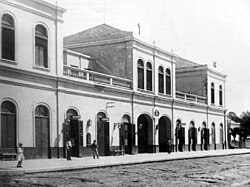
Key Facts
- Opened: 1883
- Original Owner: Santa Fe Western Railway
- Later Operator: Central Argentine Railway
- Current Use: Cultural center and community hub
- Restoration Date: Completed May 2007
- Location: Parque Urquiza, Rosario, Argentina
A History of Transit and Transformation
The station was established in 1883 by the Santa Fe Western Railway to serve as a critical terminus in the region. For nearly two decades, it operated as a primary gateway for the company's rail services. However, the landscape of Argentine rail shifted in 1900 when the Central Argentine Railway acquired the Santa Fe Western Railway.
Following this acquisition, the station was renamed Rosario Este. Under this new designation, its purpose shifted away from general passenger travel to focus exclusively on the transport of cargo and cattle, reflecting the agricultural priorities of the era.
Decline and Abandonment
As the broader Argentine railway system entered a period of decline, the station suffered a similar fate. The rails were eventually removed, and the building fell into a state of abandonment and deterioration, mirroring the fate of many other railway structures across the country.
Restoration and Cultural Rebirth
Recognizing the architectural and historical value of the site, the Municipality of Rosario took ownership of the property to preserve its remaining structure. After a long period of planning and work, a comprehensive restoration was completed in May 2007.
Today, the building has been repurposed as a multifaceted cultural center. It currently houses the video library of the Centro Audiovisual Rosario (CAR), the Rosario Audiovisual Center. Beyond its role as an archive, the station serves as a community center for senior citizens and a dedicated meeting space for local sculptors.
Further developments include the relocation of the Municipal Culture Secretariat offices to the site and the establishment of an auditorium designed for public activities and film projections.
Station Summary
| Feature | Details |
|---|---|
| Coordinates | 32°57′22.61″S 60°37′27.29″W |
| Original Name | Rosario (Santa Fe Western) |
| Secondary Name | Rosario Este |
| Current Owner | Municipality of Rosario |
| Primary Current Function | Cultural Center / Video Library |
Frequently Asked Questions
When was the Rosario Santa Fe Western station opened?
The station was opened in 1883 by the Santa Fe Western Railway company.
Why was the station renamed Rosario Este?
It was renamed Rosario Este in 1900 after the Central Argentine Railway purchased the Santa Fe Western Railway, at which point the station was designated for cargo and cattle exclusively.
What happened to the railway tracks?
As the Argentine railway system declined, the rails were removed, leading to a period where the station was abandoned and deteriorated.
What is the station used for today?
The building is now a cultural center housing the Rosario Audiovisual Center's video library, a community center for senior citizens, a meeting place for sculptors, and offices for the Municipal Culture Secretariat.
Where exactly is the station located?
It is located in the southeast of Rosario, Argentina, within Parque Urquiza at the intersection of Chacabuco and 9 de Julio streets.