Rosarigasino: The Secret Rhyming Slang of Rosario
In the heart of Santa Fe province, Argentina, exists a linguistic curiosity known as Rosarigasino (also referred to as Gasó). More of a language game than a formal dialect, this rhyming slang is deeply tied to the cultural identity of the city of Rosario, though it is rarely spoken in daily conversation today.
Similar to the popular Spanish word game jeringonza, Rosarigasino transforms standard speech into a coded version that is challenging for outsiders to decipher. While it may seem like a playful exercise now, its roots are grounded in a need for secrecy.
The Origins of Gasó
The exact beginnings of Rosarigasino are shrouded in some uncertainty, but historians and scholars generally agree on its purpose. It is believed to have been developed in the early 20th century by local prisoners. By creating a specialized way of speaking, inmates could communicate with one another without being understood by the prison guards.
How Rosarigasino Works
The mechanics of the language are based on a specific phonetic formula. To convert a word into Rosarigasino, two syllables are added to the original term. The sequence -gas- is inserted immediately after the stressed vowel of the word, followed by a repetition of that same vowel before completing the word.
The name of the language itself is a perfect example: it is derived from rosarino (the demonym for residents of Rosario), transformed into rosarigasino.
Below are several examples of how common terms are modified:
- Colectivo (bus) becomes colecti gasi vo
- Peatonal (pedestrian street) becomes peatona gasa l
- Calle Córdoba (Córdoba St.) becomes Ca gasa lle Co gasó rdoba
- Monumento a la Bandera (Flag Memorial) becomes Monume gase nto a la Bande gase ra
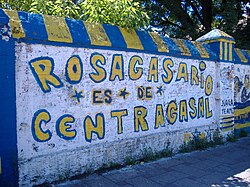
Cultural Legacy and Literature
Despite its limited current use, Rosarigasino has left a mark on the arts and local institutions. The city of Rosario hosts an Association or Academia of Gasó, and learning manuals are still available for purchase in certain locations.
The language has also been applied to high literature and cinema. In 2005, translator Bernardo "Chiquito" Reyes published a complete version of Miguel de Cervantes' Don Quixote de la Mancha written entirely in Rosarigasino, titled Don Quijogasote de la Magasancha. Additionally, the 2001 film Rosarigasinos, directed by Rodrigo Grande, utilized the term to explore local themes.
| Feature | Details |
|---|---|
| Alternative Name | Gasó |
| Origin Location | Rosario, Santa Fe, Argentina |
| Estimated Origin | Early 20th Century (Prisoners) |
| Linguistic Rule | Insert "-gas-" + repeated stressed vowel |
| Notable Work | Don Quijogasote de la Magasancha (2005) |
Key Facts
- Rosarigasino is a rhyming slang language game from Rosario, Argentina.
- It was originally created by prisoners to avoid detection by guards.
- The transformation involves adding the sequence "-gas-" and repeating the stressed vowel.
- A full translation of Don Quixote exists in this language.
- It is closely related to the game of jeringonza.
Frequently Asked Questions
What is the difference between Rosarigasino and a real language?
Rosarigasino is considered a language game or rhyming slang rather than a standalone language. It relies on the existing structure of Spanish but applies a consistent phonetic rule to modify words.
Who created Rosarigasino?
While the specific individuals are unknown, scholars believe it was created by prisoners in Rosario during the early 1900s to communicate secretly.
Is Rosarigasino still spoken today?
Very few people, if any, use it in daily conversation today, though it remains a point of cultural interest and is preserved by the Association of Gasó.
How do you translate a word into Rosarigasino?
You find the stressed vowel of the word, insert "-gas-" immediately after it, and then repeat that vowel before finishing the word. For example, "peatonal" becomes "peatona gasa l".
What is Don Quijogasote de la Magasancha?
It is a 2005 translation of Cervantes' Don Quixote de la Mancha, rewritten entirely in the Rosarigasino slang by Bernardo "Chiquito" Reyes.