Rollins Band: The Evolution of Henry Rollins' Musical Journey
Formed in Van Nuys, California, Rollins Band stands as a powerhouse of American rock, blending raw intensity with sophisticated musicality. Led by the formidable Henry Rollins—formerly the vocalist for the legendary punk outfit Black Flag—the band carved out a unique space in the alternative music landscape between 1987 and 2006. Known for their uncompromising sound and cathartic energy, they bridged the gap between the aggression of hardcore punk and the complexity of jazz and funk.
Throughout their career, the band became synonymous with a high-energy fusion of styles. Critic Steve Huey described their work as intense blends of funk, post-punk, noise, and jazz experimentalism, anchored by Rollins' biting, self-examining lyrical delivery. This unique approach earned them a spot at No. 47 on VH1's 100 Greatest Artists of Hard Rock in 2000.
Key Facts
- Founder: Henry Rollins (former Black Flag vocalist).
- Origin: Van Nuys, California, U.S.
- Primary Genres: Alternative metal, post-hardcore, hard rock, and funk metal.
- Major Hits: "Liar" and "Low Self Opinion," both heavily rotated on MTV in the 1990s.
- Active Periods: 1987–1997, 1999–2003, and a brief reunion in 2006.
- Legacy: Influenced later nu metal and alternative bands like Korn, Godsmack, and System of a Down.
Musical Foundations and Early Years (1980–1986)
Before the formation of the Rollins Band, Henry Rollins established himself in the punk scene. He sang for the Washington, D.C. band State of Alert from October 1980 to July 1981, before joining Black Flag in August 1981. While Black Flag avoided mainstream fame, their grueling tour schedule cemented them as one of the most influential punk bands of the 1980s.
Following Black Flag's dissolution, Rollins collaborated with guitarist Chris Haskett, bassist Bernie Wandel, and drummer Mick Green. This early iteration released two records: Hot Animal Machine (a solo Rollins project) and Drive by Shooting (credited to "Henrietta Collins and the Wifebeating Childhaters"). These works began the transition from pure punk toward heavy metal and funk influences.
The First and Second Editions (1987–1997)
The official Rollins Band emerged with a lineup featuring Chris Haskett, bassist Andrew Weiss, and drummer Sim Cain. This ensemble was praised for its "jazzy, thrashy" take on rock, blending the power of metal with an inventive rhythmic clock. However, creative and personal tensions eventually led to the departure of Weiss after the End of Silence tour.
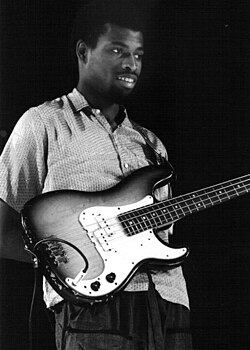
The band entered a new era with the addition of jazz and funk veteran Melvin Gibbs. This lineup leaned heavily into jazz fusion, influenced by the electric era of Miles Davis and the work of Ronald Shannon Jackson. During this period, the band recorded with free jazz saxophonist Charles Gayle, though the resulting sessions, Weighting, were not released until 2003.
The 1994 album Weight brought the band significant mainstream success. The music video for "Liar," featuring Rollins in various costumes, became an MTV staple. The band also performed at Woodstock '94. Despite this peak, legal battles with Imago Records and a perceived creative stagnation following the release of Come In and Burn (1997) led Rollins to dissolve the group.
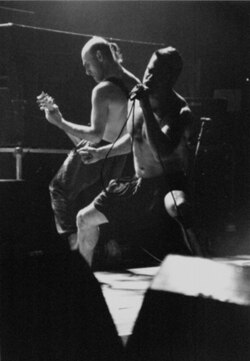
Later Iterations and Retirement (1999–2011)
In 1999, Rollins rebranded the band by recruiting the Los Angeles rock group Mother Superior. This version of the Rollins Band shifted toward a more straightforward hard rock sound, releasing albums such as Get Some Go Again (2000) and Nice (2001). This era was marked by a fondness for Thin Lizzy, evidenced by their cover of "Are You Ready?"
A brief reunion of the Haskett-Gibbs-Cain lineup occurred in 2006. Rollins emphasized that he only wanted to reunite if the band could move forward artistically rather than simply playing "retreads." They performed on the finale of The Henry Rollins Show before returning to a hiatus.
In 2011, Rollins officially announced his retirement from music, bringing the Rollins Band to a permanent close. The music community later mourned the loss of former member Jason Mackenroth, who passed away from prostate cancer in 2016.
Musical Style and Lasting Influence
The Rollins Band sound was a sophisticated mix of alternative metal and post-hardcore. Guitarist Chris Haskett noted the heavy influence of King Crimson's early 70s work, specifically the use of flatted fifths to create dark tonalities and the use of collective improvisation. This approach allowed the band to move dynamically between crushing volume and near silence.
As a fixture of the 1990s Los Angeles scene alongside bands like Tool and Rage Against the Machine, the Rollins Band helped define the alternative metal genre. Henry Rollins' aggressive shout-singing style became a blueprint for many nu metal artists. Their impact is further evidenced by Pearl Jam covering the songs "Tearing" and "Shine."
| Category | Details |
|---|---|
| Origin | Van Nuys, California |
| Key Members | Henry Rollins, Chris Haskett, Sim Cain, Melvin Gibbs, Andrew Weiss |
| Notable Albums | Weight, Come In and Burn, Get Some Go Again |
| Influences | King Crimson, Miles Davis, Thin Lizzy, Grateful Dead |
| Major Labels | DreamWorks, Sanctuary, Imago, 2.13.61 |
Frequently Asked Questions
Who was the lead singer of Rollins Band?
The band was led by Henry Rollins, who previously served as the vocalist for the influential punk rock band Black Flag.
What are the most famous songs by Rollins Band?
The band is best known for "Liar" and "Low Self Opinion," both of which received significant airplay on MTV during the early to mid-1990s.
How did the band's style change over time?
The band evolved from a punk-influenced sound to a complex fusion of jazz, funk, and alternative metal in the mid-90s, before transitioning to a more straightforward hard rock style with the Mother Superior lineup.
Why did the band eventually break up?
The original group dissolved in 1997 due to creative stagnation. While there were later iterations and a brief reunion in 2006, Henry Rollins officially retired from music in 2011.
Which other bands were influenced by Rollins Band?
Rollins' vocal style and the band's sound influenced several alternative and nu metal acts, including Korn, Godsmack, Chevelle, Coal Chamber, and System of a Down.