Rogelio Yrurtia: The Master of Argentine Realist Sculpture
Rogelio Yrurtia (1879–1950) stands as one of the most influential figures in Argentine art history. A master of the Realist school—an artistic movement focused on depicting subjects as they appear in everyday life without idealization—Yrurtia blended classical training with a profound sense of human emotion and civic duty. From the studios of Paris to the public plazas of Buenos Aires, his work captured the spirit of his era and the identity of his nation.
Early Life and European Training
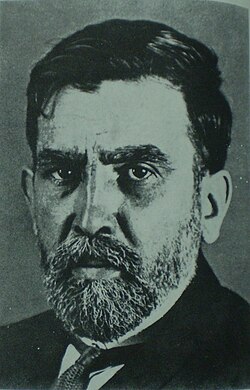
Born in Buenos Aires to Basque immigrants, Yrurtia's journey into the arts began in 1899 when he enrolled in the local Society for the Promotion of Fine Arts. His exceptional talent quickly earned him a scholarship to study in Paris, the global center of art at the time. He attended the prestigious Académie Julian, where he apprenticed under the guidance of Jules-Felix Coutan.
Yrurtia's international ascent was rapid. In 1903, he secured his first exhibition at the National Society of French Artists, and by 1904, he achieved global recognition by winning a Grand Prize at the Louisiana Purchase Exposition in St. Louis, Missouri.
Career Milestones and Public Monuments
Upon returning to Buenos Aires in 1905, Yrurtia began establishing himself as the premier sculptor for Argentina's civic commemorations. In 1907, he was commissioned to create a monument for Manuel Dorrego, a prominent statesman of the 1820s. This project included the evocative piece Alegoría de la Fatalidad (1926).
His career continued to oscillate between South America and Europe. While living in Barcelona, Spain, he won a Grand Prize at the 1911 International Arts Exposition. Returning to Argentina in 1916, he was tasked with sculpting a likeness of Bernardino Rivadavia, the first Constitutional President of Argentina, for a planned mausoleum at Plaza Miserere.
The Ode to Labour
The pinnacle of Yrurtia's career is undoubtedly the Ode to Labour. Commissioned by the city of Buenos Aires for a median plaza along Paseo Colón, this ambitious work was inaugurated in 1927. It remains his most famous and complex creation, serving as a monumental tribute to the dignity of work.
Later Works and Legacy
In his later years, Yrurtia's work expanded into private commissions and institutional contributions. In 1936, he completed a crypt for industrialist Carlos Delcasse in Vicente López. A specific piece within this crypt, titled Justice, was so highly regarded that it was later reproduced in bronze for the Argentine Supreme Court.
Yrurtia's commitment to the arts extended beyond his own studio. In 1937, he created a sculpture of Moses for the opening of the Juan B. Castagnino Fine Arts Museum in Rosario. In 1938, he became a founding member of the National Academy of Fine Arts.
Yrurtia spent his final years working from his Baroque home in the Belgrano district of Buenos Aires. Following his death in 1950, the residence was bequeathed as a museum, preserving his legacy. One of his final works, The Boxers, remains on display in the museum's central courtyard.
Key Facts
- Artistic Style: Realist school.
- Education: Society for the Promotion of Fine Arts (Buenos Aires) and Académie Julian (Paris).
- Most Famous Work: Ode to Labour (1927).
- Major Awards: Grand Prizes at the 1904 Louisiana Purchase Exposition and the 1911 International Arts Exposition in Barcelona.
- Institutional Role: Founding member of the National Academy of Fine Arts (1938).
| Work | Year/Period | Location/Context | Significance |
|---|---|---|---|
| Monument to Manuel Dorrego | Commissioned 1907 | Buenos Aires | Civic monument to 1820s statesman |
| Bernardino Rivadavia Likeness | Post-1916 | Plaza Miserere (planned) | Tribute to Argentina's first Constitutional President |
| Ode to Labour | 1927 | Paseo Colón, Buenos Aires | His most ambitious and well-known work |
| Justice | 1936 | Delcasse Crypt / Supreme Court | Reproduced in bronze for the Supreme Court |
| Moses | 1937 | Juan B. Castagnino Museum | Created for the museum's grand opening |
| The Boxers | Late career | Yrurtia Museum | One of his final completed works |
Frequently Asked Questions
What was Rogelio Yrurtia's primary artistic style?
Yrurtia was a renowned sculptor of the Realist school, which emphasizes the accurate, detailed representation of subjects as they appear in reality.
Where can the public see Yrurtia's work today?
Many of his works are in public spaces in Buenos Aires, such as the Ode to Labour on Paseo Colón. Additionally, his former home in the Belgrano section of Buenos Aires serves as the Yrurtia Museum.
Which of his works is considered the most ambitious?
The Ode to Labour, inaugurated in 1927, is widely regarded as his most ambitious and best-known masterpiece.
Did Yrurtia study outside of Argentina?
Yes, he traveled to Paris on a scholarship to attend the Académie Julian, where he studied under the sculptor Jules-Felix Coutan.
What is the significance of the sculpture 'Justice'?
Originally created for the crypt of Carlos Delcasse, the sculpture was so well-received that it was reproduced in bronze for the Argentine Supreme Court.