Rocket 88: The Controversial Birth of Rock and Roll
In March 1951, a recording session in Memphis, Tennessee, produced a track that would spark a decades-long debate among music historians. Rocket 88, credited to Jackie Brenston and his Delta Cats, emerged as a brash, high-energy anthem that blended rhythm and blues with a raw edge previously unheard on commercial records. While its status as the "first" rock and roll record is still debated, its influence on the trajectory of popular music is undeniable.
Key Facts
- Recorded: March 3 or 5, 1951, at the Memphis Recording Service.
- Artists: Credited to Jackie Brenston and his Delta Cats, though the band was actually Ike Turner and his Kings of Rhythm.
- Chart Success: Reached number one on the Billboard R&B chart in June 1951.
- Innovation: Featured one of the first recorded uses of distorted electric guitar.
- Accolades: Inducted into the Blues Hall of Fame (1991), Grammy Hall of Fame (1998), Rock and Roll Hall of Fame (2018), and National Recording Registry (2024).
The Composition and the "Accidental" Sound
Rocket 88 is a twelve-bar blues song that serves as a hymn of praise for the Oldsmobile Rocket 88 automobile. The track drew heavy inspiration from jump blues—a high-tempo style of jazz-influenced R&B—specifically borrowing elements from Jimmy Liggins' "Cadillac Boogie" (1947) and Pete Johnson's "Rocket Boogie '88" (1948).
The recording featured Jackie Brenston on lead vocals, Ike Turner on piano, Willie Sims on drums, and 17-year-old Raymond Hill on tenor saxophone. However, the most distinctive element was the guitar work of Willie Kizart. According to music lore, Kizart's amplifier was damaged during the trip from Mississippi to Memphis. To fix the burst woofer, producer Sam Phillips stuffed the amplifier with wadded newspaper and sack paper.
This makeshift repair created a distorted, fuzzy sound. Rather than recording a clean signal, Phillips embraced the unconventional noise, effectively introducing a sonic texture that would later become a cornerstone of rock guitar.
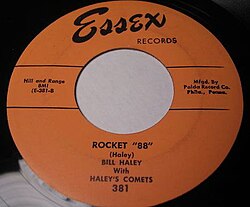
Production and Controversy
The session was produced by Sam Phillips and licensed to Chess Records. A significant point of contention arose regarding the credits; while the record was intended to be credited to Ike Turner and his Kings of Rhythm featuring Jackie Brenston, it was released under the name "Jackie Brenston and his Delta Cats." Turner attributed this error to Phillips.
The financial rewards were similarly modest. Turner and his band members were paid $20 each (approximately $248 in 2025 dollars), while Brenston sold his rights to Phillips for $910.
| Detail | Information |
|---|---|
| Release Date | March 1951 |
| Label | Chess |
| Producer | Sam Phillips |
| Genre | Rock and roll / R&B / Jump blues |
| Length | 2:48 |
| B-side | "Come Back Where You Belong" |
Was It the First Rock and Roll Record?
Whether Rocket 88 is the definitive first rock and roll record remains a subject of academic and critical debate. Some historians argue that the song's shuffle rhythm is more aligned with R&B than the distinctive rock beat later popularized by Chuck Berry. Others suggest that the "first record" narrative was amplified by Sam Phillips' own later claims.
Ike Turner himself offered a nuanced perspective, stating that while he didn't believe the song was rock and roll, he believed it was the cause of rock and roll's existence. He noted that when the song was played on white radio stations, it triggered a massive demand among white youth, leading Phillips to seek out white artists who could emulate the black R&B sound—eventually leading to the discovery of Elvis Presley and Jerry Lee Lewis.
Lasting Influence
The impact of Rocket 88 extended far beyond the 1950s. Little Richard famously cited the song's piano introduction as a direct influence on his 1958 hit "Good Golly, Miss Molly." Music critics have praised the track for its "sound and fury," noting that its combination of suggestive lyrics, heavy rhythm, and distorted guitar set it apart from everything that had come before.
Frequently Asked Questions
Who actually performed on Rocket 88?
Although credited to Jackie Brenston and his Delta Cats, the performance was actually by Ike Turner and his Kings of Rhythm, with Brenston providing the lead vocals.
How was the distorted guitar sound achieved?
The distortion was an accident caused by a damaged amplifier cone. Producer Sam Phillips stuffed the speaker with newspaper and sack paper to hold it together, which created the unique fuzzed-out sound.
What was the song's chart performance?
The song was a major hit in 1951, reaching number one on the Billboard Best Selling R&B Records chart and spending a total of five weeks at the top of the R&B charts.
Why is the song considered a prototype for rock and roll?
It combined the elements of jump blues with a raw, distorted electric guitar sound and lyrics centered on automobiles as metaphors for sexual prowess, all of which became staples of the rock genre.
Which halls of fame has the song been inducted into?
Rocket 88 has been inducted into the Blues Hall of Fame, the Grammy Hall of Fame, the Rock and Roll Hall of Fame, and the National Recording Registry.