Bo Diddley: The Originator of the Rock and Roll Beat
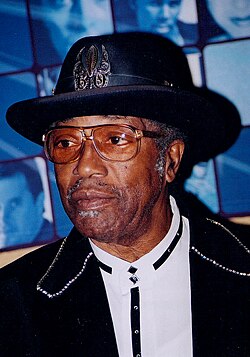
Few musicians have left as indelible a mark on the DNA of modern music as Bo Diddley. Born Ellas Otha Bates, the American guitarist, singer, and songwriter served as a vital bridge in the transition from traditional blues to the high-energy explosion of rock and roll. Known as "The Originator," Diddley did more than just play music; he engineered a rhythmic revolution that continues to echo through hip-hop, pop, and rock today.
His influence is vast, stretching across generations of legendary artists. From the early days of the Beatles and the Rolling Stones to the raw energy of the Clash and the songwriting of Tom Petty, Diddley's approach to the guitar and rhythm provided a blueprint for countless musicians.
Key Facts
- Real Name: Ellas Otha Bates (also known as Ellas Bates McDaniel).
- Signature Contribution: The "Bo Diddley beat," a five-accent hambone rhythm based on the African clave.
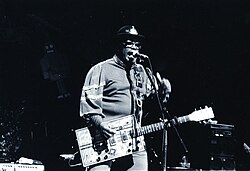
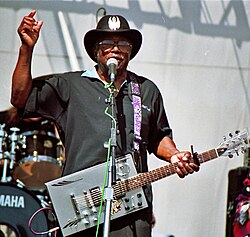
- Technical Innovation: Pioneer in using tremolo and reverb effects with custom rectangular guitars.
- Major Honors: Inductee of the Rock and Roll, Blues, and Rhythm and Blues Halls of Fame.
- Active Years: 1943–2008.
The Architecture of the "Bo Diddley Beat"
At the heart of Diddley's legacy is his signature rhythm. The Bo Diddley beat is essentially a variation of the clave rhythm, a fundamental bell pattern found throughout sub-Saharan African music traditions. This simple yet driving five-accent hambone rhythm became a cornerstone of 20th-century popular music.
While Diddley popularized the sound, scholars have noted similar rhythms in R&B recordings dating back to 1944, including works by Johnny Otis. However, Diddley's ability to fuse this rhythm with electric guitar innovation made it a global phenomenon.
!["Bo Diddley beat"[116]/Son clave Playⓘ.](/images/78/bd/78bd9bc3a87921cc88a68171451ec255f7c05f5f0899a429c5a5c6d008654c8b.png)
Career Highlights and Technical Innovation
Diddley was as much an inventor as he was a performer. He is widely recognized for his technical experimentation, specifically his use of tremolo (a rapid variation in volume) and reverb (the persistence of sound after it is produced) to create a thick, atmospheric sound. This sonic texture was further enhanced by his use of distinctive, custom-built rectangular guitars.
The Ed Sullivan Incident
One of the most famous anecdotes of his career occurred on November 20, 1955, during an appearance on The Ed Sullivan Show. Legend has it that after being overheard singing "Sixteen Tons" in the dressing room, Diddley was asked to perform it. However, upon seeing "Bo Diddley" on the cue card, he performed both his hit single and "Sixteen Tons." This led to a furious Ed Sullivan banning him from the show, claiming Diddley would not last six months in the industry.
Songwriting and Collaborations
Beyond his own hits, Diddley was a prolific songwriter. In 1956, he co-wrote the pop hit "Love Is Strange" with Jody Williams, which became a success for Mickey & Sylvia in 1957. He also penned "Mama (Can I Go Out)" for rockabilly singer Jo Ann Campbell. Throughout his career, he collaborated with other titans of the era, including Chuck Berry, Muddy Waters, and Howlin' Wolf.
Later Years and Lasting Legacy
Diddley's career spanned decades and venues, from small clubs to massive stadiums. In 1972, he performed with the Grateful Dead at the Academy of Music in New York City, a performance later released in the Dick's Picks series. His music even crossed into cinema, with his song "Bo Diddley" appearing in the animated film Fritz the Cat.
Bo Diddley passed away on June 2, 2008, at the age of 79 due to heart failure at his home in Archer, Florida. His final words, spoken after a Gospel song was sung at his bedside, were: "Wow! I'm goin' to Heaven!"
Summary of Career and Accolades
| Category | Details |
|---|---|
| Primary Genres | Rock and roll, Blues, Psychedelic funk, R&B |
| Major Labels | Checker, Chess, RCA, Triple X, Atlantic |
| Hall of Fame Inductions | Rock and Roll (1987), Blues (2003), R&B (2017) |
| Key Awards | Grammy Lifetime Achievement Award, R&B Foundation Lifetime Achievement Award |
| Notable Songs | "Bo Diddley", "I'm a Man", "Say Man", "Road Runner" |
Frequently Asked Questions
What exactly is the Bo Diddley beat?
The Bo Diddley beat is a rhythmic pattern based on the African clave, characterized by a five-accent hambone rhythm. It is a foundational element in the development of rock, pop, and hip-hop.
Which famous artists were influenced by Bo Diddley?
He influenced a wide array of musicians, including the Beatles, the Rolling Stones, Buddy Holly, the Animals, George Thorogood, Syd Barrett, Tom Petty, and the Clash.
What were Bo Diddley's technical contributions to the guitar?
Diddley is noted for his innovative use of tremolo and reverb effects, as well as his use of uniquely shaped rectangular guitars to achieve a specific sound.
How did Bo Diddley's relationship with Ed Sullivan end?
After a misunderstanding regarding the songs he was supposed to perform on the show, Ed Sullivan became furious and banned Diddley from the program, predicting his career would be short-lived.
When was Bo Diddley inducted into the Rock and Roll Hall of Fame?
Bo Diddley was inducted into the Rock and Roll Hall of Fame in 1987.