Rock Gardens: The Art and History of Stone Landscaping
A rock garden—historically referred to as a rockery or rockwork—is a specialized landscaping feature composed of rocks, stones, and gravel. These gardens are designed to provide a structured framework for specific types of vegetation, typically small alpine plants that thrive in environments with minimal soil and water. Whether integrated into a larger landscape or standing as a focal point, rock gardens offer a unique blend of geological texture and botanical beauty.
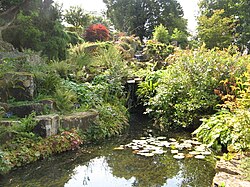
Depending on the design, rock gardens can be categorized into several styles. Western traditions often distinguish between alpine gardens and scree gardens, the latter of which utilize looser, smaller stones to mimic natural mountain slopes. While some gardens are built around existing natural rock outcrops, many are entirely artificial, with both the stones and plants carefully curated to create a specific aesthetic.
Key Facts
- Diverse Styles: Includes Western alpine gardens, scree gardens, and Japanese dry gardens.
- Planting Needs: Primarily features small alpine species that prefer well-drained soil.
- Historical Roots: Decorative stone use dates back at least 1,500 years in China and Japan.
- Artificial Construction: Many gardens use stones aligned to suggest natural bedding planes.
- Modern Utility: Used in tropical climates for drainage and in Canada for yard cooling.
The Evolution of Rock Gardening
Eastern Traditions and Symbolic Stones
The use of rocks as symbolic elements is deeply rooted in Asian history. In China, large scholar's rocks—often limestone shaped by river currents or waterfalls—were highly prized and transported to imperial gardens. Similarly, Korea utilizes suseok, while Japan features smaller suiseki, which are typically intended for indoor display.
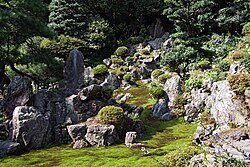
The Japanese rock garden, often called a "Zen garden" or dry garden, represents a distinct approach. These landscapes often feature a few large rocks set against a surface of raked gravel, sometimes with very few or no plants at all. In contrast, other Chinese and Japanese styles may incorporate rocks into lush settings with flowing water or grass.
Western Development and the Victorian Craze
Early European rockeries, spanning the late 17th to early 19th centuries, did not aim for naturalism. Instead, they utilized exotic minerals like lava, feldspars, and shells, much like the fashionable shell grottoes of the era. However, during the Golden Age of Botany (early 1700s to mid-1800s), interest shifted toward exotic alpine plants.
By the 1830s, rock gardening became a significant craze in England. While some enthusiasts used artificial stone or painted concrete, many sought "authentic" weathered stone. A notable material from this period was Pulhamite, a successful artificial stone produced by the firm James Pulham and Son.
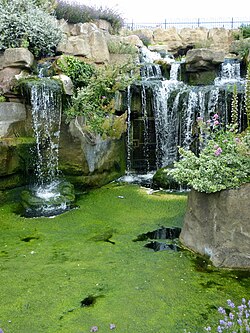
The discipline was further refined in the early 20th century, most notably by Reginald Farrer, whose 1919 two-volume work, The English Rock Garden, became a definitive text. Interestingly, the history of rockeries even intersects with social movements; British suffragette Norah Balls famously collected stones thrown at her during political campaigns to add to her own rockery.
Design and Layout Principles
A standard rock garden layout involves an aesthetically arranged pile of rocks in varying sizes, with small gaps between them to serve as planting pockets. Most plants used are small, typically staying under 1 meter in height. However, in woodland rock gardens, small trees or shrubs up to 6 meters may be used to provide shade.
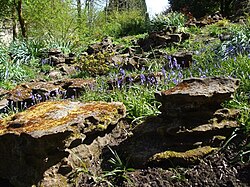
To maintain the visual impact of the stones, larger plants are often grown in troughs or kept low to the ground. The primary requirement for most rock garden flora is well-drained soil, which prevents root rot and mimics natural mountain habitats.
Global Applications and Conservation
In modern landscaping, rock gardens serve various functional purposes. In tropical regions like Thailand, the use of heavy plastic liners helps manage unwanted plant growth and ensures excellent drainage. In Canada, these gardens can assist in cooling yards during hot summer months.
However, the desire for unique stones has historically led to environmental concerns. The removal of plants and stones from wild locations has caused ecological issues, leading to the legal protection of certain sites, such as the English Westmorland limestone pavement.
| Style | Primary Elements | Typical Vegetation |
|---|---|---|
| Western Alpine | Weathered stone, scree | Small alpine plants |
| Japanese Zen | Large rocks, raked gravel | Minimal to none |
| Woodland Rockery | Rocks, shaded areas | Small trees and shrubs |
| Chinese Scholar | Scholar's rocks (limestone) | Varied greenery |
Frequently Asked Questions
What are the best plants for a rock garden?
Most rock gardens utilize small alpine plants that require well-drained soil and minimal water. In woodland settings, small trees or shrubs can be used to provide shade.
What is the difference between a rockery and a Zen garden?
A traditional rockery often focuses on growing alpine plants among stones, whereas a Japanese Zen garden (dry garden) typically uses raked gravel and a few large rocks with very little vegetation.
Can I make an artificial rock garden?
Yes. Many rock gardens are entirely artificial, using stones and plants brought in to mimic natural outcrops. Historically, materials like Pulhamite (an artificial stone) were even used to create these features.
Why are rock gardens popular in tropical climates?
In tropical areas, rock gardens are ideal because they provide excellent drainage. When combined with heavy plastic liners, they also help manage unwanted plant growth and maintenance.
Do rock gardens help with temperature control?
Yes, in certain climates like Canada, residents have found that rock gardens can help with yard cooling during hot summer months.