Aquilegia flabellata: The Elegant Fan Columbine
The Aquilegia flabellata, commonly known as the fan columbine, is a striking perennial flowering plant belonging to the buttercup family, Ranunculaceae. Native to the rugged landscapes of North and East Asia, this species is prized by botanists and gardeners alike for its unique floral structure and delicate foliage. From the high cliffs of Japan to the mountain forests of China, the fan columbine thrives in alpine environments, bringing a touch of ethereal beauty to the temperate biomes it inhabits.
Key Facts
- Common Name: Fan columbine.
- Native Range: China, Korea, Mongolia, Japan, and the Russian Far East.
- Habitat: Mountain forests, cliffs, and slopes (1,400m to 2,500m elevation).
- Flower Colors: Blueish-purple sepals with petals in purple, yellow-white, or white.
- Key Varieties: The typical A. flabellata var. flabellata and the dwarf A. flabellata var. pumila.
- Conservation Status: Predicted as not threatened.
Botanical Description
Aquilegia flabellata is a herbaceous perennial characterized by a short taproot. The plant's growth habit varies significantly between its two naturally occurring varieties. The typical form, A. f. flabellata, produces stems reaching heights of 15 cm to 45 cm, while the dwarf variety, A. f. pumila, is much smaller, generally staying between 10 cm and 15 cm.
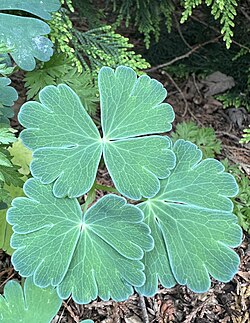
The foliage consists of basal leaves—leaves stemming from the base of the plant—that are typically biternate (divided into two leaflets, each with three lobes). These leaves are supported by long petioles, ranging from 5 mm to 15 mm in length.
Floral Anatomy
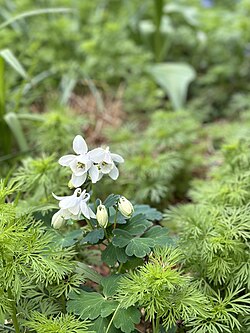
The flowers of the fan columbine are nodding and measure between 3.5 mm and 4.2 mm in diameter. Each flower consists of five blueish-purple sepals and five smaller petals. A defining feature of the genus is the nectar spur—an elongated base of the petal that projects backward to hold nectar. In A. flabellata, these purple spurs curve inward and measure between 8 mm and 20 mm in length.
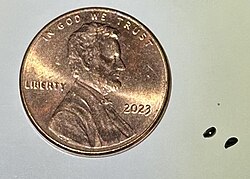
Following the flowering period, the plant produces follicles (dry fruits that split open) containing numerous shiny, black seeds, each approximately 2 mm long.
Taxonomy and Etymology
First described in 1846 by German botanists Philipp Franz von Siebold and Joseph Gerhard Zuccarini, the plant has a complex taxonomic history. While some authorities, such as the Flora of China, classify it as Aquilegia japonica, the Royal Botanic Gardens, Kew (POWO) accepts A. flabellata as the primary species name.
The name "columbine" comes from the Latin columbinus (dove), referring to the flower's resemblance to a group of doves. The genus name Aquilegia likely derives from aquila (eagle), referencing the talon-like petals, or aquam legere ("to collect water"), referring to the nectar-filled spurs. The specific epithet flabellata is Latin for "fan-shaped," describing the plant's foliage.
Distribution and Habitat
The fan columbine is native to Northeast Asia, with populations found in southern Siberia, Sakhalin, and the Kuril Islands of Russia, as well as Northeast China and Korea. In Japan, it is found across the range, including the island of Honshu and beach populations on Rebun Island.
As an alpine species, it prefers temperate biomes, specifically mountain forests and rocky slopes at elevations between 1,400 m (4,600 ft) and 2,500 m (8,200 ft) above sea level.
Cultivation and Garden Care
Due to its ornamental appeal, A. flabellata is widely grown in gardens. It is particularly popular among breeders, with over 40 cultivars derived from the dwarf A. f. pumila alone. These plants typically flower from seed the year after sowing.
To maintain the health and longevity of the plant, gardeners often practice deadheading—the removal of spent flowers to prevent the plant from spending energy on seed production. However, gardeners should be aware that columbines can become invasive due to their ability to self-sow.
Pests and Diseases
Cultivated fan columbines are susceptible to several pests, including leaf miners, aphids, caterpillars, and the columbine sawfly. They may also be affected by the aquilegia gall midge, as well as powdery and downy mildews.
Popular Cultivars
Several horticultural forms are common in the trade, though many previously labeled as "varieties" are now classified as cultivars:
- 'Alba' (or 'Nana Alba'): A compact form reaching 15 cm to 20 cm with white flowers and short, inward-curving spurs.
- 'Rosea': A dwarf variety reaching 7.5 cm to 15 cm with pink flowers.
- 'Nana': Largely identical to the wild A. f. pumila.
| Feature | var. flabellata (Typical) | var. pumila (Dwarf) |
|---|---|---|
| Stem Height | 15 cm – 45 cm | 10 cm – 15 cm |
| Stem Thickness | 2 mm – 4 mm at base | Thinner than typical |
| Native Range | North/East Asia | Japan |
| Cultivar Diversity | Moderate | High (40+ cultivars) |
Frequently Asked Questions
When does Aquilegia flabellata typically flower?
In its native Chinese range, the plant flowers in July, although cultivated plants in other regions, such as St. Petersburg, Russia, have been observed flowering as early as May.
What is the difference between 'Alba' and 'Rosea' cultivars?
'Alba' is a compact plant (15-20 cm) with white flowers, while 'Rosea' is a smaller dwarf form (7.5-15 cm) featuring pink flowers.
How can I extend the lifespan of my columbines?
Practicing deadheading—removing dead flowers before the plant produces seeds—can help extend the lifespan of the plant by conserving its energy.
Is Aquilegia flabellata considered an endangered species?
No, as of 2025, the Plants of the World Online (POWO) predicts the conservation status of A. flabellata as not threatened.
What are the most common pests that affect this plant?
The most common pests include leaf miners, the columbine sawfly, aphids, caterpillars, and the aquilegia gall midge.