Rock Around the Clock: The Anthem That Defined Early Rock and Roll
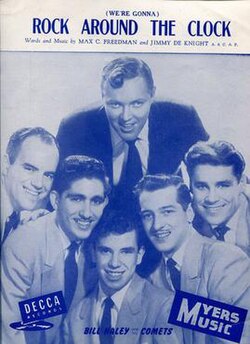
Few songs have captured the spirit of a cultural revolution as vividly as Rock Around the Clock. Recorded by Bill Haley & His Comets, this high-energy track didn't just climb the charts; it became a global anthem for the rebellious youth of the 1950s, bridging the gap between rhythm and blues and the mainstream pop explosion.
Written in 1952 by Max C. Freedman and James E. Myers (who used the pseudonym Jimmy DeKnight), the song was designed to capture the excitement of late-night partying. While other songs shared the title or similar themes, the Haley version became the definitive recording, eventually becoming the first rock and roll record to top the pop charts in both the United States and the United Kingdom.
Key Facts
- Artist: Bill Haley & His Comets
- Release Date: May 20, 1954 (Original); May 1955 (Re-release)
- Chart Achievement: First rock and roll song to hit #1 on US and UK pop charts.
- Cultural Impact: Gained massive popularity after appearing in the 1955 film Blackboard Jungle.
- Estimated Sales: Approximately 25 million copies across all versions.
- Recording Studio: Pythian Temple, New York City.
The Decca Recording Session
The journey to the top of the charts nearly ended before it began. On April 12, 1954, Bill Haley and his band were traveling from Philadelphia to New York City when their ferry became stuck on a sandbar. Despite the delay, they eventually reached the Pythian Temple studios to work with producer Milt Gabler.
Gabler, known for his work with Louis Jordan and Billie Holiday, wanted a high-production sound with a strong beat and clear lyrics. Interestingly, Gabler originally intended for a different song, "Thirteen Women (And Only One Man in Town)," to be the A-side of the single.
The Musicians Behind the Sound
The recording featured a mix of Comets and trusted session players. While Dick Richards was Haley's regular drummer, session musician Billy Gussak played drums on the track. The song is particularly famous for the electric guitar solo by Danny Cedrone, a performance now regarded as one of the most classic solos in rock history. Tragically, Cedrone died in a fall shortly after the recording in June 1954, never witnessing the song's global success.
The Path to Global Stardom
Despite its energy, the song did not become an overnight sensation. Its ascent to legendary status was accelerated by cinema. The producers of the 1955 film Blackboard Jungle wanted music that reflected the tastes of contemporary teenagers. They chose "Rock Around the Clock" after the star's son, Peter Ford, shared the record with his father, Glenn Ford.
Following the film's release, the song skyrocketed. On July 9, 1955, it hit number one on the Billboard Pop charts, where it remained for eight weeks. In the UK, the song had an extraordinary chart life, entering the charts in early 1955 and returning multiple times through the 1960s and 70s.
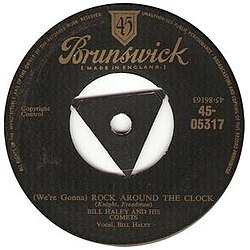
Chart Performance Summary
| Chart/Region | Peak Position | Year(s) |
|---|---|---|
| US Billboard Hot 100 | 1 | 1955 |
| UK Singles Chart | 1 | 1955, 1956 |
| US Billboard R&B | 3 | 1955 |
| Australia (Kent Music Report) | 1 | 1955 |
| Germany | 1 | 1955 |
Legacy and Later Influence
The song's influence extended far beyond the 1950s. It was featured in the 1974 film American Graffiti and served as the opening theme for the first two seasons of the TV series Happy Days. It even appeared in the 1978 film Superman.
Bill Haley recorded the song numerous times throughout his career, including a sequel titled "Dance Around the Clock" in 1964, though the original 1954 version remained the gold standard. After Haley's death in 1981, the song continued to be honored, receiving the Grammy Hall of Fame Award in 1982.
Frequently Asked Questions
Who wrote "Rock Around the Clock"?
The song was written in 1952 by Max C. Freedman and James E. Myers, the latter of whom used the pseudonym "Jimmy DeKnight." Some historians speculate that Freedman may have written the song alone.
Was the song copied from Big Joe Turner?
No. While it is sometimes erroneously claimed that the song was copied from Big Joe Turner's "Around the Clock Blues," the two songs bear very little resemblance despite their similar titles.
Why is there a difference in the song's length on different releases?
The original vinyl release runs 2 minutes and 8 seconds. However, many digital and CD versions run 2 minutes and 10 seconds because they include a "count-in" (the words "One... two") that was edited out of the original single.
How many copies of the song have been sold?
While exact audited numbers are unavailable, the Guinness Book of World Records previously cited at least 25 million copies sold across all versions, with Bill Haley's version alone estimated at 15 million.
What movie helped make the song a hit?
The 1955 film Blackboard Jungle is credited with propelling the song to massive popularity among teenagers, as it was used to represent the youth culture of the era.