Rifle Regiments: History, Traditions, and Global Evolution
In modern military terminology, almost all infantry units are armed with rifled weapons. However, a rifle regiment refers to a specific type of unit that adheres to distinct traditions and tactics that historically separated them from standard line infantry. While traditional infantry once focused on massed volleys and rigid formations, rifle regiments pioneered a more flexible, precise, and stealthy approach to warfare.
The emergence of these units was driven by technological evolution. Although rifles existed for decades, they were initially too slow to load and unreliable for mass issue. By the late 18th century, improvements in design allowed armies to equip entire units with rifles instead of the standard musket (a smoothbore long gun). Despite taking twice as long to load as a musket, the superior accuracy and tactical versatility of the rifle fundamentally changed the battlefield.
Key Facts
- Distinctive Uniforms: Rifle regiments traditionally wore "rifle green" for camouflage, contrasting with the bright scarlet of British line infantry.
- Tactical Shift: They moved away from massed volleys toward dispersed formations, individual marksmanship, and selective targeting.
- Unique Signaling: Because they lacked drums and Colours (regimental flags), riflemen used bugles for communication.
- Social Norms: Historically, rifle regiments featured less harsh discipline and more social integration between officers and enlisted men.
- Global Presence: Traditions persist today in the British, Canadian, Indian, and Sri Lankan armies.
The Evolution of Rifle Tactics in the United Kingdom
During the 18th century, European armies relied on line infantry who fired volleys in massed formations. This strategy prioritized volume of fire over individual accuracy. Because muskets were inaccurate beyond 100 to 200 yards, these engagements often culminated in a bayonet charge.
These rigid tactics failed in the wooded terrain of North America. In the mid-18th century, the 60th (Royal American) Regiment, under 1st battalion commander Henri Bouquet, experimented with lighter gear and dark green or brown jackets to blend into the environment.
Building on this success, Colonel Coote Manningham formed the Experimental Corps of Riflemen in 1800, which evolved into the 95th Rifles and later the Rifle Brigade. These soldiers were equipped with the Baker rifle and adopted a suite of camouflage measures: rifle green jackets, black trouser stripes, black horn buttons, and black belts. They operated in dispersed pairs rather than files, focusing on precision fire.
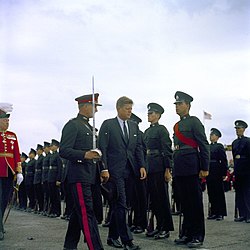
This cultural shift extended to internal discipline. Rifle regiments were known for less frequent flogging, and officers often dined with enlisted men—a rarity in the class-conscious British society of the era. This egalitarian approach often drew condescension from regular army officers who viewed riflemen as socially inferior.
Traditions and Symbolic Distinctions
The Absence of Colours
Because rifle regiments operated in dispersed formations, they did not carry Colours (ceremonial flags used as rally points). Consequently, they had no place to display their battle honours. To solve this, honours were eventually placed on drums or cap badges. In the modern regiment The Rifles (formed in 2007), battle honours are integrated into the belt badge, ensuring every soldier carries the regiment's history in ceremonial uniform.
Other nations have adapted this tradition: the Royal Gurkha Rifles carry the Queen's Truncheon, while Indian Army regiments use president's banners. In Canada, the Halifax Rifles and the British Columbia Regiment carry a guidon, following cavalry traditions.
Order of Precedence
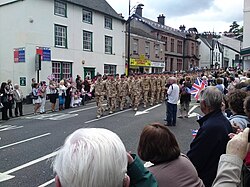
In military parades, the order of precedence determines the marching sequence. As relatively new formations, rifle regiments typically appear at the end of the line. In the British Army, The Royal Gurkha Rifles and The Rifles are among the last regular infantry units to march, positioned just ahead of the Special Air Service (SAS).
Modern Rifle Regiments Around the World
While many historical units have been amalgamated, the legacy of the rifleman continues across several global militaries.
United Kingdom and Commonwealth
In the British Army, the tradition is carried forward by The Rifles, the Royal Gurkha Rifles, and the Royal Bermuda Regiment. Canada maintains seven rifle regiments divided between the Royal Canadian Armoured Corps (such as the Halifax Rifles) and the Royal Canadian Infantry Corps (such as the Queen's Own Rifles of Canada).
India and Sri Lanka
The Indian Army maintains 10 rifle regiments, including the Rajputana Rifles and various Gorkha Rifles. Additionally, the Assam Rifles serves as a paramilitary force under the Ministry of Home Affairs, originally raised in the 19th century to protect tea estates. India also utilizes Rashtriya Rifles (RR), which are specialized counter-insurgency battalions.
The Sri Lanka Army maintains the reserve Sri Lanka Rifle Corps, which holds a high position in the national infantry order of precedence.
Other Nations
Sweden's Jämtland Rifle Corps, established in 1646, has officially been designated as a rifle regiment since 1820.
| Region/Army | Key Units | Distinctive Tradition/Symbol |
|---|---|---|
| United Kingdom | The Rifles, Royal Gurkha Rifles | Rifle green uniforms; Bugles instead of drums |
| Canada | Halifax Rifles, Queen's Own Rifles | Guidons (for some RCAC units) |
| India | Gorkha Rifles, Rajputana Rifles | President's banners; Paramilitary Assam Rifles |
| Sri Lanka | Sri Lanka Rifle Corps | President's and regimental truncheons |
Frequently Asked Questions
What is the difference between a rifle regiment and standard infantry?
Historically, rifle regiments differed through their use of rifled barrels for accuracy, dark green camouflage uniforms, dispersed tactical formations, and a less rigid social hierarchy compared to the massed-volley tactics of line infantry.
Why do rifle regiments not carry Colours?
Colours served as central rally points for massed formations. Because riflemen operated in small, dispersed groups to remain stealthy and precise, carrying a large, bright flag would have been counterproductive to their tactical goals.
What is "rifle green"?
Rifle green is a dark green color adopted by rifle regiments to provide camouflage in wooded or rural terrain, replacing the bright scarlet jackets worn by traditional British line infantry.
How do rifle regiments communicate without drums?
Since they did not use drums (which are too loud and suited for massed formations), rifle regiments adopted the bugle to issue signals and commands across dispersed units.
What is the role of the Assam Rifles in India?
The Assam Rifles is the oldest paramilitary unit in India. While it operates under the Ministry of Home Affairs as a police-natured unit, its officer cadre is largely deputized from the Indian Army, and it focuses on guarding borders and containing insurgencies.