Rhodesia: The Rise and Fall of an Unrecognised State
From 1965 to 1979, the territory known as Rhodesia existed as a controversial and unrecognised state in Southern Africa. Emerging from the era of British colonial rule, it transitioned from a constitutional monarchy to a republic, defined by its struggle for independence from the United Kingdom and a brutal internal conflict known as the Bush War. Today, this region forms the heart of the modern nation of Zimbabwe.
The state's history is marked by the Unilateral Declaration of Independence (UDI), a bold and illegal move by the minority white government to maintain control amidst the broader wave of African decolonisation during the Cold War.
Key Facts
- Duration: 1965–1979 (Republic status from 1970).
- Capital: Salisbury (now Harare).
- Key Leader: Prime Minister Ian Smith (1965–1979).
- Legal Status: Unrecognised state.
- Total Area: 390,580 km².
- Final Transition: Became Zimbabwe Rhodesia in 1979, then the Republic of Zimbabwe in 1980.
The Path to Independence and the UDI
On November 11, 1965, Rhodesia issued its Unilateral Declaration of Independence (UDI). This move was designed to break away from the United Kingdom without granting full political power to the Black majority. The international community responded with immediate condemnation; the United Nations Security Council Resolution 216 specifically called on all states to refuse recognition of the "illegal racist minority regime."
Initially, the state operated as a unitary parliamentary constitutional monarchy under Queen Elizabeth II. However, on March 2, 1970, it officially declared itself a republic, severing its remaining formal ties to the British Crown.
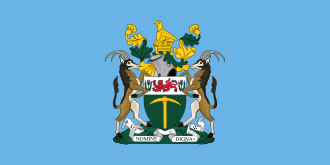
Government and Administration
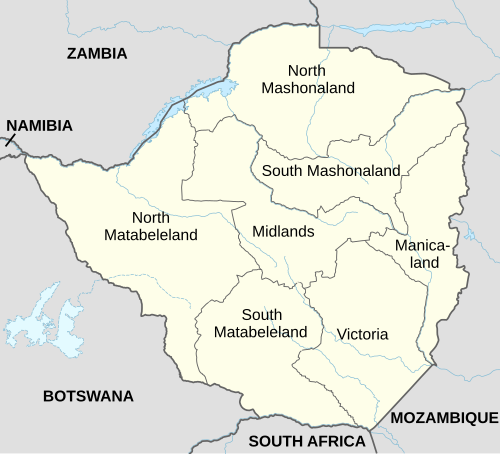
The government was led throughout the UDI era by Prime Minister Ian Smith. The legislative structure consisted of a Parliament featuring a Senate (upper house) and a House of Assembly (lower house). Administratively, the country was divided into several provinces to manage its diverse geography and population.
| Province | Capital |
|---|---|
| Manicaland | Umtali |
| North Mashonaland | Salisbury |
| South Mashonaland | Salisbury |
| Victoria | Fort Victoria |
| North Matabeleland | Bulawayo |
| South Matabeleland | Bulawayo |
| Midlands | Gwelo |
Demographics and Society
Rhodesia was characterized by a stark demographic divide. According to 1969 data, the population was 93.09% Black, 6.49% White, and 0.47% Coloured or Asian. The primary languages spoken were English (de facto official), Shona, and Northern Ndebele.
The urban centers reflected this divide, with Salisbury and Bulawayo serving as the primary hubs of commerce and administration. For example, in Salisbury, the population consisted of 96,420 White residents and 280,090 Black residents.
The Rhodesian Bush War
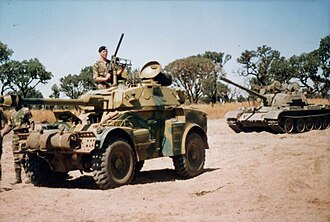
The tension between the minority-led government and the Black majority escalated into the Bush War. This conflict involved militant activity that intensified between 1972 and 1976, evolving into a full-scale insurgency. The Rhodesian military employed various tactics to maintain control, including the use of the Rhodesian Armoured Corps.
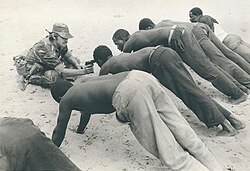
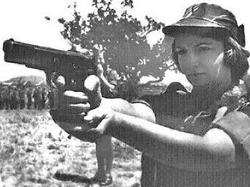
The military effort included recruitment campaigns to bolster the army's numbers and the deployment of specialized units to combat guerrilla warfare in the countryside.
The End of UDI and Transition to Zimbabwe
By the late 1970s, the intensification of the Bush War and the pressure of international sanctions made the UDI position unsustainable. On March 3, 1978, the Internal Settlement was signed by Ian Smith, Bishop Abel Muzorewa, Jeremiah Chirau, and Ndabaningi Sithole in an attempt to find a political solution.
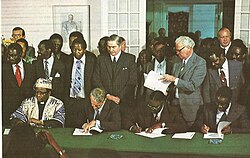
This process led to the creation of Zimbabwe Rhodesia on June 1, 1979. However, this transitional state was short-lived, eventually giving way to the fully recognized Republic of Zimbabwe in 1980.
Frequently Asked Questions
What was the Unilateral Declaration of Independence (UDI)?
The UDI was a declaration made on November 11, 1965, by the government of Rhodesia to break away from British colonial rule without agreeing to the UK's requirement for majority rule.
Who was the primary leader of Rhodesia during this period?
Ian Smith served as the Prime Minister of Rhodesia from 1965 until 1979, acting as the central figure of the minority-led government.
What was the status of Rhodesia in the eyes of the world?
Rhodesia was an unrecognised state. The United Nations and most other countries refused to recognize its legitimacy, viewing the regime as illegal.
What happened to the currency of Rhodesia?
The state used the Rhodesian pound from 1964 to 1970, after which it transitioned to the Rhodesian dollar, which remained in use until 1980.
What was the result of the Rhodesian Bush War?
The war led to the eventual collapse of the UDI government, the signing of the Internal Settlement, and the transition to the Republic of Zimbabwe in 1980.