Reuters: The History and Global Impact of a News Giant
Reuters is one of the world's largest news agencies, serving as a critical artery for global information. Now a division of the multinational information conglomerate Thomson Reuters, the agency maintains a massive operational footprint, employing approximately 2,500 journalists and 600 photojournalists. These professionals operate across 200 locations in 165 countries, delivering news in 16 different languages to a worldwide audience.
Key Facts
- Founded: October 1851 by Paul Julius Reuter.
- Ownership: Wholly owned by Thomson Reuters (the Thomson family).
- Global Reach: Operates in 165 countries across 200 locations.
- Workforce: Approximately 25,000 total employees.
- Accolades: 13 Pulitzer Prizes won since 2008.
- Headquarters: Parent company based in Toronto; editorial offices in London (Canary Wharf).
The Origins of a News Empire
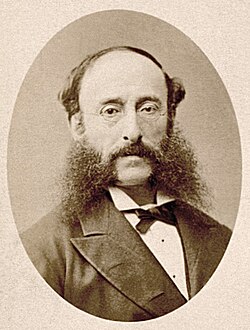
The story of Reuters began in the mid-19th century with Paul Julius Reuter. While working at a book-publishing firm in Berlin during the revolutions of 1848, Reuter became involved in distributing radical pamphlets. This experience led him to innovate in the field of communication.
In 1850, Reuter developed a prototype news service in Aachen. To overcome the communication barriers of the time, he utilized a combination of homing pigeons and electric telegraphy starting in 1851 to transmit messages between Brussels and Aachen. This rudimentary but effective system laid the foundation for what would become a global news powerhouse.
Evolution Through the 20th and 21st Centuries
By the early 2000s, Reuters was recognized as one of the "big three" global news agencies, alongside the Associated Press and Agence France-Presse. The agency experienced significant financial volatility during the dotcom boom and the subsequent banking troubles of 2001.
A pivotal shift occurred in 2008 when the independent Reuters Group plc was acquired by the Canadian Thomson Corporation, resulting in the formation of Thomson Reuters. Following this merger, the company shifted its listing from the LSE and NASDAQ to the Toronto Stock Exchange (TSX) and the New York Stock Exchange (NYSE). While the parent company focuses heavily on providing financial information to clients, it continues to support the traditional news-agency business.
In recent years, the organization has undergone various structural changes. In 2016, Thomson Reuters sold its science and intellectual property operations for $3.55 billion and implemented a restructuring plan that eliminated 2,000 jobs. The agency has also modernized its physical presence, moving its London operations to Canary Wharf.

Journalistic Excellence and Sacrifice
Reuters is renowned for its high-stakes reporting and has been recognized with numerous Pulitzer Prizes. Since 2008, the agency has secured 13 such awards, including honors for National Reporting on Elon Musk's businesses in 2024 and Breaking News Photography for coverage of the Gaza war and the Hong Kong protests.
However, this commitment to global reporting comes with significant risk. Over the decades, numerous Reuters journalists have been killed on assignment in conflict zones including Iraq, Somalia, Syria, and Afghanistan.
| Year | Category | Focus/Description |
|---|---|---|
| 2025 | Investigative Reporting | Staff of Reuters |
| 2024 | National Reporting | Elon Musk and business misconduct |
| 2024 | Breaking News Photography | Gaza war coverage |
| 2020 | Breaking News Photography | Hong Kong protests |
| 2019 | International Reporting | Contributions from Wa Lone and Kyaw Soe Oo |
Controversies and Challenges
Like many large media organizations, Reuters has faced various controversies. These include accusations regarding the objectivity of its climate change reporting and disputes over the alteration of photographs. The agency also faced internal and external scrutiny regarding its "Reuters Connect" partnership with the Russian news agency TASS, which was eventually terminated following the 2022 invasion of Ukraine.
Frequently Asked Questions
Who owns Reuters today?
Reuters is wholly owned by Thomson Reuters, a multinational information conglomerate controlled by the Thomson family.
How did Reuters start transmitting news?
Founder Paul Julius Reuter began his service in 1850 using a combination of homing pigeons and electric telegraphy to send messages between Brussels and Aachen.
How many Pulitzer Prizes has Reuters won?
As of 2025, Reuters has won a total of 13 Pulitzer Prizes since 2008.
Where is Reuters headquartered?
The parent company, Thomson Reuters, is headquartered in Toronto, while the news agency maintains major editorial offices in London's Canary Wharf.
What is the scale of Reuters' global operations?
The agency employs around 2,500 journalists and 600 photojournalists across 200 locations in 165 countries, producing content in 16 languages.