Retail Formats: A Comprehensive Analysis of Store Types and Marketing Strategies
A retail format (or retail formula) is the strategic framework a business uses to define its marketplace—the physical or digital location where goods and services are exchanged. This format is critical because it directly influences consumer expectations and determines why a customer chooses one store over another. While small, family-run operations still exist globally, the landscape is increasingly dominated by large retail chains. These giants leverage immense buying power to lower prices and often introduce private labels to compete with established manufacturer brands, shifting power away from wholesalers.
In regions like Britain and Europe, retail is officially designated as a service activity. For instance, the European Service Directive governs all retail trade, ranging from permanent shops to street traders and periodic markets.
Key Facts
- Retail Formats dictate how products are displayed and how target customers are attracted.
- Softlines refer to short-lived goods (under three years), while Hardlines refer to durable goods.
- FMCG (Fast-Moving-Consumer Goods) are high-turnover consumables found in grocery and convenience stores.
- Category Killers dominate a specific product niche by offering a wider assortment at lower prices than competitors.
- Concept Stores prioritize experiential marketing over high inventory volume.
Retail Classification by Product Type
Retailers are often categorized by the nature of the merchandise they sell, primarily divided into softlines and hardlines.
Softline Retailers
Softline retailers sell goods that are consumed after a single use or have a limited lifespan, typically under three years. This category includes clothing, footwear, toiletries, cosmetics, medicines, and stationery.
Grocery and Convenience Stores
These stores focus on Fast-Moving-Consumer Goods (FMCG)—household items and food products that require regular purchase and result in high turnover for the retailer. While supermarkets and hypermarkets handle large volumes, convenience stores prioritize ease of access and extended operating hours, whether they are staffed or automated.
Hardline Retailers
Hardline retailers sell consumer durables—items that do not wear out quickly and provide utility over a long period. Examples include automobiles, appliances, electronics, furniture, and sporting goods. Because these represent major financial decisions, consumers typically have longer purchase decision cycles (e.g., replacing a car every five years or a computer every four).
Retail Classification by Marketing Strategy
Beyond the products they sell, retailers are defined by their operational and marketing strategies, which determine their scale, target audience, and customer experience.
Specialized and Niche Formats
Some retailers focus on a narrow segment of the market. Boutiques offer a select range of fashionable goods, while Specialty Stores focus on a specific product (like toys) or a specific audience (like tourists). Concept Stores take this further by using experiential marketing—unique lighting, music, and architecture—to create an immersive brand environment.
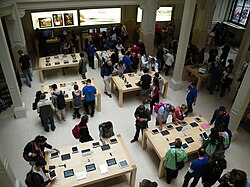
A Category Killer is a specialist store that dominates its niche by providing a massive assortment at prices that make it difficult for smaller competitors to survive.
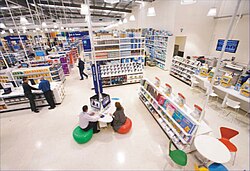
Large-Scale and Volume Retailers
Department Stores offer a broad assortment of both soft and hard goods across multiple categories. Big-box stores encompass larger discount and warehouse formats. Hypermarkets combine a supermarket and a discount store, typically exceeding 200,000 square feet, to sell huge volumes of merchandise at low margins.
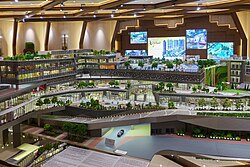
For those seeking the lowest possible prices, Warehouse Clubs (membership-based) and Warehouse Stores (no-frills, pallet-based storage) offer bulk quantities with minimal customer service.
Community and Alternative Formats
In rural areas, the General Store serves as a vital hub, providing everything from fuel and pharmaceuticals to postal and banking services.
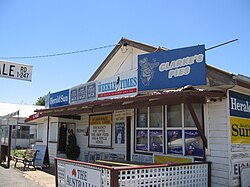
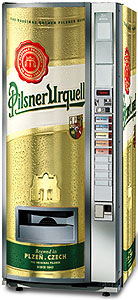
Other formats include Shopping Malls (collections of shops under one roof), Arcades (covered walkways), and Pop-up Stores (temporary spaces used for novelty or seasonal sales). For maximum convenience, Automated Stores and Vending Machines provide 24/7 access to goods without human staff.
Digital Retail
E-tailers allow customers to shop via the internet. Some utilize drop shipping, where the e-retailer accepts payment, but the manufacturer or wholesaler ships the product directly to the consumer.
Retail Format Summary
| Format | Primary Product Focus | Key Characteristic | Customer Value |
|---|---|---|---|
| Softline | Clothing, Toiletries | Short lifespan (< 3 years) | Regular replacement |
| Hardline | Electronics, Furniture | Long-term utility | Major purchase decision |
| Category Killer | Single Category (e.g., Toys) | Deep assortment, low price | One-stop shop for niche |
| Hypermarket | Food & General Merchandise | Massive scale (> 200k sq ft) | Volume and variety |
| Concept Store | Single Brand/Limited Range | Experiential marketing | Brand immersion |
| Warehouse Club | Bulk Merchandise | Membership-based | Wholesale pricing |
Frequently Asked Questions
What is the difference between a softline and a hardline retailer?
Softline retailers sell goods with a short lifespan, typically under three years, such as clothing and cosmetics. Hardline retailers sell durable goods that provide utility over a long period, such as appliances and automobiles.
What defines a "category killer" in retail?
A category killer is a specialist store that dominates a specific product category by offering a wider variety of goods at lower prices than other retailers, effectively "killing" the competition in that niche.
How does a concept store differ from a specialty store?
While both are small and focused, concept stores emphasize experiential marketing—using architecture, music, and design to create a specific brand atmosphere—rather than just providing a deep stock of a specific product.
What is an anchor store and why is it important?
An anchor store is a large, reputable retailer used by mall management to attract a high volume of shoppers to a shopping center, which in turn benefits the smaller retailers in the vicinity.
What is drop shipping in e-tailing?
Drop shipping is a fulfillment method where the e-retailer handles the sale and payment, but the product is shipped directly from the manufacturer or wholesaler to the customer, eliminating the need for the retailer to hold inventory.