Republican Party
The Republican Party, commonly known as the GOP (Grand Old Party), is one of the two major contemporary political parties in the United States. From its mid-19th-century origins as an anti-slavery coalition to its current status as a champion of right-wing populism and conservatism, the party has played a central role in shaping American governance, law, and foreign policy.
Currently led by figures such as President Donald Trump and Vice President JD Vance, the party maintains a significant presence across all levels of government, including the U.S. Senate, House of Representatives, and numerous state governorships.
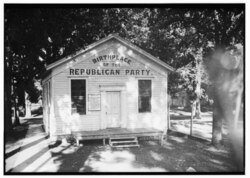
Key Facts
- Founded: Mid-1850s through a merger of the Whig Party, Free Soil Party, and the Anti-Nebraska movement.
- Core Ideologies: Right-wing populism, American neo-nationalism, and various forms of conservatism.
- Current Leadership: Donald Trump (President), JD Vance (Vice President), and Mike Johnson (Speaker of the House).
- Symbol: The elephant, first popularized in political cartoons in 1874.
- Primary Color: Red.
Historical Evolution
Founding and the Civil War Era
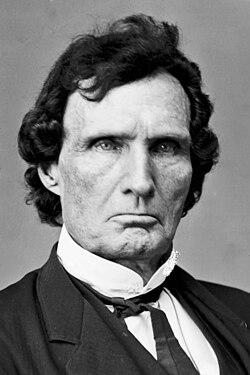
The Republican Party was established in the 1850s by founders including Alvan E. Bovay, Horace Greeley, and Salmon P. Chase. Its early platform was defined by opposition to the expansion of slavery, leading to the election of its first president, Abraham Lincoln, in 1860. During the Reconstruction era, leaders like Thaddeus Stevens pushed for the rights of African Americans and the dismantling of discriminatory systems.
The 20th Century and the Shift Rightward
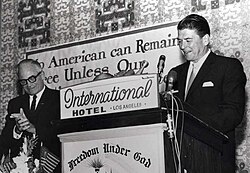
Throughout the 1900s, the party evolved from the progressive era of Theodore Roosevelt to a more staunchly conservative stance. By the 1960s, figures like Barry Goldwater began steering the party toward a more rigorous libertarian and conservative framework, a movement later solidified during the presidency of Ronald Reagan in the 1980s.
The Trump Era and Modern Populism
The 21st century has seen a significant transformation with the rise of Trumpism. This era is characterized by a shift toward right-wing populism and neo-nationalism. This transition is exemplified by the rise of JD Vance, who evolved from a critic of Donald Trump to a staunch advocate of his populist approach.
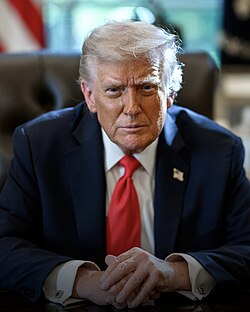
![JD Vance, Donald Trump's vice president during Trump's second term. Initially critical of Trump, he became a staunch advocate of Trumpism later in Trump's first term and has been described as a right-wing populist.[144]](/images/71/6e/716eef6d0fd6f59cafd15594d3bc22fd145b029e497cc4f485be2643073b2af5.webp)
Party Ideology and Factions
The modern Republican Party is not a monolith but a coalition of several distinct ideological factions:
- Right-wing Populists: Focused on nationalist policies and challenging established political norms.
- Conservatives: Advocates for traditional values and limited government intervention.
- Christian Right: A faction emphasizing the integration of biblical values into public policy.
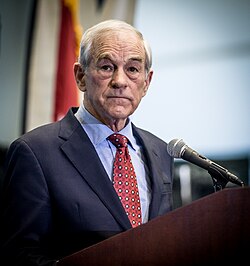
- Libertarians: Proponents of maximum individual liberty and minimal state interference, influenced by figures like Ron Paul.
- Moderates: Those who seek a more centrist approach to governance.
Political Positions and Policy
Economic and Domestic Policy
The GOP generally advocates for lower taxes, reduced government spending, and a deregulated business environment. Their approach to labor often involves skepticism toward minimum wage increases and a preference for free-market solutions. On social issues, the party has moved toward a strong pro-life stance regarding abortion and embryonic stem cell research.
Foreign Policy and National Security
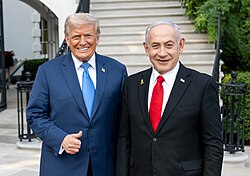
Republican foreign policy often emphasizes strong national defense and strategic alliances. The party maintains a consistently strong relationship with Israel and supports security measures regarding Taiwan. While approaches to Europe, Russia, and Ukraine vary, the party remains focused on the global War on Terror.
Governance and Law
The party typically supports strict gun rights, a rigorous approach to criminal justice, and stringent immigration controls. They often oppose affirmative action and have taken specific stances on voting rights and LGBT issues to align with conservative values.

Republican Party Overview
| Category | Detail |
|---|---|
| Governing Body | Republican National Committee (RNC) |
| Current President | Donald Trump |
| Senate Seats | 53 / 100 |
| House Seats | 218 / 435 |
| State Governors | 26 / 50 |
| International Affiliations | International Democracy Union, Asia Pacific Democracy Union |
![Percent of self-identified conservatives by state as of 2018, according to a Gallup poll:[195] 45% and above 40–44% 35–39% 30–34% 25–29% 24% and under](/images/31/9b/319b99c579d0b740c38ce9d9f2ea4479d7f5ff734256989f8c0a34a18d595a9c.webp)
Frequently Asked Questions
What does GOP stand for?
GOP stands for "Grand Old Party," a traditional nickname for the Republican Party.
Who were the founders of the Republican Party?
The party was founded by a group including Alvan E. Bovay, Henry Jarvis Raymond, Horace Greeley, John C. Frémont, Francis Preston Blair, Edwin D. Morgan, Amos Tuck, and Salmon P. Chase.
What is the significance of the elephant symbol?
The elephant became the party's notable symbol following a political cartoon by Thomas Nast in 1874.
How has the party's ideology changed over time?
The party began as an anti-slavery movement in the 1850s, transitioned through various stages of conservatism in the 20th century, and has recently embraced right-wing populism and neo-nationalism under the influence of Donald Trump.
Which factions exist within the modern Republican Party?
The party includes several factions, most notably right-wing populists, traditional conservatives, the Christian right, right-libertarians, and moderates.