Republic of Biak-na-Bato: The Short-Lived Revolutionary State
During the tumultuous years of the Philippine Revolution, the Republic of Biak-na-Bato emerged as a pivotal, albeit brief, attempt to establish an independent Filipino government. Operating under the name Republika ng Pilipinas, this unrecognized state served as a strategic stronghold for revolutionary forces seeking to end centuries of Spanish colonial rule.
Though it lasted just over a month in 1897, the republic represents a critical chapter in the struggle for sovereignty, bridging the gap between early uprisings and the eventual declaration of independence. To distinguish it from the modern Philippine government, historians refer to this specific entity as the Republic of Biak-na-Bato.
Key Facts
- Established: November 1, 1897.
- President: Emilio Aguinaldo.
- Capital: San Miguel.
- Constitution: Heavily based on the Cuban Constitution of Jimaguayú.
- Outcome: Dissolved via the Pact of Biak-na-Bato on December 14-15, 1897.
- Legacy: Now commemorated as the Biak-na-Bato National Park.
The Rise of the Republic
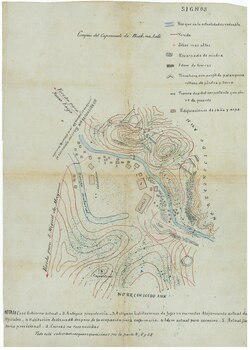
The republic was born out of military necessity. After being surrounded by Spanish forces at his headquarters in Talisay, Batangas, Emilio Aguinaldo escaped with 500 elite soldiers to the rugged wilderness of Biak-na-Bato ("Cleft Rock") in San Miguel, Bulacan. This natural fortress provided the ideal sanctuary for the revolutionary leadership.
Aguinaldo's arrival sparked a resurgence of armed resistance across central Luzon, drawing fighters from Pangasinan, Tarlac, Zambales, Nueva Ecija, and the Ilocos provinces. In response, Governor-General Fernando Primo de Rivera attempted to stifle the movement by prohibiting residents from leaving their towns on July 2, 1897, but the resistance persisted.
Revolutionary Demands
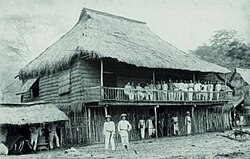
From his hideout, Aguinaldo issued a proclamation titled "To the Brave Sons of the Philippines," outlining the essential requirements for peace:
- Expulsion of the Friars and the return of appropriated lands to Filipinos.
- Representation in the Spanish Cortes (the legislative body of Spain).
- Freedom of the press and religious tolerance.
- Equal pay and treatment for Peninsular (Spanish-born) and Insular (Philippine-born) civil servants.
- Abolition of the government's power to banish citizens.
- Legal equality for all individuals.
Government Structure and Constitution
On November 1, 1897, the republic signed its provisional constitution. Written by Felix Ferrer and Isabelo Artacho, the document was nearly a word-for-word copy of the Cuban Constitution of Jimaguayú. This legal framework established a Supreme Council to lead the unrecognized state.
| Position | Name |
|---|---|
| President | Emilio Aguinaldo |
| Vice-President | Mariano Trías |
| Secretary of Foreign Affairs | Antonio Montenegro |
| Secretary of War | Emiliano Riego de Dios |
| Secretary of the Interior | Isabelo Artacho |
| Secretary of the Treasury | Baldomero Aguinaldo |
The Pact of Biak-na-Bato
By late 1897, Governor-General Primo de Rivera admitted that while he could capture the physical location of Biak-na-Bato, he could not crush the rebellion itself. This stalemate led to the involvement of Pedro Paterno, a Manila lawyer who acted as a mediator through shuttle diplomacy.
The resulting Pact of Biak-na-Bato, signed between December 14 and 15, 1897, effectively ended the republic. The agreement included several key conditions:
- Exile and Indemnity: Aguinaldo and his associates were permitted to live in a foreign country (Hong Kong). In exchange for surrendering arms, the Spanish government agreed to pay an indemnity of 800,000 Mexican dollars in three installments.
- Financial Control: The funds were paid directly to Aguinaldo, who held discretion over their distribution among the insurgents.
- Hostages: Two Spanish generals were held as hostages by the revolutionaries until Aguinaldo reached Hong Kong and the first payment was received.
- Political Reforms: While the expulsion of religious corporations and an autonomous government were discussed, these were not included in the final treaty to avoid criticism of the Governor-General.
Legacy and Preservation
The site of the republic's headquarters is now preserved as the Biak-na-Bato National Park. Established by President Manuel L. Quezon in 1937, the park originally covered 2,117 hectares. Over time, boundaries were adjusted to accommodate mineral and watershed reservations.
Today, the park serves as a historical landmark, featuring the cave where Aguinaldo hid, a memorial to the Pact, and markers commemorating the revolutionary efforts of the 1897 government.
Frequently Asked Questions
Why is it called the Republic of Biak-na-Bato instead of the Republic of the Philippines?
While the revolutionaries called themselves the Republic of the Philippines, historians use the name Republic of Biak-na-Bato to avoid confusion with the current Philippine government and other historical governments that used the same title.
What was the primary purpose of the Pact of Biak-na-Bato?
The pact was a peace agreement intended to end the hostilities between the Filipino revolutionaries and the Spanish colonial government through financial indemnity and the exile of the revolutionary leadership.
Where did the republic's constitution come from?
The constitution was written by Felix Ferrer and Isabelo Artacho, who based it almost entirely on the Cuban Constitution of Jimaguayú.
What happened to Emilio Aguinaldo after the republic was dissolved?
As part of the peace treaty, Aguinaldo and several of his associates went into exile in Hong Kong.
What is the significance of the Mexican dollar in the treaty?
The indemnity was denominated in Mexican dollars, which were a common currency at the time; they were worth approximately 50 US cents each during that era.