Religion: Global Belief Systems, Practices, and Demographics
Religion encompasses a diverse array of social-cultural systems that connect humanity to supernatural, transcendental, and spiritual elements. These systems are expressed through designated behaviors, ethics, morals, beliefs, and worldviews. While scholars lack a precise consensus on a single definition, religion generally involves a combination of faith, sacred texts, and organized practices that attempt to explain the origin of life and the universe.
The emergence of religious belief is often attributed to human awareness of death, the need for community, and the interpretation of dreams. To preserve these beliefs, religions utilize sacred histories and mythologies, which are passed down through oral traditions, symbols, and the veneration of holy places.
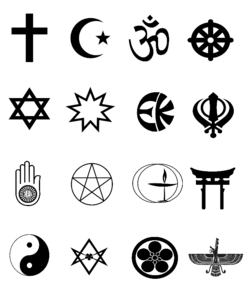
Key Facts

- There are an estimated 10,000 distinct religions worldwide.
- Four major religions—Christianity, Islam, Hinduism, and Buddhism—account for over 73% of the global population.
- Approximately 97.6% of people either follow one of these four major faiths or identify as nonreligious.
- Global religiosity may be increasing due to higher birth rates in religious countries.
- Religiosity often shows a negative correlation with average income.
The Nature of Religious Practice
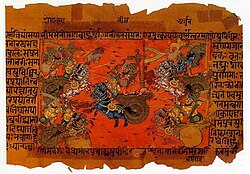
Religious expression varies widely across different cultures and traditions. Common practices include rituals (formalized ceremonies), sermons, and the veneration of deities or saints. Many faiths also incorporate sacrifices, festivals, meditation, and prayer to maintain a connection with the divine.
Beyond individual prayer, religion often manifests in communal events such as matrimonial and funerary services, music, dance, and public service. These activities serve to reinforce the shared identity and moral framework of the community.
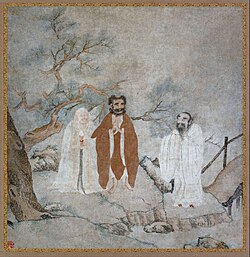
Classification of World Religions

Religions are typically categorized by their reach and origin. World religions are transcultural and international, while indigenous religions are specific to a particular culture or nation.
Abrahamic Religions
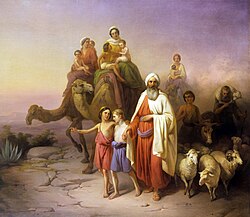
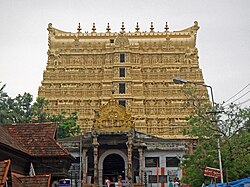
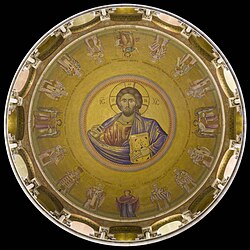
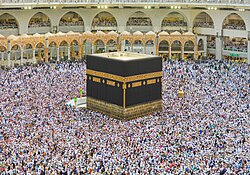
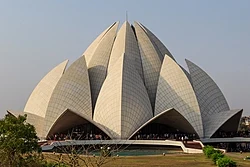
These are organized religions originating from the patriarch Abraham. This group includes Judaism, Christianity, Islam, and the Baháʼí Faith.
Indian Religions
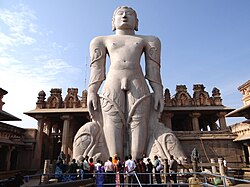
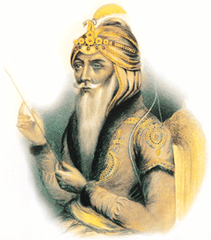
Originating in the Indian subcontinent, these systems include Hinduism, Buddhism, Jainism, and Sikhism.
East Asian and Folk Religions
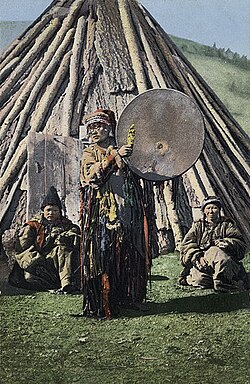
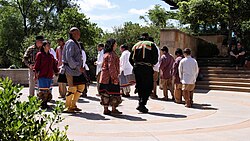
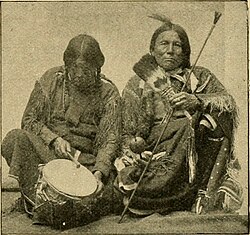
This category includes Taoism and Confucianism, as well as various folk religions and indigenous beliefs found in the Americas, Africa, and Siberia.
Global Religious Demographics
![A map of major denominations and religions of the world[needs update]](/images/10/17/101761b7847be8863d9efa0c9b8c1b96c4d7ac313637d6c46d4c953827a9dac6.webp)
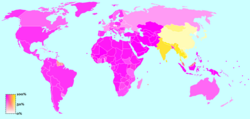
The distribution of faith is heavily concentrated among a few major systems. While thousands of smaller faiths exist, the vast majority of the human population adheres to one of the four largest global religions.
| Religion | Adherents (Billion) | Percentage of Population |
|---|---|---|
| Christianity | 2.3 | 28.8% |
| Islam | 2.0 | 25.6% |
| Hinduism | 1.2 | 14.9% |
| Buddhism | 0.3 | 4.1% |
| Total | 5.8 | 73.4% |
![Global percentage of adherents by religion[144]](/images/77/65/7765c58927c1cd1d47139d38326be52d34e82426dc984e6aaf8e282b89db6260.webp)
The Role of Nonreligion
A significant portion of the global population identifies as religiously unaffiliated. This demographic includes atheists (those who disbelieve in deities) and agnostics (those who believe the existence of the divine is unknown or unknowable). However, many unaffiliated individuals still maintain various spiritual beliefs without adhering to an organized religious structure.
![Average income correlates negatively with (self-defined) religiosity.[135]](/images/66/50/6650e0f04aa47aed96b8df3b58e71766baa9346904585cec205629d0090bac6c.png)
Frequently Asked Questions








How many religions exist in the world?
It is estimated that there are approximately 10,000 distinct religions worldwide, though most have small, regional followings.
What are the four largest religions by population?
The four largest religions are Christianity, Islam, Hinduism, and Buddhism, which together represent over 73% of the world's population.
What is the difference between world religions and indigenous religions?
World religions are transcultural and international in scope, whereas indigenous religions are typically culture-specific or nation-specific.
What does it mean to be religiously unaffiliated?
Being religiously unaffiliated means a person does not identify with any particular organized religion; this group includes atheists and agnostics, though some may still hold personal spiritual beliefs.
Why is global religiosity predicted to increase?
Scholars suggest that global religiosity may rise because countries with higher levels of religious adherence generally have higher birth rates.