Reinsurance Treaty: The Secret Diplomacy of Bismarck and the Road to World War I
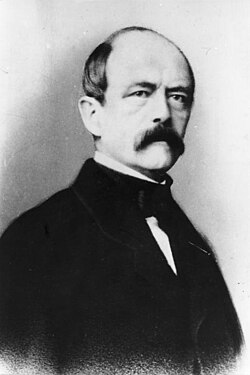
In the high-stakes world of 19th-century European diplomacy, few agreements were as critical—or as secretive—as the Reinsurance Treaty. Signed in 1887, this clandestine pact between the German Empire and the Russian Empire was a cornerstone of Chancellor Otto von Bismarck's strategy to maintain peace and ensure German dominance in Europe.
For a brief period, the treaty successfully calmed tensions between Berlin and St. Petersburg. However, its eventual collapse would trigger a geopolitical shift that many historians believe paved the way for the First World War.
Key Facts
- Duration: In effect from 1887 to 1890.
- Nature: A secret diplomatic agreement known only to a few high-ranking officials.
- Primary Goal: To prevent a two-front war for Germany by keeping Russia from aligning with France.
- Core Terms: Mutual neutrality in wars with third powers, with specific exceptions regarding France and Austria-Hungary.
- Outcome: Its non-renewal led directly to the Franco-Russian Alliance of 1894.
The Origins of the Treaty
The Reinsurance Treaty emerged from the ruins of the Dreikaiserbund (League of the Three Emperors), which collapsed in 1887. The collapse was driven by intense competition between the Russian Empire and Austria-Hungary for influence in the Balkans.
Bismarck, the German Chancellor, feared that if Russia felt isolated, it would form an alliance with France. This was a nightmare scenario for Germany, as it would force the nation to fight a two-front war. To prevent this, Bismarck negotiated a deal with Russian Foreign Minister Nikolay Girs. While Tsar Alexander III was initially hesitant, he eventually accepted the plan as the best alternative in the absence of French friendship.
The Terms of the Agreement
The treaty consisted of two primary components designed to balance Germany's conflicting obligations:
- Benevolent Neutrality: Both nations agreed to remain neutral if the other became involved in a war with a third great power. However, this did not apply if Germany attacked France or if Russia attacked Austria-Hungary.
- The Straits Question: Germany agreed to remain neutral if Russia intervened against Ottoman control of the Bosphorus and the Dardanelles (the Turkish Straits), effectively recognizing Russia's sphere of influence in Bulgaria and Eastern Rumelia.
The Collapse and Non-Renewal
The stability of the treaty relied heavily on Bismarck's personal prestige and diplomatic skill. When Kaiser Wilhelm II dismissed Bismarck in 1890, the new administration viewed the treaty differently. Bismarck's successor, Leo von Caprivi, and officials like Count von Berchem argued that the agreement was too favorable to Russia and contradicted other German commitments, such as the 1883 Austro-Romanian Treaty.
Kaiser Wilhelm II believed his personal friendship with Tsar Alexander III would be enough to maintain good relations, and he prioritized building a stronger relationship with Great Britain. Consequently, Germany refused to renew the treaty in 1890.
Geopolitical Consequences
The non-renewal was a strategic disaster for Germany. Russia, feeling abandoned and needing security, turned to France. This resulted in the Franco-Russian Alliance (1891–1917), which ended the diplomatic isolation of France—the very outcome Bismarck had spent his career trying to avoid.
| Feature | Under Reinsurance Treaty (1887) | Post-Non-Renewal (1894) |
|---|---|---|
| Russian Ally | Germany (Secretly) | France |
| French Status | Diplomatically Isolated | Allied with Russia |
| German Risk | Managed tension in Balkans | High risk of two-front war |
| Key Driver | Bismarck's diplomacy | Wilhelmine foreign policy |
Historical Significance
The existence of the treaty remained a secret until 1896, when a retired Bismarck revealed it to a newspaper to criticize his successors. Historians, including Norman Rich and Sidney Fay, view the failure to renew the treaty as a decisive turning point. While not the sole cause of World War I, it created the structural alignment of powers—specifically the Franco-Russian bloc—that made a general European conflict more likely in 1914.
Frequently Asked Questions
Why was the Reinsurance Treaty kept secret?
The treaty was secret because its terms contradicted other public alliances. Specifically, Germany's promise of neutrality to Russia regarding the Ottoman Empire conflicted with its obligations to other allies and its relationship with Great Britain.
What happened after the treaty expired in 1890?
After Germany refused to renew the treaty, Russia sought a new strategic partner for military and economic security. This led to the formation of the Franco-Russian Alliance in 1894, ending France's diplomatic isolation.
How did the treaty affect the Balkans?
The treaty attempted to manage the rivalry between Russia and Austria-Hungary in the Balkans by granting Russia a sphere of influence in Bulgaria and Eastern Rumelia, thereby reducing the immediate risk of conflict between the two empires.
Did the Reinsurance Treaty cause World War I?
While not the direct cause, historians consider the non-renewal of the treaty a long-term cause of the war. It pushed Russia toward France, creating the two-front threat that plagued German military strategy leading up to 1914.
Who was responsible for the treaty's non-renewal?
The decision was driven by Kaiser Wilhelm II and his advisors, including Chancellor Leo von Caprivi and Count von Berchem, who believed the treaty was unfavorable to Germany and inconsistent with other foreign policy goals.