Redcliffe History: From Medieval Manor to Industrial Hub
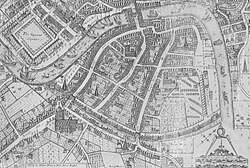
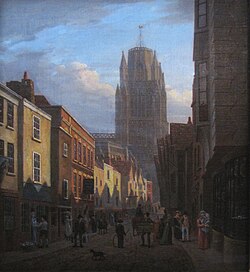
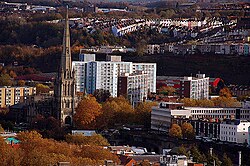
Redcliffe, a historic district of Bristol, possesses a rich legacy defined by its strategic geography and industrial spirit. Originally part of the manor of Bedminster and held by the Earls of Gloucester, Redcliffe was separated from the main settlement of Bristol by the River Avon. The area's unique geology—specifically the outcrops of red sandstone—provided a stable foundation for the iconic St Mary Redcliffe church and deep waters that naturally encouraged the development of bustling wharves.
Despite their proximity, a distinct rivalry existed between the merchants and residents of Redcliffe and those of Bristol. For centuries, the only fixed crossing between the two was Bristol Bridge, though numerous ferries served the community.
The Influence of Military Orders
During the 12th century, the landscape of Redcliffe was shaped by the arrival of the Knights Templar. Robert Fitzroy granted the order a portion of the land, which became known as Temple Fee. This grant was not merely territorial; the Templars were bestowed with the legal authority to hold courts and execute felons.
Following the suppression of the Templars, these significant legal rights and the associated fee were transferred to the Knights of St. John of Jerusalem, maintaining the area's status as a center of administrative and legal power.
Early Industry and Urban Expansion
Redcliffe's early economy was driven by textile production, specifically weaving, fulling (the process of cleansing and thickening cloth), and dyeing. Because fulling and dyeing were often noxious processes, they were likely established in Redcliffe to keep the pollution outside the city walls of Bristol.
The 13th century, during the reign of King Henry III, marked a period of rapid expansion. A major harbor improvement project led to the creation of the "Great Ditch," which diverted the River Frome through St Augustine's Marsh to create more mooring space and new quays at Broad Quay (St Augustines Reach). To facilitate the construction of the stone Bristol Bridge, the River Avon was diverted through Redcliffe along the "Portwall," utilizing wattle and daub coffer dams—temporary watertight enclosures—to lay solid stone foundations. Henry III specifically mandated that "the men of Redcliffe" assist in these massive engineering feats.
Integration into Bristol and Industrial Innovation
By 1373, the administrative divide ended when Redcliffe was officially incorporated into Bristol, forming the city and county of Bristol. This transition was a pivotal legal milestone, as it allowed local legal disputes to be settled within the city rather than requiring travel to courts in Gloucester or Ilminster in Somerset.
Centuries later, Redcliffe became a site of global industrial firsts. In 1782, William Watts converted his home near St Mary Redcliffe into the world's first shot tower. This innovative process allowed for the production of lead shot by dropping molten lead from a height. The Redcliffe Shot Tower remained a landmark until 1968, when it was demolished for road improvements, and production moved to the Cheese Lane Shot Tower on the Floating Harbour.
Key Facts
- Original Ownership: Originally part of the manor of Bedminster, held by the Earls of Gloucester.
- Legal Autonomy: The Knights Templar once held the power to execute felons in the area known as Temple Fee.
- Industrial Roots: Early industries included weaving, dyeing, and fulling, located outside Bristol's walls due to their noxious nature.
- City Status: Redcliffe became part of the city and county of Bristol in 1373.
- Global First: Home to the world's first shot tower, established by William Watts in 1782.
Redcliffe Historical Summary
| Period/Year | Event/Development | Significance |
|---|---|---|
| 12th Century | Grant to Knights Templar | Establishment of Temple Fee and local court powers. |
| 13th Century | Harbour Improvements | Construction of the Great Ditch and stone Bristol Bridge. |
| 1373 | Incorporation into Bristol | Became part of the city and county of Bristol. |
| 1782 | First Shot Tower | William Watts innovated lead shot production. |
| 1968 | Shot Tower Demolition | Removal of the tower for road improvements. |
Frequently Asked Questions
Why were dyeing and fulling industries located in Redcliffe?
These processes were considered noxious, meaning they produced unpleasant smells or pollutants. Consequently, they were established in Redcliffe because it sat outside the city walls of Bristol.
What was the significance of the "Temple Fee"?
The Temple Fee was a portion of Redcliffe given to the Knights Templar in the 12th century, granting them the authority to hold courts and execute felons.
How did the construction of Bristol Bridge affect Redcliffe?
To build the stone bridge, the River Avon had to be diverted through Redcliffe along the line of the Portwall, and local men were required by King Henry III to assist in the project.
What was the purpose of the Redcliffe Shot Tower?
Established by William Watts in 1782, it was the first tower in the world used to manufacture lead shot through an innovative dropping process.
Why was the 1373 incorporation into Bristol important?
Becoming part of the city and county of Bristol meant that residents no longer had to travel to Gloucester or Ilminster to resolve legal disputes in court.