Red Fox: Biology, Distribution, and Behavior of Vulpes vulpes
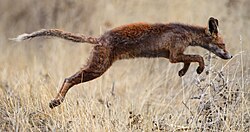
The red fox (Vulpes vulpes) is one of the most widely distributed carnivores in the world. A member of the Canidae family, this adaptable mammal has successfully colonized diverse environments, ranging from the frozen taiga of Siberia to the bustling streets of modern cities. Known for its intelligence and versatility, the red fox plays a critical role in various ecosystems as both a predator and prey.
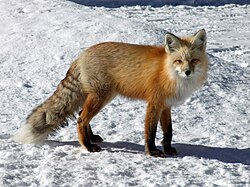
From its distinctive reddish-orange fur to its keen senses, the red fox is a master of survival. Whether navigating the wilderness of North America or adapting to urban gardens in England, its ability to exploit new food sources and habitats has ensured its status as a species of Least Concern according to the IUCN.
Key Facts
- Scientific Name: Vulpes vulpes
- Conservation Status: Least Concern (IUCN 3.1)
- Temporal Range: Approximately 0.7 million years ago to present
- Distribution: Native to much of the Northern Hemisphere; introduced to Australia
- Diet: Omnivorous, focusing on small mammals, invertebrates, and fruit
- Social Structure: Territorial, utilizing scent marking and complex dens
Taxonomy and Physical Characteristics
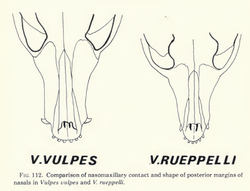
The red fox is classified under the order Carnivora and the genus Vulpes. It is distinguished from other foxes, such as the Rüppell's fox, by a more developed facial area in its skull structure.

Dimensions and Build
Physical size varies significantly across its 45 recognized subspecies. For example, the Scandinavian red fox typically measures 70–90 cm in length and weighs between 5 and 10 kg. In contrast, smaller subspecies like the Anatolian fox may only weigh between 2.2 and 3.2 kg.
Fur and Color Morphs
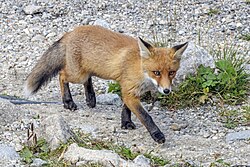
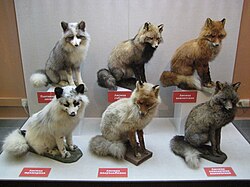
While the typical coloration is red, the species exhibits several distinct color morphs (genetic variations in coat color). These include the Silver, Cross, Platinum (silvery-white with a bluish cast), and Amber morphs. The Samson morph is unique for its woolly pelt that lacks guard hairs.
Distribution and Habitat
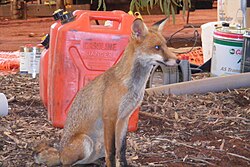
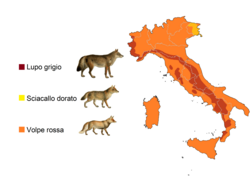
The red fox is found across vast regions of the globe. While native to North America, Europe, and Asia, it has been introduced to other areas, most notably Australia, where it is considered an invasive species that can harm native wildlife.
Subspecies Overview
| Subspecies | Primary Range | Typical Weight |
|---|---|---|
| V. v. vulpes | Scandinavia | 5–10 kg |
| V. v. fulva | North America | Variable |
| V. v. arabica | Arabian Peninsula | 2.4–3.2 kg |
| V. v. niloticus | Egypt and Sudan | 1.8–3.8 kg |
| V. v. japonica | Japan | Variable |
Behavior and Ecology

Social Structure and Reproduction
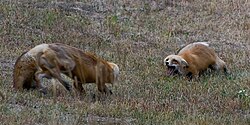
Red foxes are territorial animals that use scent glands and urine marking to define their boundaries. They are known for their complex denning behavior, creating underground shelters for raising their young.
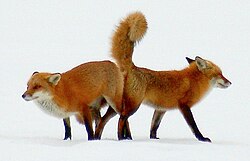
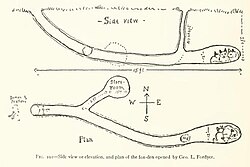
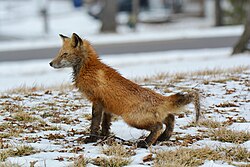
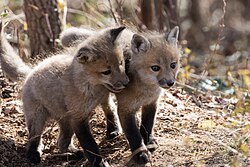
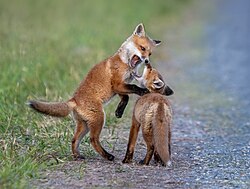
Juvenile foxes, known as kits or cubs, remain in the den during their early development, often engaging in social play to hone their hunting skills.
Diet and Hunting
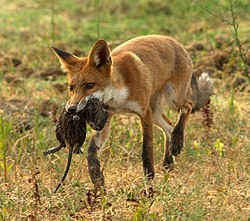
The red fox is an opportunistic omnivore. Its diet varies by continent but generally consists of small mammals (such as mice and rabbits), invertebrates, birds, and vegetation. In urban areas, they frequently supplement their diet with human garbage.
![Occurrence of key food categories in the diet of red foxes by continent. Food categories, from left to right: small mammals, invertebrates, medium-sized mammals, fruit, birds, vegetation, large mammals, garbage, and reptiles[84]](/images/81/6c/816c10ff3b471dfa99e2f7b7831b854892893f43a2ec4dc30345effb3272bf2b.jpg)
Interspecific Competition
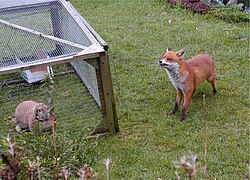
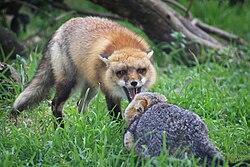
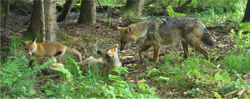
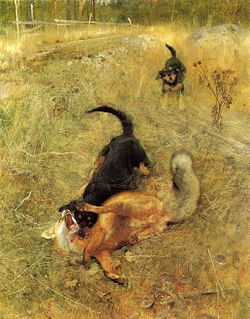
The red fox often competes with other carnivores. It is generally dominant over the raccoon dog, sometimes entering their dens to kill kits or adults. It also interacts with other canids, such as the golden jackal and gray fox, though these relationships can range from competitive to occasionally social.
Relationship with Humans
Urban Adaptation
In recent decades, red foxes have successfully transitioned to urban environments. These urban foxes are often bolder than their rural counterparts, though research suggests they are not necessarily more innovative. They have become a common sight in cities like London and Denver.

Human Impact and Use
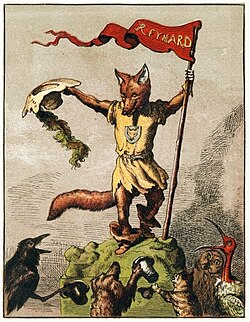
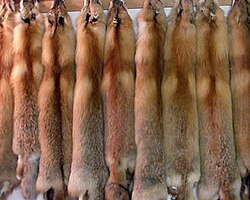
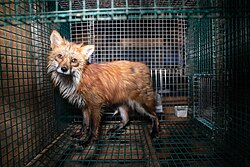
Humans have a complex history with the red fox. They have been hunted for sport and their pelts used in the fur industry. Conversely, they appear frequently in folklore and mythology, such as the character Reynard the Fox.
Frequently Asked Questions
What are baby red foxes called?
Juvenile red foxes are commonly referred to as kits or cubs.
Are red foxes the same as other fox species?
No, while they share the genus Vulpes with species like the Arctic fox and Fennec fox, the red fox (Vulpes vulpes) is a distinct species with its own unique morphology and distribution.
What do red foxes eat?
Red foxes are omnivores. Their diet primarily includes small mammals and invertebrates, but they also eat birds, fruit, vegetation, and, in urban settings, human food waste.
Why are red foxes considered invasive in Australia?
Because they were introduced to the region and have no natural predators, they prey heavily on native wildlife, disrupting the local ecological balance.
Do red foxes live in cities?
Yes, urban red foxes are common in many cities worldwide. They have adapted to live in built-up areas by utilizing gardens for dens and scavenging for food.