Understanding Foxes: Biology, Diversity, and Conservation
Foxes are a diverse group of clever, adaptable mammals belonging to the family Canidae. While the term "fox" is often used broadly to describe many different animals, scientific classification distinguishes between "true foxes" and other related species. From the frozen tundras of the Arctic to the tropical forests of South America, these animals have mastered various ecosystems through specialized biological traits and intelligent behaviors.
Key Facts
- True Foxes: There are 12 species belonging to the monophyletic genus Vulpes.
- Size Range: The red fox is the largest (up to 8.7 kg), while the fennec fox is the smallest (as low as 0.7 kg).
- Diet: Most foxes are omnivores, consuming insects, small vertebrates, eggs, and vegetation.
- Physical Traits: They are digitigrade (walking on their toes) and possess partially retractable claws.
- Reproduction: Gestation typically lasts between 52 and 53 days.
Scientific Classification and Diversity
In the biological hierarchy, foxes fall under the order Carnivora and the family Canidae. However, the term "fox" is complex due to its phylogenetic (evolutionary) relationships.
The Genus Vulpes
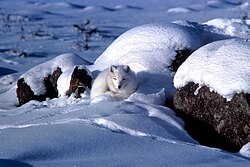
The "true foxes" comprise 12 species within the genus Vulpes. This group is considered monophyletic, meaning they all share a single common ancestor. Notable members include the red fox, Arctic fox, and fennec fox.
Other Fox Groups
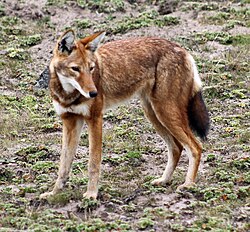
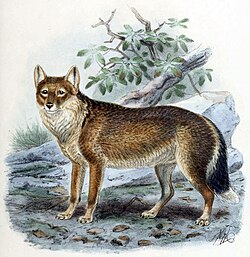
Beyond the Vulpes genus, there are approximately 25 current or extinct species often referred to as foxes. These include the South American foxes (such as the Lycalopex genus) and outlying groups like the gray fox and the bat-eared fox. Some of these groups are paraphyletic, meaning they do not include all the descendants of their common ancestor.
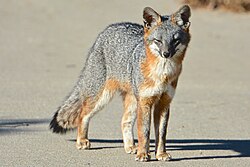
| Genus | Example Species |
|---|---|
| Vulpes | Red fox, Arctic fox, Fennec fox |
| Urocyon | Gray fox, Island fox |
| Lycalopex | Darwin's fox, Culpeo (Andean fox) |
| Otocyon | Bat-eared fox |
| Cerdocyon | Crab-eating fox |
| Canis | Ethiopian wolf |
Biology and Physical Characteristics
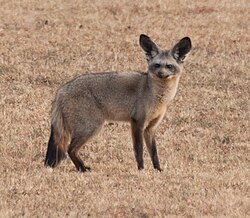
Foxes are generally smaller than wolves or jackals but can be larger than raccoon dogs. Their physical build is highly specialized for hunting and survival.
Morphology and Sensory Tools
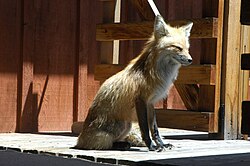
A typical fox features a triangular face, pointed ears, an elongated rostrum (snout), and a bushy tail. Their whiskers, or vibrissae, are essential sensory tools. The mystacial vibrissae on the muzzle average 100–110 mm in length, while carpal vibrissae on the forelimbs average about 40 mm and point downward and backward.
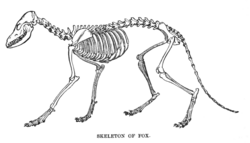
Dentition and Diet
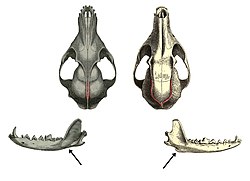
As carnivores, foxes possess pronounced carnassial pairs—specialized teeth (the upper premolar and lower first molar) that work together to shear through flesh. Their sharp canines are ideal for gripping prey. While many are generalist predators, their diet is primarily composed of invertebrates (insects) and small vertebrates (birds and reptiles).
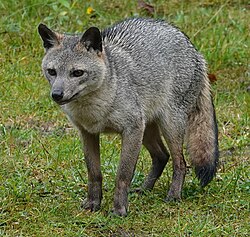
Behavior and Hunting
Foxes are known for caching, a behavior where they bury excess food under leaves, snow, or soil for later use. When hunting, they often use a pouncing technique: they crouch to camouflage themselves and then use their hind legs to leap forcefully onto their prey.
Reproduction and Life Cycle
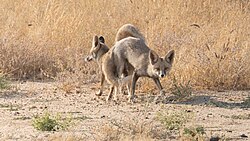
The reproductive cycle of a vixen (female fox) is approximately twelve months long. Following a period of estrus lasting one to six days, fertilization occurs, leading to a gestation period of 52 to 53 days.
Litter sizes vary significantly by species and environment. While the average litter is four to five kits, the Arctic fox can produce as many as eleven. Kits are born with a limited vocal repertoire, which evolves from whining into infantile barks and yelps during play.
Conservation Challenges

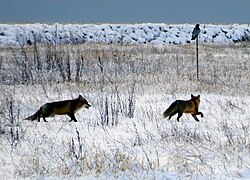
Several fox species face significant threats from habitat loss, disease, and predation.
The Island Fox
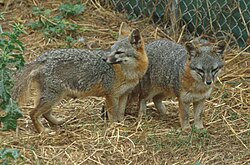
The island fox (*Urocyon littoralis*) on the California Channel Islands faced a population crisis due to canine distemper virus and predation by non-native golden eagles. Conservation efforts, including captive breeding and habitat restoration, were required to prevent a total population collapse caused by the Allee effect—a phenomenon where low population density decreases an individual's fitness.
Darwin's Fox
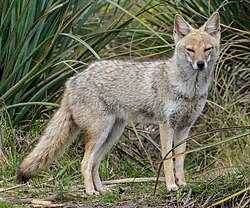
Darwin's fox (*Lycalopex fulvipes*) is an endangered species found primarily on Chiloé Island. Its main threats include deforestation, which shrinks its habitat and allows the competitor chilla fox to expand, and diseases transmitted by domestic pet dogs.
Frequently Asked Questions

What is the difference between a true fox and other canids?
True foxes belong to the genus Vulpes and are a monophyletic group. Other animals commonly called "foxes," such as the gray fox or the bat-eared fox, belong to different genera and are not part of the Vulpes lineage.
How do foxes hunt their prey?
Many foxes use a specialized pouncing technique. They crouch low to the ground to remain camouflaged and then use their powerful hind legs to leap high into the air, landing directly on top of their prey.
Are foxes omnivores or carnivores?
Foxes are considered omnivores. While they have the dental structure of a carnivore (including shearing carnassial teeth), their diet includes a wide range of items including insects, small vertebrates, eggs, and vegetation.
Why are some fox populations declining?
Declines are often caused by habitat loss (deforestation), competition from other species, predation by non-native animals, and the spread of diseases from domestic animals.
What are "vibrissae"?
Vibrissae are the scientific term for whiskers. Foxes have these sensory hairs on their muzzles and also on their forelimbs to help them navigate and sense their surroundings.