Understanding Red Clover: The Versatile Powerhouse of the Meadow
Known scientifically as Trifolium pratense, red clover is a vibrant, herbaceous flowering plant belonging to the Fabaceae, or bean family. Its name is derived from the Latin word prātum, meaning meadow, which perfectly describes its natural habitat. While native to the Old World, this resilient perennial has naturalized across the globe, becoming a staple in both wild landscapes and agricultural fields.
Key Facts
- Scientific Name: Trifolium pratense
- Conservation Status: Least Concern (IUCN 3.1)
- Primary Benefit: Nitrogen fixation, which improves soil fertility.
- Native Range: Europe, Western Asia, and northwest Africa.
- Key Pollinators: Bumblebees, particularly the large garden bumblebee (Bombus ruderatus).
- Cultural Status: State flower of Vermont since 1894.
Botanical Description
Red clover is a short-lived perennial plant that typically grows between 20 and 80 cm tall. One of its most defining features is a deep taproot, which allows the plant to remain tolerant of drought and provides a beneficial soil-structuring effect.
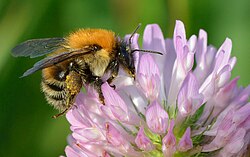
The foliage is characterized by alternate, trifoliate leaves—meaning each leaf is composed of three leaflets. These leaflets are green with a distinctive pale crescent mark on the outer half. The plant produces dense inflorescences (clusters of flowers) consisting of dark pink blossoms with paler bases, measuring 12–15 mm in length. These flowers are specifically structured with a hairy calyx tube and five petals, making them highly attractive to pollinators.
Taxonomy and Distribution
First published by Carl Linnaeus in 1753 in Species Plantarum, Trifolium pratense is categorized into three known subspecies: T. pratense subsp. pratense, T. pratense subsp. baeticum, and T. pratense subsp. kotulae.
Originally native to Europe, northwest Africa, and Western Asia, the plant has been introduced to other continents. It was brought to New Zealand and South America, specifically Argentina and Chile, over a century ago. In many temperate regions of the Americas and Australasia, it has become naturalized after escaping from agricultural cultivation.
Ecological Importance and Challenges
Red clover plays a vital role in its ecosystem through nitrogen fixation, a process where the plant converts atmospheric nitrogen into a form that enriches the soil. This capability promotes protein-rich growth, providing a sustainable food source for wildlife such as rabbits, turkeys, and deer.
The plant's relationship with pollinators is equally critical. In South America and New Zealand, the large garden bumblebee (Bombus ruderatus) serves as a primary pollinator. Because of their high visibility, red clover flowers are sometimes used by conservationists to help build wildlife bridges that reconnect fragmented habitats.
Despite its resilience, the plant is susceptible to several biological threats, including:
- Fungal and Bacterial Diseases: Such as clover rot and red clover rust (Uromyces trifolii-repentis var. fallens).
- Pests: Parasitic nematodes (roundworms).
- Viruses: Various viral infections that can impact plant health.
Agricultural and Practical Uses
Due to its ability to increase soil fertility, red clover is widely utilized as a green manure crop—a crop grown specifically to be plowed back into the soil to improve its quality. It is also highly valued as a fodder crop for livestock. In India, the Agriculture Department of Kashmir's Fodder Seed Production Station Aru is the leading producer of red clover seed.
Beyond the farm, red clover has several culinary and ornamental applications:
- Culinary: The leaves and flowers are edible and used as garnishes or ground into flour.
- Beverages: Flowers are used to create tisanes (herbal teas) and jellies.
- Wellness: Essential oils are extracted for use in aromatherapy, and flowers are included in essiac recipes.
Phytochemistry and Folk Medicine
The chemical composition of red clover includes carbohydrates, saponins, and flavonoids. Notably, it contains isoflavones, also known as phytoestrogens, which are plant-based compounds that structurally resemble human estrogen.
In Indian folk medicine, the plant is believed to act as a sedative, expectorant, anti-inflammatory, or antispasmodic agent. In alternative medicine, it is sometimes used to treat menopausal symptoms, such as hot flashes. However, a 2024 evidence map indicated that clinical trials are too few to confirm efficacy, and clinical organizations do not recommend it for menopause treatment. There is no evidence that red clover prevents or treats cancer.
Safety Warning: Because red clover contains coumarin and flavonoid derivatives, it should be used with caution by individuals with coagulation disorders or those taking anticoagulation therapy.
Cultural Significance
Red clover holds a place of honor in several regions. It became the state flower of Vermont in 1894. It also served as the national flower of Denmark starting in 1936; however, this choice was unpopular with the public and was replaced in 1987 by the daisy (either the oxeye or marguerite daisy).
Red Clover Summary Reference
| Feature | Details |
|---|---|
| Family | Fabaceae (Bean family) |
| Growth Habit | Short-lived perennial (20–80 cm) |
| Key Chemical | Isoflavones (Phytoestrogens) |
| Primary Use | Fodder, green manure, ornamental |
| Native Regions | Europe, NW Africa, Western Asia |
| Conservation Status | Least Concern |
Frequently Asked Questions
Is red clover edible?
Yes, both the flowers and leaves of the red clover are edible. They can be used as garnishes for dishes or ground into a flour.
How does red clover help the soil?
Red clover performs nitrogen fixation, which means it converts nitrogen from the air into a form that plants can use, thereby increasing soil fertility and supporting protein-rich growth.
Can red clover be used as a medicine?
While used in folk medicine as an anti-inflammatory or sedative, and in alternative medicine for menopause symptoms, there is limited clinical evidence to support these uses. It is not an effective treatment for cancer.
Are there any risks associated with red clover?
Yes. Due to its coumarin and flavonoid derivatives, people with coagulation disorders or those on anticoagulation medication should use red clover with caution.
Which insects are most important for red clover?
Bumblebees are the primary visitors. Specifically, the large garden bumblebee (Bombus ruderatus) is a critical pollinator in regions like New Zealand and South America.