Recession: Causes, Indicators, and Economic Impact
In the study of economics, a recession is a business cycle contraction characterized by a broad decline in economic activity. While the International Monetary Fund notes that there is no single official global definition, recessions generally occur when there is a widespread drop in spending, known as an adverse demand shock.
These downturns can be triggered by a variety of catalysts, including financial crises, external trade shocks, adverse supply shocks, the bursting of economic bubbles, or large-scale disasters such as pandemics.
Defining a Recession Across Borders
Different regions apply different criteria to determine when an economy has officially entered a recession:
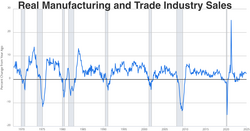
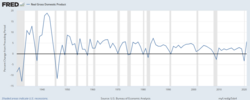
- United States: Defined as a significant decline in economic activity spread across the market, lasting more than a few months. This is typically visible in real gross domestic product (GDP), real income, employment, industrial production, and wholesale-retail sales.
- European Union: Adopts a definition similar to that of the United States.
- United Kingdom and Canada: Defined more strictly as negative economic growth in GDP for two consecutive quarters.
Key Facts
- Recessions are marked by a widespread drop in spending (adverse demand shocks).
- Governments typically combat recessions using expansionary policies, such as lowering interest rates or increasing government spending.
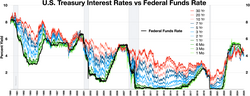
- An inverted yield curve—where short-term interest rates exceed long-term rates—is a primary predictor of downturns.
- The Sahm Rule is a recognized labor-market indicator used to signal the start of a recession.
- U.S. history includes significant contractions, such as the 18-month recession from December 2007 to June 2009.
The Lifecycle of an Economic Downturn
Economies typically move from a state of growth through a period of warning signs before hitting a severe downturn threshold.
Early Warning Signs
Before a recession fully takes hold, several "front end" indicators often shift. Economic growth begins to slow, and consumer and business confidence declines. Uncertainty increases, leading to falling business investments and growing unemployment. In the housing market, prices may begin to fall, while corporate and household debt levels often grow.
The Severe Downturn
Once the recession threshold is crossed, economic growth may vanish entirely. Confidence reaches low levels, and uncertainty becomes high. Consumer spending decreases significantly, and unemployment reaches high peaks.
| Condition | Normal Economy | Early Warning Signs | Severe Downturn |
|---|---|---|---|
| Economic Growth | Average/Strong | Slowing | None |
| Confidence | Average/High | Declining | Low |
| Unemployment | Low/Average | Growing | High |
| Consumer Spending | Stable/High | Decreasing | Low |
| Business Investment | Average/High | Falling | None |
Predicting the Contraction
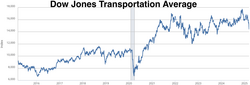
Economists monitor various predictors to forecast potential recessions. These include manufacturing data, industrial production, and chemical activity. Transportation trends and corporate profits are also critical markers.
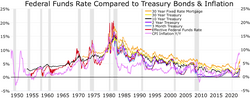
One of the most watched indicators is the inverted yield curve. This occurs when the Federal Reserve raises the Federal Funds Rate, pushing short-term interest rates above long-term Treasury rates.
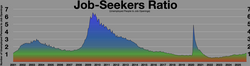
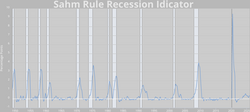
Other critical predictors include the Sahm Rule, which monitors unemployment trends, and the JOLTS report, which analyzes the ratio of job seekers to available positions to determine if the job market is "hot," "balanced," or "cold."
Additional indicators include the S&P 500 and BBB bond spread, retail sales, consumer confidence, and housing construction. Even unorthodox signals, such as changes in the demand for specific consumer goods, are sometimes monitored by analysts.
Government Responses and Consequences
To mitigate the damage of a recession, governments typically employ expansionary macroeconomic policies. These strategies aim to stimulate demand by increasing the money supply, decreasing interest rates, increasing government spending, or decreasing taxation.
Despite these efforts, recessions lead to significant consequences, most notably increased unemployment and business failures. Historically, the U.S. has faced various contractions, including a 15-month period from July 1981 to November 1982 and an 8-month period from March 2001 to November 2001.
Frequently Asked Questions
What is the difference between a recession and a depression?
While a recession is a significant decline in economic activity lasting several months, a depression is generally a more severe and prolonged economic collapse.
How does an inverted yield curve predict a recession?
An inverted yield curve occurs when short-term interest rates are higher than long-term rates, signaling that investors have a pessimistic outlook on the near-term economy.
What is the Sahm Rule?
The Sahm Rule is a labor-market indicator that triggers a recession warning when the three-month moving average of the unemployment rate rises by a specific threshold relative to its previous low.
How do governments stop a recession?
Governments use expansionary policies, such as lowering interest rates to encourage borrowing and spending, or increasing public spending to create jobs and stimulate demand.
Is a recession the same in every country?
No. While the general concept is the same, definitions vary. For example, the UK and Canada use a technical definition of two consecutive quarters of negative GDP growth, whereas the US uses a broader set of economic indicators.