Reader's Digest: A History of Global Publishing and Business Evolution
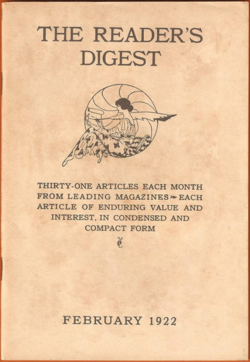
Founded on the idea of curation long before the digital age, Reader's Digest transformed the way people consumed information. By gathering a sampling of favorite articles from various monthly magazines and condensing or rewriting them into a single publication, the magazine provided a streamlined reading experience for a mass-market audience.
The venture began in 1920 after Dewitt Wallace married Lila Bell Wallace in Pleasantville, New York. The couple launched the publication in an unlikely setting: a basement located beneath a Greenwich Village speakeasy. While the Wallaces initially hoped for a modest net income of $5,000, Dewitt Wallace's keen understanding of audience preferences fueled explosive growth.
Key Facts
- Founded: 1922 by Dewitt and Lila Bell Wallace.
- Core Concept: Condensing and curating top articles from other magazines.
- Global Reach: At its peak, it had 40 international editions in 13 languages and Braille.
- Health Impact: Published "Cancer by the Carton" in 1952, linking smoking to lung cancer.
- Educational Contribution: Launched the "Word Power" column in 1945 and a national school competition from 2002 to 2006.
Rapid Growth and Global Expansion
By 1929, Reader's Digest had already secured 290,000 subscribers and was generating a gross annual income of $900,000. The magazine maintained a conservative and anti-Communist political and social perspective throughout the 20th century.
International expansion began in 1938 with the launch of the United Kingdom edition. This set the stage for a massive global footprint; by its 40th anniversary, the magazine reached a total international circulation of 23 million. It became the largest-circulating journal in several countries, including Mexico, Spain, Sweden, Peru, and China.
Cultural and Educational Milestones
Beyond general interest stories, the magazine introduced influential features. In January 1945, Wilfred J. Funk wrote the first "Word Power" column, focusing on vocabulary. The publication also took a stand on public health in December 1952 with the series "Cancer by the Carton," which established a link between smoking and lung cancer.
The commitment to literacy continued into the 21st century with the Reader's Digest National Word Power Challenge, a vocabulary competition held in US schools from 2002 to 2006. The program was paused in 2007 for a comprehensive evaluation of its mission and implementation model.
Business Transitions and Financial Challenges
During the 1950s, the organization operated with a complex editorial hierarchy, including Executive, Managing, Senior, Department, Roving, and Associate Editors, alongside a dedicated Book Department.
The business structure shifted significantly in 1990 when the parent company, The Reader's Digest Association, Inc. (RDA), became a publicly traded corporation. However, the following decades brought financial instability, with RDA reporting net losses every year from 2005 to 2010.
Private Equity and Bankruptcy
In March 2007, a consortium led by Ripplewood Holdings LLC acquired the company via a leveraged buyout—a transaction where debt is used to fund the purchase—for $2.8 billion. This deal was financed with $2.2 billion in debt, which tripled the association's annual interest payments to $148 million.
The heavy debt load led to an arranged Chapter 11 bankruptcy filing on August 24, 2009. The company emerged after lenders exchanged debt for equity, effectively extinguishing Ripplewood's original investment. A second bankruptcy filing occurred on February 17, 2013, leading to the company's purchase for £1 by venture capitalist Mike Luckwell.
Evolution of the Modern Edition
The magazine has frequently adjusted its publishing strategy to adapt to changing markets. In 2009, the US edition reduced its frequency to 10 times a year to prioritize digital offerings and shifted content away from celebrity profiles toward spiritual and military stories. While it returned to a 12-issue annual schedule in 2013, its current publication frequency is six times a year.
International operations have also fluctuated. While expanding into Slovenia, Croatia, Romania, and Serbia between 2006 and 2007, the magazine faced setbacks elsewhere. The Italian licensee stopped publishing in 2007, and the Chinese edition, launched in 2008, ceased operations in 2012 due to high pricing and translation quality issues. Most recently, the closure of the UK edition was announced in April 2024.
| Period/Year | Key Event | Impact/Detail |
|---|---|---|
| 1922 | Foundation | Launched by Dewitt and Lila Bell Wallace in NYC. |
| 1938 | International Debut | First international edition published in the UK. |
| 1952 | Health Reporting | Linked smoking to lung cancer in "Cancer by the Carton". |
| 1990 | Public Offering | RDA became a publicly traded corporation. |
| 2007 | Leveraged Buyout | Acquired by Ripplewood Holdings for $2.8 billion. |
| 2009/2013 | Bankruptcy | Filed for Chapter 11 twice to restructure debt. |
Frequently Asked Questions
What was the original purpose of Reader's Digest?
The magazine was designed to curate a sampling of favorite articles from various monthly magazines, condensing and rewriting them to provide a comprehensive collection of diverse subjects in one publication.
How did Reader's Digest contribute to public health awareness?
In December 1952, the magazine published a series of articles titled "Cancer by the Carton," which highlighted the link between smoking and lung cancer.
Why did the magazine struggle in the Chinese market?
The Chinese edition ceased publishing in 2012 because of low sales driven by high pricing, a poorly defined target audience, and low-quality translated content.
What happened during the 2007 leveraged buyout?
Ripplewood Holdings LLC and other investors bought the company for $2.8 billion, using $2.2 billion in debt. This significantly increased the company's interest payments, eventually contributing to its bankruptcy filings.
What is the current publication frequency of the US edition?
The magazine is currently published six times a year.