Raspberries: A Comprehensive Guide to Species, Cultivation, and Nutrition
The raspberry is the edible fruit of several plant species within the Rubus genus of the rose family. Most of these species fall under the subgenus Idaeobatus. These perennial plants are characterized by their woody stems and the production of aggregate fruits that are prized globally for their flavor and nutritional value.
From the gardens of North America and Northern Europe to large-scale commercial farms, raspberries are consumed in a vast array of forms, including fresh fruit, preserves, cakes, pastries, ice cream, and liqueurs.
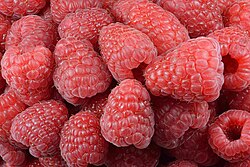
Key Facts
- Global Production: 940,979 tonnes were produced in 2023, with Russia leading at 23%.
- Fruit Structure: A single berry typically weighs 3–5 g and consists of approximately 100 drupelets (small individual fleshy fruits).
- Nutritional Highlights: High in Vitamin C (29% DV), Manganese (29% DV), and dietary fiber.
- Botanical Distinction: Unlike blackberries, the torus (receptacle) does not remain inside the fruit when a raspberry is picked.
- Growth Habit: Perennial woody plants that thrive in well-drained soil with a pH between 6 and 7.
Botanical Description and Etymology
A raspberry bush can yield several hundred berries annually. The plants require ample sunlight and water to develop optimally. However, they are susceptible to Phytophthora root rot, a serious pest problem caused by excess irrigation or heavy, wet soils. Because they spread easily via seeds—often transported by bird droppings—escaped raspberries are frequently viewed as garden weeds unless regularly pruned.
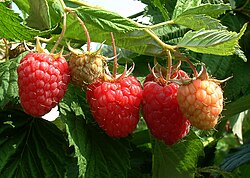
The word "raspberry" first appeared in print in 1602 as a compound of "rasp" and "berry." The term "rasp" is believed to derive from raspise, a 15th-century term for a sweet rose-colored wine. While some suggest a folk etymology linking the name to the "rough" appearance of the berry, the wine-based origin is more historically supported. In Scotland and Northern England, the fruit is still commonly referred to as "rasp."
Raspberry Species and Varieties
The genus Rubus is diverse, spanning various subgenera and species across the globe.
Subgenus Idaeobatus
- Rubus idaeus: The European red raspberry.
- Rubus strigosus: The American red raspberry.
- Rubus occidentalis: The black raspberry.
- Rubus crataegifolius: The Asian raspberry.
- Rubus phoenicolasius: The wine raspberry.
- Rubus parvifolius: The Australian native raspberry.
- Rubus rosifolius: The Mauritius raspberry.
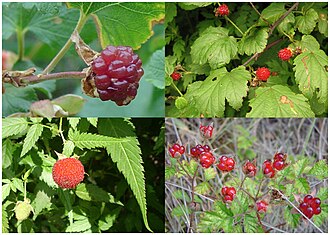
Other Notable Species
Beyond Idaeobatus, other raspberries include the boulder raspberry (Rubus deliciosus), the Arctic raspberry (Rubus arcticus), and the snow raspberry (Rubus nivalis).
Cultivation and Commercial Production
Raspberries can be grown in hardiness zones 3 through 9. While traditionally planted as dormant canes in winter, many growers now use tissue-culture plug plants. A unique method known as "long cane production" involves growing canes in cold climates (like Scotland or Washington) to meet chilling requirements for bud break before transplanting them to warmer regions like Spain for an early-season harvest.
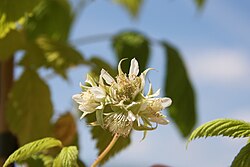
For commercial success, plants are typically spaced 2–6 per meter in fertile, well-drained soil, often in raised beds to prevent root rot. Harvesting occurs when the fruit turns a deep color—red, black, purple, or golden yellow—and detaches easily from the receptacle.
Cultivars and Color Variants
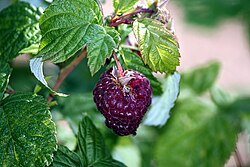
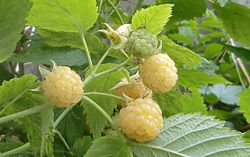
Modern red raspberries are often hybrids of R. idaeus and R. strigosus, with recent breeding focusing on thornless, upright varieties. Interestingly, some raspberries appear yellow. These golden raspberries are albino-like variants caused by recessive genes that prevent the production of anthocyanin pigments, though they retain the flavor of their parent species (red or black).
Nutrition and Phytochemicals
Raspberries are highly nutritious, consisting of 86% water and 12% carbohydrates. They are particularly valued for their high fiber content and essential micronutrients.
| Nutrient | Amount | % Daily Value (DV) |
|---|---|---|
| Energy | 53 kcal | - |
| Dietary Fiber | 6.5 g | - |
| Vitamin C | - | 29% |
| Manganese | - | 29% |
| Vitamin K | - | 7% |
| Pantothenic acid (B5) | - | 7% |
Pests and Diseases
Raspberry growers face several biological challenges:
- Insects: The raspberry beetle (Europe) and raspberry fruitworm (North America) are primary pests, alongside various aphids and moths.
- Viruses: The Raspberry mosaic disease complex (a synergy of three viruses) causes leaf mottling and reduced yields. The Tomato ringspot virus can cause fruit to appear crumbly and leaves to curl.
Frequently Asked Questions
What is the difference between a raspberry and a blackberry?
The primary botanical difference is that when a raspberry is picked, the torus (the core/receptacle) remains on the plant, whereas the torus stays with the fruit in a blackberry.
Why are some raspberries yellow?
Yellow or golden raspberries are variants resulting from recessive genes that impede the production of anthocyanin pigments. Despite the color change, they maintain the flavor of the red or black species they derive from.
What are the best soil conditions for growing raspberries?
Raspberries thrive in well-drained soil with a pH between 6 and 7 and a high amount of organic matter to help retain moisture without becoming waterlogged.
Which country is the largest producer of raspberries?
As of 2023, Russia is the leading producer, accounting for 23% of the world's total production (approximately 219,338 tonnes).