Radio Drama: The Evolution of Acoustic Storytelling
Radio drama, also known as audio theatre or an audio play, is a dramatized performance that exists purely in the acoustic dimension. Because it lacks a visual component, this medium relies entirely on dialogue, music, and sound effects to build a world in the listener's mind. While it is physically auditory, it acts as a powerful visual force within the psychological dimension of the audience.
The scope of radio drama is broad, encompassing plays written specifically for the airwaves, docudramas, dramatized fiction, and adaptations of stage plays, operas, and musical theatre.
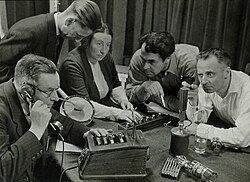
Key Facts
- Core Elements: Relies on dialogue, music, and sound effects to convey narrative and character.
- Golden Age: Achieved peak international popularity between the 1930s and 1960s.
- Global Reach: Remains highly popular in Germany (where it is called Hörspiel) and Poland.
- Modern State: While television caused a decline in the US and Australia, the BBC continues to produce hundreds of new plays annually.
- Preservation: Old-time radio (OTR) recordings are preserved in museums, libraries, and digital archives like the Internet Archive.
The Early Years (1880–1930)
Radio drama began to take shape in the early 20th century. By May 1923, records from The New York Times show at least 20 dramatic offerings scheduled, ranging from one-act plays and operettas to adaptations of Molière. These were produced either in-studio or via remote broadcasts from opera houses and theatres.
In Great Britain, an early milestone occurred on July 25, 1923, with the broadcast of Shakespeare's A Midsummer Night's Dream on 2LO. While early broadcasts often mirrored stage plays, later critics, such as Arch Oboler, pointed to Wyllis Cooper's Lights Out (1934–47) as the first "true" radio drama because it utilized the unique acoustic qualities of the medium rather than simply replicating theatre.
The Era of Widespread Popularity (1930–1960s)
The mid-20th century marked the zenith of the medium. In the UK, the BBC established its Drama Repertory Company in 1939–40 to provide a steady pool of professional actors. Following World War II, the BBC expanded its reach by introducing the Light Programme (1945) and the Third Programme (1946) to supplement the Home Service.
The 1950s and 1960s were particularly fertile for British playwrights. Many, such as Caryl Churchill and Joe Orton, began their professional careers in radio. Notable works from this era include Dylan Thomas's Under Milk Wood (1954), Samuel Beckett's All That Fall (1957), and Robert Bolt's A Man for All Seasons (1954).
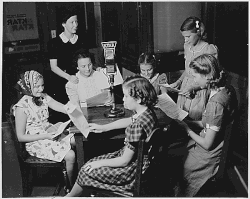
Global Developments
Outside the UK, radio drama flourished in various forms:
- Germany: The first German radio drama appeared in 1923. Post-WWII, the medium boomed because many physical theatres had been destroyed. Today, Germany remains a massive market for Hörspiel, particularly on CD.
- Poland: Polish Radio has a prolific history, producing over 2,500 plays between 1925 and 1939. The series Matysiakowie (started in 1956) is one of the longest-running radio plays globally.
- Japan: Starting in 1925, the medium gained massive popularity following the hit Tankou no Naka, leading NHK to hire top writers for high fees.
- South Africa: The SABC and the commercial Springbok Radio (1950–1985) made radio drama a dominant cultural force.
Regional Declines and the New Media Revival
The rise of television in the 1950s led to a sharp decline in radio drama popularity in the United States and Australia. In the US, most major network dramas on CBS and NBC were cancelled by 1960, with Suspense and Yours Truly, Johnny Dollar ending in 1962. In Australia, commercial radio shifted toward music-based formats like Top 40 and talkback radio.
However, government-funded broadcasters often maintained the art form. The Australian Broadcasting Corporation (ABC) produced the legendary soap opera Blue Hills, which ran for 27 years (1949–1976) and was once the world's longest-running radio serial. Similarly, the BBC continues to be a powerhouse of audio drama through Radio 4 and Radio 4 Extra.
In the 21st century, the medium has seen a revival through "new media," including podcasts and digital archives, allowing acoustic storytelling to reach new global audiences.
Summary of Radio Drama Characteristics
| Region | Peak Period | Key Characteristics/Works | Current Status |
|---|---|---|---|
| United Kingdom | 1940s–1960s | BBC Third Programme; Under Milk Wood | Highly Active (BBC Radio 4) |
| United States | 1930s–1950s | Golden Age; Suspense | Niche/Public Radio |
| Germany | Post-WWII | Hörspiel; Die drei ??? | Major Global Market |
| Australia | 1940s–1970s | ABC's Blue Hills | Significant Decline |
| Poland | 1920s–Present | Matysiakowie; Wielki Splendor awards | Active/Popular |
Frequently Asked Questions
What is the difference between a radio play and a stage play?
A radio play is purely acoustic, meaning it has no visual component. It relies on sound effects, music, and dialogue to create imagery in the listener's mind, whereas a stage play relies on physical sets, costumes, and visual acting.
Why did radio drama decline in the United States?
The primary cause was the advent and widespread adoption of television in the 1950s, which drew audiences away from acoustic storytelling toward visual entertainment.
What is a "Hörspiel"?
Hörspiel is the German term for a radio drama or audio play. Germany remains one of the world's largest markets for this format, especially in the form of audio CDs.
Which was the longest-running radio serial in the world at one time?
The Australian soap opera Blue Hills, written by Gwen Meredith and broadcast by the ABC, was at one time the world's longest-running radio serial, airing 5,795 episodes over 27 years.
How can I listen to old radio dramas today?
Many recordings of old-time radio (OTR) are available through the audio archives of museums and libraries, as well as online repositories such as the Internet Archive.