QST Magazine: A History of Amateur Radio's Definitive Publication
For over a century, QST has served as a cornerstone for the amateur radio community. Established to support the growth of the hobby, the magazine has navigated through global conflicts, government restrictions, and the evolving landscape of wireless communication. Its journey reflects the resilience of the radio amateurs who have used the medium for both personal passion and national service.
The Early Years and Foundation
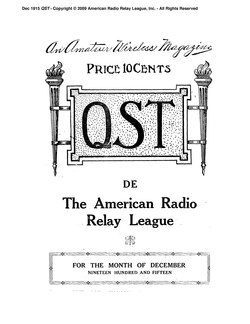
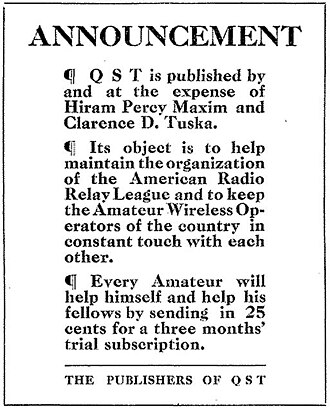
The first issue of QST was published in December 1915. In its infancy, the publication relied on the financial backing of Hiram Percy Maxim, the founder of the American Radio Relay League (ARRL), and secretary Clarence D. Tuska. The duo financed the first three issues with the hope that a growing membership base would eventually sustain the magazine's operations.
As the publication grew, the need for a formal business structure became apparent. In October 1916, the editors announced the creation of The QST Publishing Company. This move was primarily designed to protect Maxim and Tuska from potential litigation risks associated with the publication.
Wartime Disruptions and Resilience
The trajectory of QST was sharply interrupted by global conflict. Following the United States' entry into World War I in April 1917, the government banned all amateur radio activities. This ban, combined with the fact that many subscribers had enlisted in military service, led to the temporary suspension of QST after the September 1917 issue.
The magazine's return was a gradual process. In May 1919, QST reappeared as an 8-page "ARRL special bulletin" without a cover. This revival was made possible by a March 29 meeting in New York, where Maxim, Tuska, and nine other individuals agreed to finance the return and call for membership and subscription renewals.
The Path to Full Recovery
The recovery of the publication mirrored the lifting of government restrictions. The June 1919 issue noted that the ban on receiving signals had been lifted, and by July 1919, the magazine returned to its previous format. However, amateur operators were not permitted to transmit again until the fall of 1919, an event celebrated in a supplement to the October issue with the proclamation "BAN OFF".
By September 1920, QST had fully recovered its scale, reaching 100 pages—a volume not seen since April 1917.
Continuity Through World War II
Unlike the first World War, QST continued publication throughout World War II. While the U.S. government again ordered repeated hiatuses for amateur radio activities during the conflict, the magazine remained active. During both world wars, the skills of amateur radio operators were in high demand for military service, and the staff of QST contributed their expertise to the war effort.
Key Facts
- First Publication: December 1915.
- Founding Financiers: Hiram Percy Maxim and Clarence D. Tuska.
- Corporate Shift: The QST Publishing Company was formed in October 1916 to mitigate litigation risks.
- WWI Impact: Publication was suspended from September 1917 to May 1919 due to a government ban on amateur radio.
- Post-WWI Recovery: Returned to a 100-page format by September 1920.
- WWII Status: Publication continued despite government-ordered radio hiatuses.
| Date | Event | Status/Detail |
|---|---|---|
| December 1915 | First Issue Published | Financed by Maxim and Tuska |
| October 1916 | Company Formation | The QST Publishing Company established |
| September 1917 | Suspension | Halted due to WWI amateur radio ban |
| May 1919 | Return | 8-page special bulletin |
| October 1919 | Ban Lifted | Amateurs permitted back on the air |
| September 1920 | Full Scale | Returned to 100-page length |
Frequently Asked Questions
Who originally funded QST magazine?
The first three issues were financed by Hiram Percy Maxim, the founder of the American Radio Relay League, and secretary Clarence D. Tuska.
Why was The QST Publishing Company formed in 1916?
The company was established primarily to insulate Hiram Percy Maxim and Clarence D. Tuska from possible litigation risks.
Why did QST stop publication during World War I?
Publication was suspended after September 1917 because the U.S. government banned all amateur radio activities and many subscribers entered military service.
When were amateur radio operators allowed back on the air after WWI?
While receiving was permitted in June 1919, full transmission privileges returned in the fall of 1919, as announced in the October 1919 issue.
Did QST stop publication during World War II?
No, publication continued throughout World War II, even though the U.S. government ordered repeated hiatuses of amateur radio activities.