Motorola History: From Car Radios to the Mobile Revolution
The story of Motorola is a chronicle of communication evolution. What began as a small venture in Chicago to create battery eliminators eventually transformed into a global powerhouse that defined how the world speaks, from the first handheld mobile phones to the microprocessors that powered the early computing revolution.
The Foundations of Galvin Manufacturing
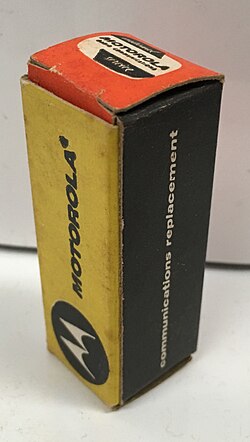
Founded in 1928 in Chicago, Illinois, the Galvin Manufacturing Corporation initially focused on producing battery eliminators. As the company expanded into car radios, Paul Galvin sought a distinctive brand name. He combined "motor" (from motor car) with the suffix "ola"—inspired by the Victrola and other popular brands of the era like Pianola and Crayola.
The first Motorola-branded radio was sold on June 23, 1930, to Herbert C. Wall for $30. The brand's rapid success led the company to officially rename itself Motorola, Inc. in 1947.
Early Public Safety and Military Contributions
By November 1930, Motorola began providing car-radio receivers to municipalities and police departments across Illinois, including the City of Evanston and the Illinois State Highway Police. The company's commitment to research and development grew with the addition of Dan Noble, a pioneer in semiconductor technologies and FM radio.
During World War II, Motorola played a critical role in Allied communications by producing the SCR-536, a handheld AM radio. This military success placed Motorola 94th among U.S. corporations in terms of military production contract value.
Post-War Expansion and the Computing Era
Following the war, Motorola diversified into televisions and radios, going public in 1943. The company's reach extended into the most extreme frontiers of communication; in 1969, Neil Armstrong used a Motorola transceiver to transmit his historic words from the Moon.
The Microprocessor Revolution
Motorola became a key player in the computing world with the 1974 introduction of the MC6800, an 8-bit microprocessor used in computing, automotive, and video game applications. This was followed in 1980 by the 32-bit MC68000, which powered devices for industry giants including Apple, Atari, Commodore, Sun, and Hewlett-Packard.
The Birth of the Mobile Phone
In 1973, Motorola achieved a historic milestone by demonstrating the first handheld portable telephone. This innovation culminated in September 1983 when the FCC approved the DynaTAC 8000X, the world's first commercial cellular device.
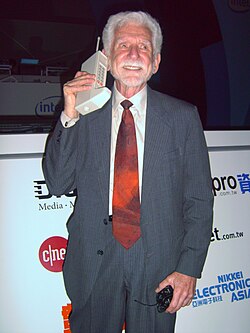
By 1998, cellular phones had become the company's primary driver of growth, accounting for two-thirds of Motorola's gross revenue. The company further strengthened its global presence by acquiring Storno in 1986, which aided its entry into the European market and the GSM (Global System for Mobile Communications) standardization process.
Challenges and Strategic Shifts
Despite its early dominance, Motorola faced significant hurdles in the late 1990s. A failure to pivot quickly to emerging digital cellular standards allowed competitors like Ericsson and Nokia to overtake them. By 1998, Nokia became the world's largest seller of mobile handsets.
The company also experienced a turbulent relationship with Apple. In 1996, Motorola released the StarMax, a Macintosh clone. However, a dispute over OS licensing led Steve Jobs to terminate the contract, briefly expelling Motorola from the AIM (Apple, IBM, Motorola) alliance before its reinstatement in 1998.
The Turn of the Millennium
The early 2000s were marked by a mix of innovation and restructuring. Motorola and Cisco supplied the first commercial GPRS (General Packet Radio Service) network to BT Cellnet in the UK. However, the company struggled with handset profitability and began a series of divestments, selling manufacturing plants in Ireland and Iowa and exiting the pager business.
The Great Split and Legacy
In 2008, facing economic downturns and restructuring needs, Motorola's board approved a plan to split the company. This process concluded on January 4, 2011, dividing the entity into two independent, publicly traded companies:
- Motorola Solutions: Focused on government and enterprise equipment.
- Motorola Mobility: Focused on cell phones and cable television equipment.
Motorola Mobility was acquired by Google in 2012. Google subsequently sold the cable equipment business to Arris Group in December 2012 and the rest of Motorola Mobility to Lenovo in October 2014.
Key Facts
- Founded: 1928 as Galvin Manufacturing Corporation in Chicago.
- First Commercial Cell Phone: The DynaTAC 8000X, approved by the FCC in 1983.
- Computing Impact: Developed the MC6800 and MC68000 microprocessors.
- Space History: Provided the transceiver used by Neil Armstrong on the Moon in 1969.
- Corporate Split: Divided into Motorola Solutions and Motorola Mobility in 2011.
| Year | Milestone | Significance |
|---|---|---|
| 1930 | First Motorola Radio Sold | Established the brand name in the market. |
| 1940 | First Handheld Walkie-Talkie | Pioneered portable two-way communication. |
| 1973 | First Handheld Phone Demo | The precursor to the modern mobile phone. |
| 1983 | DynaTAC 8000X | First commercial cellular phone. |
| 2011 | Company Split | Separation into Solutions and Mobility entities. |
Frequently Asked Questions
How did the name "Motorola" originate?
Paul Galvin created the name by combining "motor" (referring to motor cars) with the suffix "ola," which was a popular ending for brands at the time, such as the Victrola.
What was the DynaTAC 8000X?
Approved by the FCC in September 1983, the DynaTAC 8000X was the world's first commercially available cellular telephone.
Did Motorola contribute to the personal computing revolution?
Yes. Motorola developed the MC6800 and the 32-bit MC68000 microprocessors, which powered early computers from companies like Apple, Atari, and Hewlett-Packard.
What happened to Motorola after the 2011 split?
The company split into Motorola Solutions and Motorola Mobility. Motorola Mobility was later acquired by Google in 2012, and subsequently sold to Lenovo in 2014.
What role did Motorola play in World War II?
Motorola produced the SCR-536 handheld AM radio, which was essential for Allied communications during the war.